World 1901-present

Some of the most profound and influential changes in world history take place from 1901 to today and covered here are many of the important and well known ones as well as some of the smaller stories. In terms of reach this section covers huge themes on diplomacy, post imperialism and economics. The articles cover the time period right up into recent events such as the State of the Union address by the US President Barrack Obama.

Sort by: Date (Newest first) | Title A-Z
Show: All | Articles | Podcasts | Multipage Articles
  • Film: Stalin - Interpretations and Legacy

    Article

    In this film, Professor James Harris (University of Leeds) reflects upon how historical interpretations of Stalin have changed over time. Stalin’s legacy and influence continues to materialise in all subsequent Soviet and Russian administrations. The Man of Steel is used by politicians when they are looking for arguments to open...

    Click to view
  • Film: Stalin - Rise to Power

    Article

    In this film, Professor James Harris (University of Leeds) discusses how interpretations have changed over the years regarding Stalin’s rise to power, and his transformation from rural Georgian to the ‘Man of Steel’ – Stalin. For many years, western interpretations were strongly influenced by his rival Trotsky, who defined Stalin...

    Click to view
  • Film: Stalin - The Early Soviet Economy & the preparation for war

    Article

    In this film, Professor James Harris (University of Leeds) examines how the New Economic Policy transformed the Soviet economy after the civil war, and looks at Stalin’s central role in that recovery. Key during that period was Stalin’s dispute with Nikolai Bukharin and the Great Break, and the drive to...

    Click to view
  • Film: Stalin - World War II

    Article

    In this film, Professor James Harris (University of Leeds) examines Stalin and the Soviet preparations for global war. The reasons why Stalin agreed the Nazi-Soviet pact are explored as are Stalin’s response to invasion in 1941. Professor Harris addresses the impact the war had on the USSR and how that...

    Click to view
  • Film: The Kennedys and the Gores

    Article

    This film was taken at the HA Annual Conference 2019 in Chester and features the HA's President: Professor Tony Badger who presented Friday's keynote lecture.  Find out more about the HA Conference. In a country that prides itself on its egalitarianism and its democracy, it is perhaps surprising that family...

    Click to view
  • Film: Why does the massacre of the Armenians in the First World War still get overlooked?

    Article

    Why is the term 'Armenian Genocide' controversial, with many countries still not acknowledging a genocide at all? What do we know about the event of 1915 and the plight of the Armenian community in Turkey? How can we grapple with a history that many people want to forget? In this...

    Click to view
  • Film: Yeltsin and Russia in the late 1980s

    Article

    In this film, Dr Edwin Bacon (University of Lincoln), examines the political and economic repercussions of Gorbachev’s reforms. Dr Bacon reflects upon the dire state of the Soviet economy in the late 1980s/early 1990s and how that led to change but also unrest. In particular he addresses the way that...

    Click to view
  • Film: Yeltsin and the Oligarchs

    Article

    If you're unable to see the film below, please use the link for your Membership type:Historian members | Primary members | Secondary members | Student members

    Click to view
  • Film: Yeltsin and the West

    Article

    In this film, Dr Edwin Bacon (University of Lincoln), looks how the positive relationship established between Mikhail Gorbachev and President Reagan and his successor President Bush continued with the ascension of Yeltsin to the presidency of Russia. Dr Bacon discusses how Russian perceptions of the West changed with the expansion...

    Click to view
  • Film: Yeltsin and the fall of the Soviet Union

    Article

    In this film, Dr Edwin Bacon (University of Lincoln), explores the role Yeltsin played in the dissolution of the Soviet Union. Dr Bacon takes us from the fall of the Berlin Wall, the rise of nationalism in the new republics, and how Yeltsin became Russia’s first elected head of state....

    Click to view
  • Film: Yeltsin's agenda

    Article

    In this film, Dr Edwin Bacon (University of Lincoln), discusses the emergence of Russia as a democratic country and its nascent capitalist economy. He outlines how the issues Yeltsin faced in government such as the 1993 constitutional crisis, followed by the shelling by tanks in Moscow led to Yeltsin rewriting...

    Click to view
  • Film: Yeltsin's second term and legacy

    Article

    In this final film on Yeltsin, Dr Edwin Bacon (University of Lincoln), discusses Yeltin’s second term and how his public profile went from hero to growing embarrassment. Importantly he examines how Yeltin’s search for a successor that would secure his family’s security led to rapid changes in Prime Ministers in...

    Click to view
  • Films: Boris Yeltsin – Interpretations

    19th June 2024

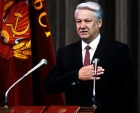
    Borisn Yelstin was the Russian leader from the collapse of the Soviet Union through to the leadership of Vladimir Putin. A key pivotal figure of the twentieth century, he had as an important an impact on Russia and global politics as any of the Soviet leaders of the 1970s and 80s and...

    Click to view
  • Films: Khrushchev – Interpretations

    9th October 2024

    (Student and corporate secondary members can view these films in our Student Zone) Khrushchev came to power in the Soviet Union at a time when the whole region was used to living on a knife's edge. He appeared to usher in a more relaxed calm era as though that had...

    Click to view
  • Films: Lenin – Interpretations

    31st January 2025

    (Student and corporate secondary members can view these films in our Student Zone) Two men – Trotsky and Lenin – symbolise the Russian Revolution for most people. While Trotsky came to an icy end in Mexico, Lenin remains an enduring figure in the history of Russia and the history of Communism...

    Click to view
  • Films: Mikhail Gorbachev – Interpretations

    Article

    How much of what Russia is today, how its people behave, and how they are perceived is dependent on its history and those that have led it? Was it the first melting pot of the world? Do its broad range of cultural traditions and diversity play a part in its...

    Click to view
  • Finding the place of substantive knowledge in history

    Article

    ‘What exactly is parliament?' finding the place of substantive knowledge in history The relationship between knowledge and literacy is a central concern for all teachers. In his teaching, Palek noted that his students were struggling to understand complex substantive concepts such as ‘parliament' and decided to explore the relationship between students'...

    Click to view
  • Franklin D. Roosevelt and the New Deal

    Article

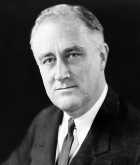
    New Deal is the name given to the policies of the American president Franklin D. Roosevelt during the 1930s. Elected in 1932, at a time of great economic depression, he sought to alleviate distress by using the inherent powers of government, and the New Deal era come to be seen...

    Click to view
  • From St Neots to Siberia: an HA Quality Mark Community Outreach Project

    Multipage Article

    Longsands Academy, a secondary school in Saint Neots, Cambridgeshire was awarded an HA Quality Mark Silver Award in 2016. The History Department at Longsands chose to build on this success by applying for a First World War Then and Now grant from the Heritage Lottery Fund to run a community...

    Click to view
  • Helping Year 9 debate the purposes of genocide education

    Article

    Connecting the dots: helping Year 9 to debate the purposes of Holocaust and genocide education Why do we teach about the Holocaust and about other genocides? The Holocaust has been a compulsory part of the English National Curriculum since 1991; however, curriculum documents say little about why pupils should learn...

    Click to view