
Search results
Found 487 results matching “revolutions”
Not found what you’re looking for? Try using double quote marks to search for a specific whole word or phrase, try different search filters, or see our search tips.
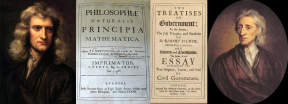
In this podcast Dr Nigel Aston of the University of Leicester looks at the origins of the Enlightenment in England.
M
Member Resource
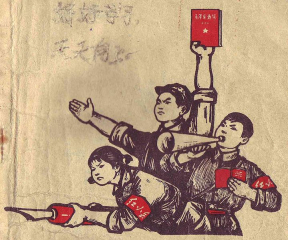
In this podcast Dr Yangwen Zheng of the University of Manchester looks at the origins, theatre and consequences of the Cultural Revolution. Dr Yangwen Zheng's essential textbook Ten Lessons in Modern Chinese History is now available. Written for university entry-level students and A-level teachers and students, it uses primary sources...
M
Member Resource
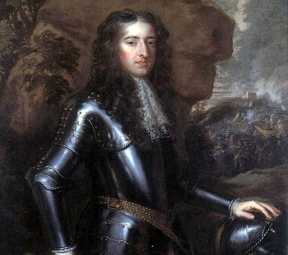
John Morrill, one of the foremost historians of the British civil wars, has described the events of 1688-9 as the ‘Sensible Revolution'. The phrase captures the essence of a long-standing scholarly consensus, that this was a very unrevolutionary revolution. The origins of this interpretation go back to the late eighteenth...
S
Secondary Resource

Please note: this article pre-dates the 2014 National Curriculum. Developments in information technology continue at an extraordinary pace. Many young children will have little or no idea of what it was like to live in a world without mobile phones, computers and the Internet. Most children will regularly make use...
P
Primary Resource
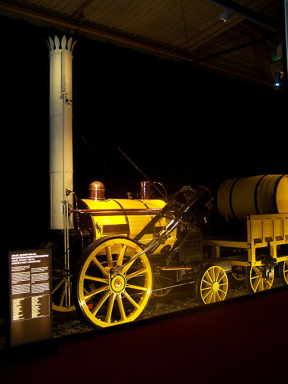
The period 1750-1830, traditionally marking the classical industrial revolution, achieved in Great Britain what Professor Rostow has called the economy's "take-off into self-sustained growth". A revolution in transportation was part of the complex of changes - industrial, agricultural, mercantile and commercial - occurring roughly concurrently.The impetus to transport change is...
M
Member Resource
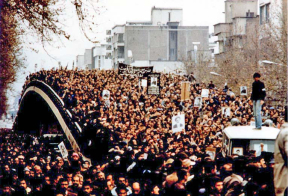
Although the curriculum changes of 2008 brought with them new GCSE specifications, Jonathan White was disappointed by the dated feel of some ‘Modern World' options, particularly the depth studies on offer. Drawing on his experience of teaching comparative history within the International Baccalaureate, and building on previous arguments in Teaching...
S
Secondary Resource
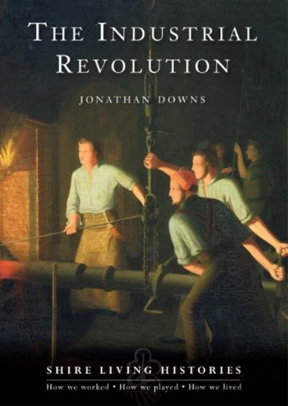
The Industrial Revolution, Britain, 1770-1810, Jonathan Downs Shire Living Histories, 2010, paperback, 88 pp, £8.99, ISBN 9780747807810This brief study of Britain's Industrial Revolution during the forty years from 1770 to 1810 offers a shorter chronological window than say Jane Humphries recently published ground breaking study of Child Labour in the...
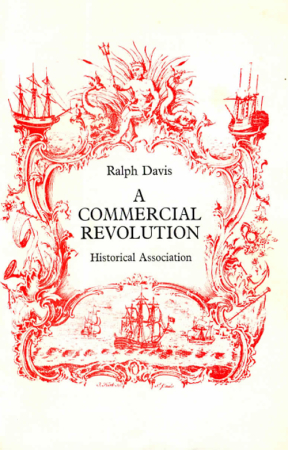
The pattern of overseas trade is always in movement: new commodities are constantly appearing, old ones fading into unimportance, different trading partners coming to the fore-front. But between the latter end of the sixteenth and the second half of the eighteenth century, change took specially far reaching forms. In 1570...
M
Member Resource
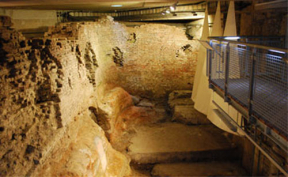
If you want to get up close to history, Liverpool's revolutionary Old Dock – the world's first commercial enclosed wet dock – opened in May 2010 as the city's latest historic attraction, with free ticketed tours for schools and members of the public starting from Merseyside Maritime Museum. For the...

There is a view that the poetry of the eighteenth century began with moralising neo-classical satire, that this was followed by insipid pastoral, and that the century closed with the advent of the Romantic. This view is simplistic. While at particular times particular types of poetry might have predominated (and...
Sc
Secondary Corporate Resource
St
Student Resource
H
Historian Resource
When the Bolsheviks seized power in what was essentially a carefully organised coup d’état in October 1917, they seized control only of the levers of central power in the then capital, Petrograd, which had already become the centre of working-class discontent. What they most emphatically did not do was to...
Sc
Secondary Corporate Resource
St
Student Resource
H
Historian Resource
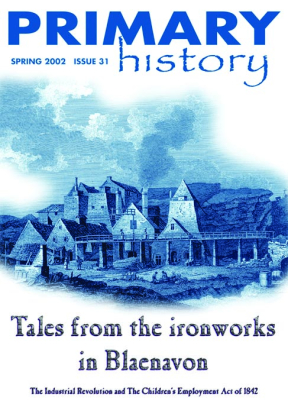
3 Editorial 4 Primary Noticeboard 6 In My View: Teaching for purpose: one dilemma? - Alan McCully 8 History co-ordinators’ dilemmas - Jayne Woodhouse and Alan Hodkinson 10 I have not seen a butterfly around here… - Penelope Harnett 12 Revising the English Reformation - Peter Fleming 15 Celebrating good...
P
Primary Resource
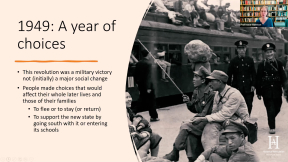
In this talk Professor Henrietta Harrison uses diary records to think about the experience of living through the revolution in China in 1949, focussing on what it meant to Chinese people, how they learned about its practices and ideology, and how this changed their lives - whether they were radical...
M
Member Resource
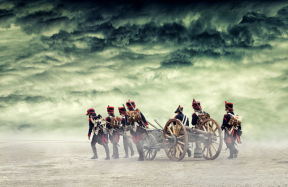
In this podcast Professor Patrick O'Brien of the London School of Economics discusses the economic impact of the Revoutionary and Napoleonic wars on Britain.
M
Member Resource
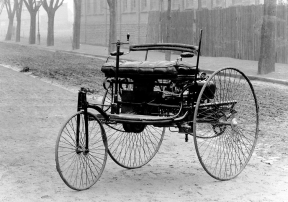
In this podcast Dr Colin Storer of the University of Warwick examines the factors that led to Germany’s industrial and scientific revolution in the 19th century and its significance. Though German was previously seen as a nation of intellectuals dating back to the reformation with Luther, and more recently with...
M
Member Resource
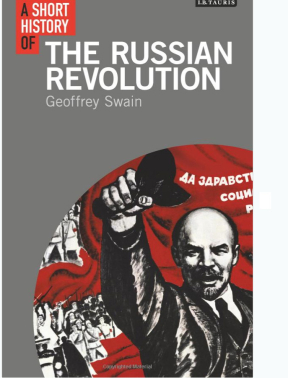
A Short History of the Russian Revolution, Geoffrey Swain, I.B. Tauris, 2017, hardback, 232 pp., £10.99, ISBN 9781780767932 This new interpretation of the events of 1917 by Geoffrey Swain, Honorary Professor Emeritus and former Alec Nove Chair in Russian and East European Studies at the University of Glasgow, has been...
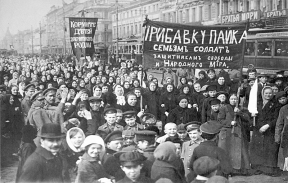
In this podcast Dr Beryl Williams looks at why the Provisional Government failed to establish liberalism in Russia between February and October 1917 and why it was the Bolsheviks that took power in October.
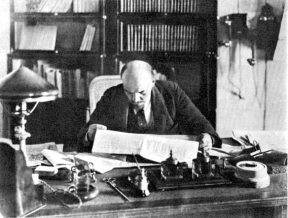
In this podcast Dr Beryl Williams discusses how historians views of the Russian Revolution have changed over time in Russia and the West.
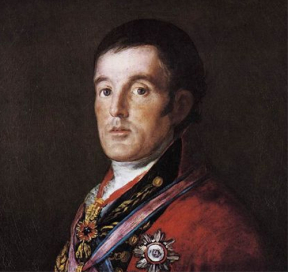
Scum of the earth – or fine fellows? Carole Divall asks whether the men of the British Army really were ‘the scum of the earth’, as often asserted, or willing soldiers who earned the respect of the French. ‘Soldiers were regarded as day labourers engaged in unsavoury business; a money...
Sc
Secondary Corporate Resource
St
Student Resource
H
Historian Resource
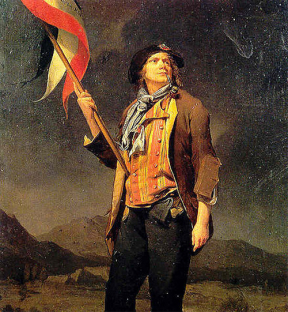
For most of the last two centuries, historical interpretations of the French Revolution have focused on its place in a grand narrative of modernity. For the most ‘counter-revolutionary' writers, the Revolution showed why modernity was to be resisted - destroying traditional institutions and disrupting all that was valuable in an...
Sc
Secondary Corporate Resource
St
Student Resource
H
Historian Resource
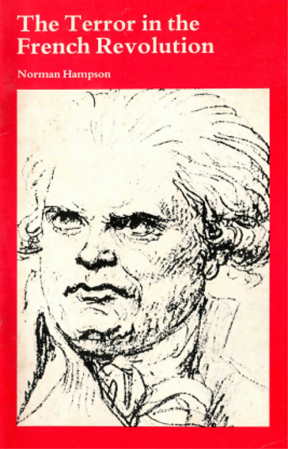
A natural reaction to the history of the French Revolution is to see it as a glorious movement for liberty which somehow ‘went wrong', ending in a nightmare of blood and chaos. This pamphlet explains what really happened, and why. It shows how the apparent achievements of the first two...
M
Member Resource
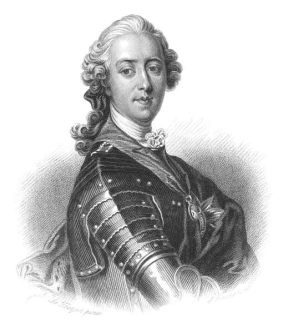
The harsh reality The 1745 Rebellion has become part of the romantic heritage in both British and Scottish history. At the time there was little romance to it. The many myths and misconceptions about Bonnie Prince Charlie and his followers need to be corrected and the glamorous image of the...
Sc
Secondary Corporate Resource
St
Student Resource
H
Historian Resource
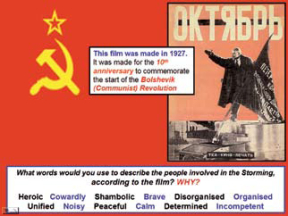
It was period 5 on a wet Wednesday afternoon deep into the winter term. Year 9 were even more difficult than usual. Being cooped up inside at lunch, without supervision, had not helped the situation. What was I going to do with this untamed bunch? Put on a trusted video?...
S
Secondary Resource
Three years ago, Séan Lang argued that narrative, which had gone rather out of fashion, needed to be brought back into our teaching. Alf Wilkinson goes further. It is not just narrative which is needed: it is story. The move away from story is not a problem confined uniquely to...
S
Secondary Resource
Polychronicon is a regular feature helping school history teachers to update their subject knowledge, with special emphasis on recent historiography and changing interpretation. This edition of 'Polychronicon'focuses on the interpretations of the American Revolution.
S
Secondary Resource