
Britain & Ireland

During the early years of the twentieth century, the New Liberals spread a political ideology which was much closer to socialism than to Victorian liberalism. Indeed, they preached State intervention in favour of social welfare, national prosperity and imperialistic strength; that social policy which logically required extra care and increased...
Despite Britain’s longstanding membership of the European Union, the question of ‘Europe’ continues to loom large in the nation’s politics. Whilst the economic pros and cons of Britain ‘joining’ the euro might be understood by only a select few, that issue provides for the many an opportunity to debate Britain’s...
Over a century after his death, interest in Oscar Wilde and his work is at flood tide, with unprecedented levels of publication and research about Wilde and his work. Wildean studies proliferate, much in languages other than English. Recent translations of Wilde’s work have included Romanian, Hebrew, Swedish and Catalan,...
The debate on the nation and its history is new to England; and there is, perhaps, a tendency to assume that what is new in England is new everywhere. In Ireland, the debate has been going on since the 1970s, fuelled by what is called ‘revisionism’; or rather, by a...
Lord Palmerston (1784-1865) has long interested (and confused) historians. A man of contradictions and paradoxes, he seemed both to embody modern Victorian Britain, and yet at the same time stand as a potent symbol of what had been lost.
During the last century or so there has developed a new ‘public role’ for history: the past as personal history, a vital element in the nourishing of people in society. During the past decades a new perception of what history is has manifested itself on two levels: first a shift...
On reading the title of this article, any reader at all familiar with the social history of late Victorian and Edwardian England is likely to think of the revelations at the time of the extent of urban poverty. Two major enquiries, one into London poverty, and the other into poverty...
'An attack on the United States with 10,000 megatons would lead to the death of essentially all of the American people and to the destruction of the nation.’ ‘In 1960 President Kennedy mentioned 30,000 megatons as the size of the world’s stockpile of nuclear weapons.’ In the autumn of 1962...
Joseph Priestley ended his days in Northumberland, Pennsylvania. This is one of the most delightful spots in the eastern United States. It is situated at the confluence of the North Western and North Eastern branches of the Susquehanna, one of the great rivers of North America, which winds its way...
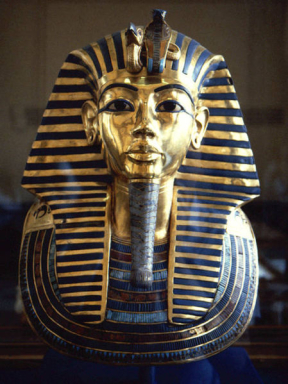
'At last have made wonderful discovery in Valley; a magnificent tomb with seals intact; re-covered same for your arrival. Congratulations.’ This telegram was sent from Luxor on the 6th November 1922 by Howard Carter to his coarchaeologist Lord Carnarvon in Britain. It started the Tut·ankh·Amen story which led to a...
The concept ‘local government’ dates only from the middle of the nineteenth century. ‘Local government service’ emerged later still. In 1903 Redlich and Hirst1 wrote of ‘municipal officers’, while in 1922 Robson2 preferred ‘the municipal civil service’. ‘Local government service’ perhaps derives its pedigree from its use in the final...
The decade and a half prior to the First World War saw Britain experience a virulent, some might say sordid phenomenon that has been referred to as ‘spy fever.’ This article traces the roots of spy fever, and examines its nature, before assessing its effects on Britain between 1900 and...
Moves to protect and record the historic environment began at the turn of the 20th century with the establishment of the National Trust in 1895, the Victoria County History in 1899, and the Royal Commission on Historical Monuments for England in 1908. The VCH took the antiquarians’ task onto a...
The publication of the first volume of Paddy Ashdown’s Diaries in 2000 has focused renewed attention on the relationship between the Liberal Democrats and the Labour Party. From the first meeting between Ashdown and Tony Blair at the latter’s house on 4 September 1994, less than seven weeks after his...
When the historian Peter Burke wrote in 1987 ‘It is high time for a social history of language’, he could scarcely have imagined that the first to meet the challenge would be the Welsh. In November 2000 the University of Wales Centre for Advanced Welsh and Celtic Studies, a research...
On April 13 2000 the Bishop of Oxford, the Right Reverend Richard Harris, gave the final Gallipoli Memorial Lecture in the Gallipoli Memorial Chapel at Holy Trinity Church, Eltham. The National Gallipoli Memorial was established there due to the effort and enthusiasm of Holy Trinity’s Vicar, the Reverend Henry Hall,...
The concept of an ‘English’ or even of a ‘British’ empire has been in use at least from the sixteenth century. What the term then conveyed was of course very different from what it was to convey in modern times. By the mid-eighteenth century, however, contemporaries were beginning to envisage...
Commenting in early 1934 at the University College, Hull, at the time of the centenary of William Morris’ birth and of a large exhibition at the Victoria and Albert Museum, the historian and active socialist, G.D.H. Cole commented, William Morris’ influence is very much alive today: but let us not...
Of the many social changes that occurred during the Victorian age, public health reform is widely agreed to be one of the most significant. In the early Victorian era the vast majority of Britons drank water from murky ponds and rivers, carried to their dwellings in buckets; and their excrement...
On 28 November 1876, William and John Habron, Irish brothers habitually in trouble with the police, were tried at Manchester Assizes for the murder three months before of Police Constable Nicholas Cock (on the basis of ‘scientific’ footprint evidence at the scene of the crime). The jury found 19 year-old...