

Reading Branch Programme
All enquiries to Chris Sexton – sexton44@gmail.com Tel 01344 779321 or 07957 184342
HA members, students and school pupils free. Non-members visitors £3. Associate branch membership £10 per annum.
Venue: Reading School, Erleigh Road, Reading RG1 5LW. Suppers precede each lecture from 6pm – cost £20 per person – are held in the school’s refectory and the lectures take place in the Lecture Theatre. Cars can only enter the site via Erleigh Rd, Reading RG1 5LR.
For the gate code and / or a map of the school layout, contact sexton44@gmail.com
Reading Programme 2026-27
16 Oct 2026
Anne Curry (Southampton)
Joan of Arc: An English Heroine
For the English of the time, Joan of Arc was simply a limb of the devil who had challenged their rightful claim to France. But in later centuries she became quite the heroine, lauded by British writers and artists as a woman of courage and commitment, and even as a symbol of Anglo-French rapprochement. Prof. Anne Curry explores the remarkable afterlives of this unique historical figure on this side of the Channel.
6 Nov 2026
James Daybell (Plymouth and President of the HA)
Letters, Emotions and the Experience of Separation in the Early Modern World
What does it feel like to be apart? We all experience forms of separation as we move through life stages, and so too did people in other times and places. Stemming from a 6-year Swedish Research Council-funded project entitled ‘Moved Apart: Communicated Experiences of Separation in the Sixteenth and Seventeenth Centuries’, this talk explores how men and women in those centuries experienced and communicated separation through a new communicative technology: the vernacular letter. Drawing on a large corpus of marital correspondence, it examines the emotional worlds created when couples lived apart—whether due to travel, war, political or diplomatic service or domestic circumstance. It considers how emotions such as longing, loneliness, frustration, affection, and anticipation were expressed through language, material or physical features of letters, and the act of writing itself. It will also look at how postal delays, distance, and uncertainty shaped emotional responses, and how gender and lifecycle affected the ways partners articulated absence and managed its challenges. Finally, the talk situates these early modern experiences within a wider, comparative framework, showing how different cultures and contexts help us understand separation as both an historical condition and a communicative practice.
4 Dec 2026
Graham Moore (The National Archives)
Revolution 250’ at The National Archives: Retelling the American Revolution
‘Revolution 250: American’s Independence Story, 1763-1783’ is a major temporary exhibition at The National Archives in Kew, running from June to November 2026. Join curator Dr Graham Moore as he explores how the exhibition’s items, drawn predominantly from The National Archives’ extensive collections of colonial American material, tell the story of the American Revolution from a fresh and engaging angle – not just an American story, but a British story and a global one, spanning the early modern Atlantic world.
22 Jan 2027
Anne Deighton (Oxford)
Still walking the tightrope: Britain' s security, the EU and NATO, from cold war to very hot peace
From its foundation in 1949, NATO was embedded in Britain’s strategic thinking about the Soviet threat, and by 1973, Britain was a key member of both NATO and the EU. NATO and US domination seemed essential to the West, and the EU’s own development was always quietly ‘nested’ inside NATO's hard power safety net. The end of the cold war and the collapse of Soviet Union by 1991 was the first great shock to NATO, setting off a rethink about ‘the Atlantic West’ and European security. Brexit was the second great shock (and a strategic folly, though security was hardly mentioned). President Trump's attitude to NATO and the EU is the third (but not unexpected) shock. What historical lessons might we learn from the cold war era, as war now rages on the continent, the fabric of the old international system unravels, and Britain now really struggles to find a security framework in Europe and the world?
26 Feb 2027
Aleks Pluskowski (Reading)
The Black Cross: The History and Legacy of the Baltic Crusades
Between the twelfth and fifteenth centuries, crusading armies unleashed a relentless holy war against the last pagan societies in northern Europe, in the Baltic Sea region. Led by Catholic rulers, churchmen and, most importantly of all, the warrior monks of the Teutonic Order, they sought to expand Christendom through conquest and conversion. In the process they forged a new world with a profound legacy that resonates into the present. This talk will trace the broader story of the Baltic Crusades and consider how this was reimagined in later centuries to serve nationalist aims.
12 Mar 2027
Naomi Iliff (independent)
The Quakers and the Social History of Reading
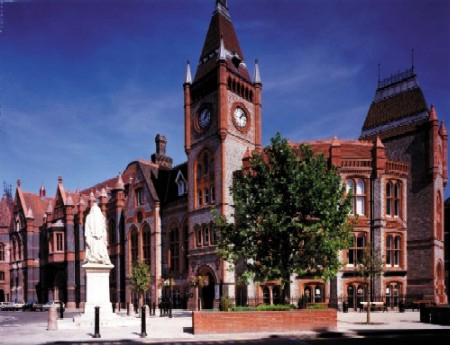
What have the Quakers ever done for Reading? If you have dunked your chocolate digestive in your tea, or wondered why Manchester Town Hall looks so much like Reading Town Hall, or wanted to know what that “Twinned with Dusseldorf” sign is all about, then the answer might surprise you. Many strands of Reading’s social history trace back to the impact and legacies of prominent Quakers such as Samuel Huntley, George Palmer, Phoebe Cusden, Alfred Waterhouse, and others.