Culture

The definitions of what is culture may change but the practice of understanding, and unpicking cultural history is an important dimension to understanding any historical period. In this section articles explore the way that definitions of culture have changed and how those changes have affected values and attitudes.  The impact of the written word on fashions and ideas and the role of historic movements such as the renaissance are all addressed in this section.

Sort by: Date (Newest first) | Title A-Z
Show: All | Articles | Podcasts | Multipage Articles
  • My Favourite History Place: The Great House of Mercers Creek

    Article

    The tropical island of Antigua is a tourist heaven, but Gabriella Howell’s research into her family property, the Great House of Mercers Creek, shows how over the centuries, a varied history has shaped the experience of visitors and residents alike. From the enslaved and missionaries to admirals and film stars,...

    Click to view
  • In conversation with Ulinka Rublack

    Article

    The Historian discusses with Ulinka Rublack her latest book, Dürer’s Lost Masterpiece: Art and Society at the Dawn of a Global World (2023), which takes a fresh look at this major Renaissance artist, telling the story of his life and times, and reassessing some of his best-known works...

    Click to view
  • Opinion: History, anti-history, and historical fiction

    Article

    As he gives a lecture to the Historical Association’s Virtual Branch, novelist, historian and BBC New Generation Thinker Oskar Jensen shares his thoughts on history, fantasy and the need to engage with the past on its own terms.

    Click to view
  • Art and ecology

    Article

    Artworks and objects from the past provide us with a compelling record of human interaction with the natural world. In this article, art historians Carla Benzan and Samuel Shaw explain how they are using collections from galleries and museums to bring environmental history to new audiences and to increase awareness...

    Click to view
  • The Chinese National Anthem

    Article

    The history of the Chinese national anthem gives Derek Ying a new perspective on society and culture from the era of the Qing dynasty to the People’s Republic of China. It reveals the strengths and weaknesses of different regimes, and the power of song to unite and divide...

    Click to view
  • Digging the dirt on ‘The Dig’

    Article

    Laura Howarth, Archaeology and Engagement Manager at the National Trust property of Sutton Hoo, reflects on the discovery of the ship burial in 1939 and its portrayal in the 2021 film, The Dig. In a corner of Suffolk during the summer of 1939, an archaeological discovery was made at Sutton...

    Click to view
  • Living on the Silk Roads: Voices from Dunhuang

    Article

    In Autumn 2024, the British Library will mount an exhibition exploring the stories of the people who inhabited or passed through the oasis town of Dunhuang during the first millennium. Located in modern-day Gansu province, in northwest China, Dunhuang was originally established as a garrison town and became an important commercial...

    Click to view
  • The circle of Ulster literary male friendships of author Forrest Reid

    Article

    Eminent Ulster novelist Forrest Reid was a complex character, reflecting a variety of attitudes in both his writing and his private life. In this article Michael Kelly examines how Reid and his circle of friends aimed to navigate their way through the changes of the early twentieth century, in both...

    Click to view
  • My Favourite History Place: A Short History of Brill

    Article

    In this article Josephine Glover discusses the long history of her ‘favourite history place’, the Buckinghamshire village of Brill. She explains how there has been a human settlement there since Mesolithic times. Using various fragments of evidence, she pieces together the extent to which the village was important to early...

    Click to view
  • White City: the world’s first Olympic Stadium

    Article

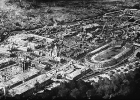
    The modern Olympic Games were first held in 1896, but it was not until their fourth edition, held in London 1908, that they had a purpose-built stadium as their sporting and ceremonial heart. This article by Martin Polley explores the history of that stadium – White City. As well as...

    Click to view
  • Political and social attitudes underpinning the 1924 Olympics

    Article

    The 1924 Olympics in Paris are best known to many British people through the ‘Chariots of Fire’ film from the early 1980s. The film touches on some of the political and social attitudes prevalent in the 1920s and Steve Illingworth explores these issues further in this article. It is argued...

    Click to view
  • Real Lives: Charlie Mitchell, Tuke's top model

    Article

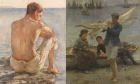
    Our series ‘Real Lives’ seeks to put the story of the ordinary person into our great historical narrative. We are all part of the rich fabric of the communities in which we live and we are affected to greater and lesser degrees by the big events that happen on a daily...

    Click to view
  • My Favourite History Place: The Holburne Museum

    Article

    Jane A. Mills describes in this article how the fascination of Holburne Museum in Bath comes partly from the historical objects on display but also from the varied history of the building itself. She explains how the recent development of the museum illustrates the ongoing issue of trying to resolve...

    Click to view
  • ‘Since singing is so good a thing’: William Byrd on the benefits of singing

    Article

    As the value of music education is again a topic of societal debate, Tudor composer William Byrd, the four hundredth anniversary of whose death is celebrated this year, was a powerful advocate of singing in early modern England, writes Katherine Butler. Tudor composer William Byrd (c.1540–1623) is recognised today not only...

    Click to view
  • A history of Choral Evensong: the birth of an English tradition

    Article

    The apogee of the native church music tradition, Evensong is a jewel born of the English Reformation, but how did it come to be, asks Tom Coxhead? Evensong is a miraculous success-story for the Anglican Church in an increasingly secular society. Midweek attendance at cathedrals, collegiate chapels, and larger churches...

    Click to view
  • Building new futures by rewriting the past: how operas have recreated history

    Article

    Simon Banks investigates how the past has been presented in European opera, revealing intriguing insights into the development of the modern world. The way a civilisation views its past shapes the way it acts in the present. Over the 400-year history of opera, opera plots have re-told, re-invented and re-evaluated...

    Click to view
  • A land without music?

    Article

    It is sometimes said that England was a ‘land without music’ in the eighteenth and nineteenth centuries – not so, according to David Fleming. ‘Between the age of Purcell and that of Elgar and Parry, we had to do without much musical life in our country.’ Or so wrote Simon...

    Click to view
  • The portrayal of historians in fiction: people on the edge?

    Article

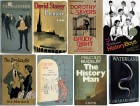
    In novels featuring history teachers and lecturers, the main characters are usually male, unmarried and with poor mental health. This article provides a rough classification of the different types of pathology displayed, and suggests why this characterisation might be the case.  Of all the texts, Graham Swift’s Waterland (1983) is...

    Click to view
  • Muddy Waters: from migrant to music icon

    Article

    Matt Jux-Blayney explores the impact of the blues singer Muddy Waters against a backdrop of significant social and racial change in the United States of the mid-twentieth century. On 3 July 1960, a man from Mississippi was introduced onto the stage of the Newport Jazz Festival in Rhode Island. He...

    Click to view
  • Film: Social & Cultural Change

    Article

    How did a new Germany rebuild itself from the legacy of the Second World War both physically, emotionally and culturally? Professor Stibbe explores the silences of many households and how that influenced the student rebellion of the late 1960s. He also puts into perspective the cultural impact that the war...

    Click to view