
Europe
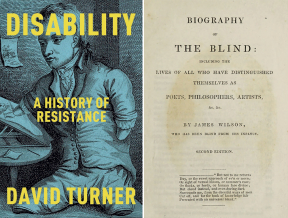
Disabled people have always been present in Britain’s past. Yet they have often appeared only at the edge of historical narratives: as recipients of charity, as objects of medical attention, as casualties of war or work, or as figures in stories told by institutions rather than by themselves. In Disability:...
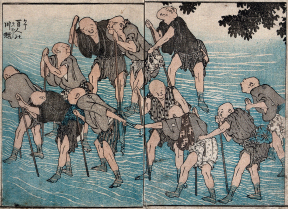
Expansion into new periods and places, new revelations of human diversity and difference, and a rethink of the tools we use to recover the past – disability history is not just thriving but is also exciting, as Daniel Blackie and Alexia Moncrieff demonstrate in their update on the state of...
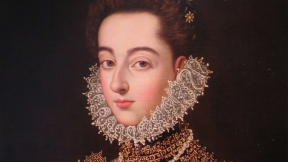
What was life really like for a Spanish royal woman? Catalina Micaela, the younger daughter of Philip II of Spain, wrote extensively to her husband Carlo Emanrele I of Savoy giving fascinating insights into the events at court and the pressures on the families, providing a glimpse into sixteenth-century Spain...
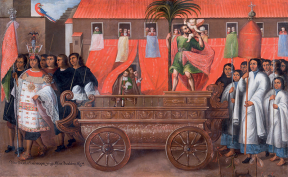
In this article, Emily C. Floyd explores a rare eighteenth-century self-commissioned engraved portrait of an elite Indigenous man in colonial Lima. By comparing this unassuming image with a more overtly Inca portrait, the article reveals how Indigenous leaders navigated identity, loyalty, and colonial restrictions, using portraiture to assert agency in...
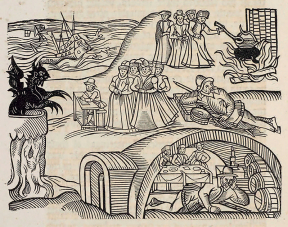
During the European witch craze, visual art played a powerful role in shaping belief in witches. The printing press allowed images of witchcraft to circulate widely, amplifying fear and suspicion. In this article, Natasha Brockman explores how such imagery did more than illustrate witchcraft: it helped create it, teaching people...
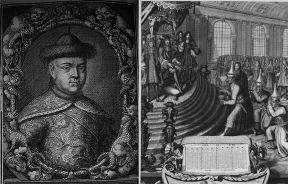
Recently the French and Chinese governments have joined together in a nostalgic reflection on cultural interactions between King Louis XIV and Emperor Kangxi in the late seventeenth and early eighteenth centuries. As Sean Heath explains here, these modern reflections are particularly interesting for an aspect of the relationship which they...
This self-guided short course provides an introduction to European witchcraft history from the fifteenth century to the present. Using a range of primary sources, the course explores important themes and questions relating to witchcraft history, examining how witchcraft has been imagined and understood at different times and in different places,...
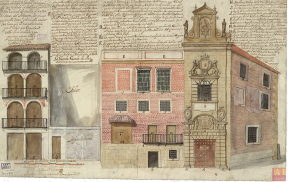
Justice in the early modern period was discretionary, which meant it could be both violent and deeply unfair. Elites often escaped the most severe punishments inflicted on the poor and minoritised groups. Clare Burgess shows how a Jesuit chaplain in sixteenth- century Seville used his spiritual discretion and zealous belief...
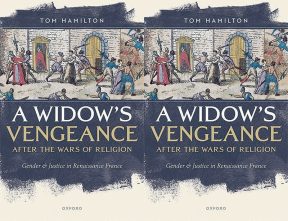
The Historian sat down with Tom Hamilton to discuss his recent work, A Widow’s Vengeance after the Wars of Religion, which uncovers the story of a revealing criminal trial during the French Wars of Religion...
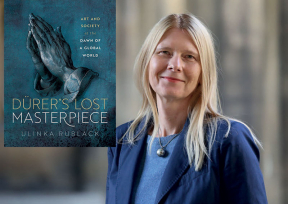
The Historian discusses with Ulinka Rublack her latest book, Dürer’s Lost Masterpiece: Art and Society at the Dawn of a Global World (2023), which takes a fresh look at this major Renaissance artist, telling the story of his life and times, and reassessing some of his best-known works...
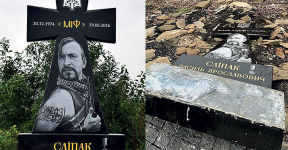
Olha Makliuk outlines the challenges faced by Ukraine as Russia tries to rewrite the narrative of Ukrainian sovereignty. Through a process of historical and cultural appropriation as well as the destruction of monuments, she explores how history has been weaponised by the Putin regime. Finally, she considers how the impact...
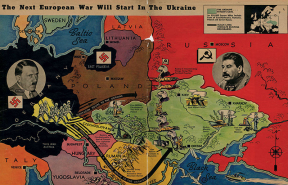
How has the understanding of what Ukraine is and, therefore, its image changed through the centuries? What did the word ‘Ukraine’ mean in the Middle Ages, the early modern times, or in the twentieth century? Even during the last four decades, this image has transformed dramatically, and the first association...
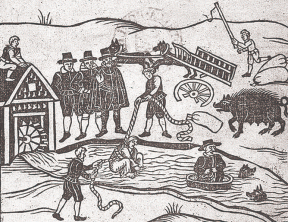
In this article, Dr Jonathan Durrant (Principal Lecturer in History, University of South Wales) argues that we know no more now than we did in the late 1980s about what witchcraft was as men and women of the early sixteenth century understood it. Dr Durrant looks at evidence from Henry...
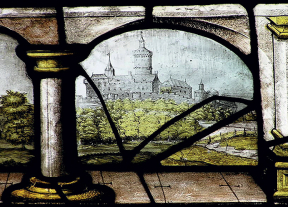
Bad Godesberg tower is the most intact remnant of what was once a castle. Built in 1210 by the Archbishop of Cologne, Dietrich von Moers (circa 1385–1463), Godesberg Castle enjoyed a relatively quiet existence as an archiepiscopal seat. Then, on 31 October 1517, Martin Luther published his Ninety-Five Theses against...
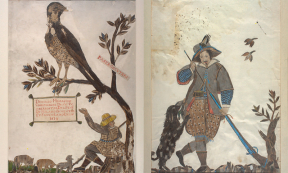
Artworks and objects from the past provide us with a compelling record of human interaction with the natural world. In this article, art historians Carla Benzan and Samuel Shaw explain how they are using collections from galleries and museums to bring environmental history to new audiences and to increase awareness...
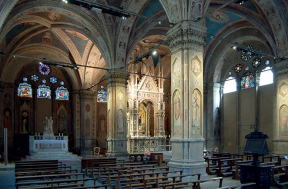
Joanne Allen reveals a fundamental structural and architectural development in Italian churches in the Renaissance era, demonstrating that careful observation of structures and archives can substantially inform our appreciation of all church buildings. In the opening to The Decameron (c. 1350), Boccaccio described how the ten young people who would...
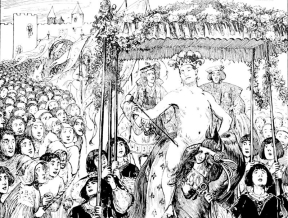
Fairy tale princesses and mysterious castles are just part of the way that historically story tellers have been connected to royalty. In this article some of the most famous story tellers are discussed with their royal patronage and experiences. Hans Christian Andersen couldn’t believe his luck. In 1854, he was...
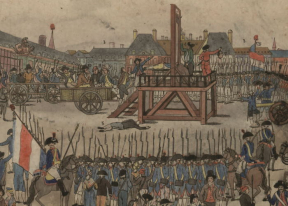
After a revolution to remove the monarchy did the French revolutionaries create another leadership of power over ideals? William Doyle re-evaluates the reputation of the so-called architect of terror during the French Revolutionary years. Two recent books reflect a seemingly endless fascination with the man whose downfall brought the end...
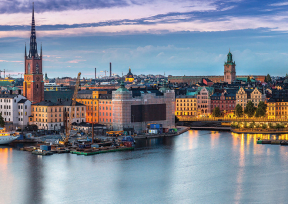
When Désirée Clary – wife of French Marshal Jean-Baptiste Bernadotte – arrived in Stockholm in 1811, she was appalled. It was true that she would eventually become Queen Desideria of Sweden and Norway, her husband having been elected heir-presumptive to the throne the previous year. But she left her new...
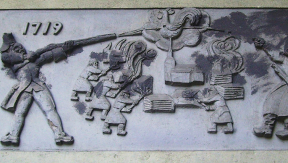
People are sometimes surprised to learn that for much of the seventeenth and early eighteenth century, Sweden was one of Europe’s great powers. The revolution that transformed Swedish government following the death of Karl XII at the end of the Great Northern War is still less widely-known. But though largely...