
Europe
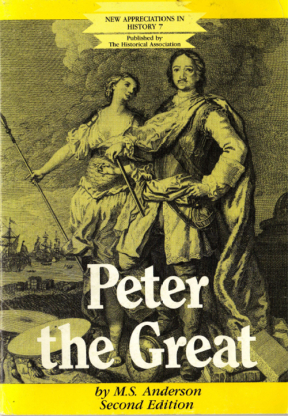
No European ruler except Napoleon I has impressed both contemporise and later historians so profoundly as Peter I of Russia by the originality and the personal character of his achievements. Like Napoleon, Peter appeared to some observers, at least in his later years, as almost more than human. He seemed...
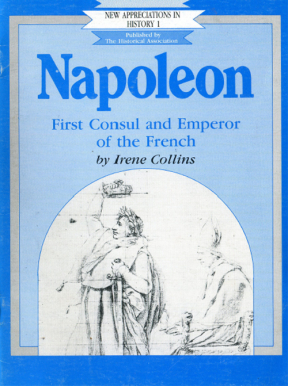
Four years after the battle of Waterloo, Richard Whately publicised a philosophical essay in which he argued that there was no real proof of Napoleon's existence. The deeds attributed to him were either so wondrously good or so amazingly bad that they far outran the evidence available to support them:...
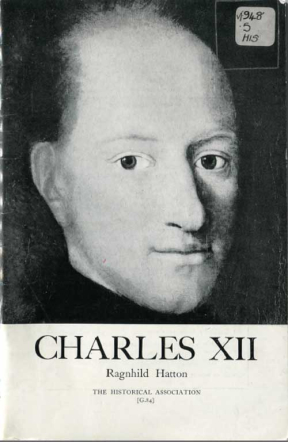
The reputation of Charles XII who became king of Sweden before he was fifteen years old and had the responsibility of absolutist goverment thrust upon him within the next six months - contrary to the plans laid down for him by his father - has tended to attract political rather...
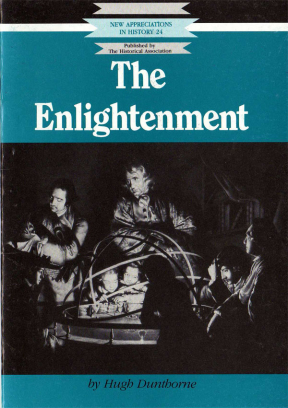
Can a movement as varied and diffuse as the Enlightenment of the eighteenth century be contained within the covers of a short pamphlet? The problem would certainly have appealed to the intellectuals of that time. Generalists rather than specialists, citizens of the whole world of knowledge, they relished the challenge...
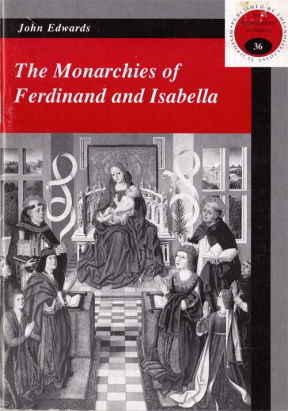
On 12 December 1474, the news reached the Castillian city of Segovia, north-west of Madrid, that Henry IV, king of Castile, had died. After the proper ceremonies had been conducted in memory of the deceased monarch, his sister, Isabella, was proclaimed queen of Castile in that place. There was much...
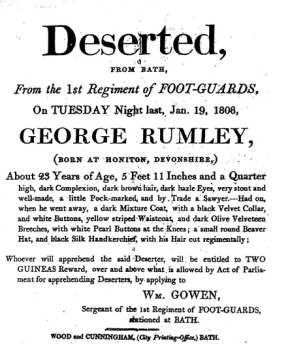
Wellington's Soldiers in the Napoleonic Wars The war with France, which began in 1793, had moved to the Iberian Peninsula by 1808. This year is therefore the two-hundredth anniversary of the commencement of the Peninsular War campaigns. War on the Peninsula demanded huge resources of manpower in order to defeat...

In the 1960s and 1970s, historians and sociologists who were not specialists in the Middle Ages constructed models of pre-industrial crowds and revolt to understand the distinctiveness of modern, post-French Revolutionary, Europe. Foremost among these scholars were George Rudé, a historian of eighteenth century England and France, and Charles Tilly,...
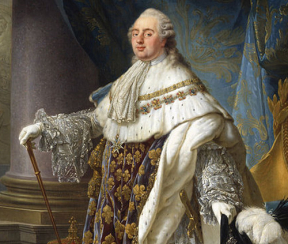
The system of Ancien Régime France was indeed archaic, to the extent that its nominal social structure not only contained remnants of the feudal system, like many European countries at that time, but was largely based on it. The extensive corruption inherent in this same system was such that those...
The Place Stanislas in Nancy has a high reputation. But expectations are far surpassed as one surveys the beautifully proportioned square, with its imposing buildings such as the Hôtel de Ville and the Governor's Palace, its Arc de Triomphe and its magnificent iron work. It is a reminder of how...
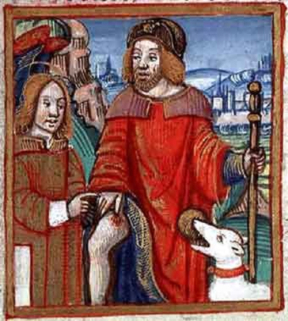
For the art historian, a thorough study of works of art, their creators and the environment in which they were produced, as well as their significance then and now, is a specialised endeavour. This, nevertheless, does not exhaust the presentation of art to contemporaries, least of all in the context...
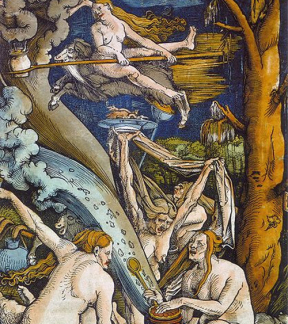
Regional variations in the intensity of European witchhunting existed because the necessary preconditions for panic chain-reaction hunts were only constantly in place in a very small number of regions. More than 35,000 witchcraft executions took place in the Holy Roman Empire where there was a wide acceptance of the cumulative...
All aspects of Hungarian nationalism – with one exception, which I shall consider later – had more or less similar counterparts elsewhere in Europe; but the blending of those elements yielded a unique constellation. Moreover, the ingredients of this mixture proved highly disruptive for central Europe, indeed at times for...
There will be many readers of The Historian whose knowledge of the 16th Century is wide and deep. This article is designed to fill in some of the corners to the map of that warravaged century, and to focus on a man, William of Nassau, who fought the battle of...
R. J. Knecht suggests that the 'Black Legend' may not be quite as unfair to Catherine as her defenders have argued. Few historical figures have aroused as much passionate controversy as Catherine de’ Medici who was queen of France from 1547 until 1559 and several times regent before her death...
On the eve of the 400th anniversary of Philip II’s death James Casey rejects the traditional portrayal of the Spanish ruler as a cruel despot and argues his achievements were more the result of an extraordinary sense of duty fully in tune with the hopes and aspirations of his people....
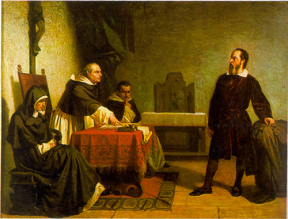
Helen Rawlings reviews the recent literature which has prompted a fundamental reappraisal of the Spanish Inquisition. The Spanish Inquisition — first established in 1478 in Castile under Queen Isabella I and suppressed in 1834 by Queen Isabella II — has left its indelible mark on the whole course of Spain’s...
Graham Darby gives an anniversary account of the later Spanish Armadas, long forgotten, but comparable in size and as threatening to contemporaries as the more famous Armada of 1588. As every schoolboy and schoolgirl should know, the Spanish Armada set sail in 1588: ‘God blew and they were scattered.’ However,...