World

Europe may have been transforming itself in the early modern period but the rest of the world was not standing still. In this section we can learn about the emerging United States, the wealth and power of the Mughal Empire and the economic impact of the slave trade, alongside the cultural destruction and changes it made on the lives of the enslaved. Read more

Sort by: Date (Newest first) | Title A-Z
Show: All | Articles | Podcasts | Multipage Articles
  • The changing convict experience: forced migration to Australia

    Article

    Edward Washington explores the story of William Noah who was sentenced to death for burglary in 1797 at the age of 43. He, and two others, were found guilty of breaking and entering the dwelling-house of Cuthbert Hilton, on the night of the 13 February. From Newgate Prison he was...

    Click to view
  • What Have Historians Been Arguing About... migration and empire

    Article

    In autumn 2019, Kara Walker’s monumental sculpture, Fons Americanus, went on display in the Tate Modern, offering a poignant, troubling challenge to national commemoration. Walker depicts not the lingering vestiges of imperial glory, but sharks, tears, and haunted memories. She brings history into conversation with its contemporary legacies and engages...

    Click to view
  • What have historians been arguing about... decolonisation and the British Empire?

    Article

    Decolonisation is a contested term. When first used in 1952, it referred to a political event: a colony gaining independence; it has since come to describe a process. When, where and why this process began, however, and whether it has ended, are all fiercely debated. Is it about new flags...

    Click to view
  • The Scottish dream of Darien

    Article

    John McKendrick considers how Scotland’s wish to create a trading empire was dashed and made the Act of Union of 1707 almost inevitable.

    Click to view
  • Out and about in Zanzibar

    Article

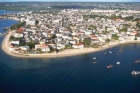
    Joe Wilkinson takes us on a tour of the island of Zanzibar, where the slave trade continued long after the British abolished it. Mention Zanzibar and most people will think of an Indian Ocean paradise, perfect for honeymooners, relaxing on the popular pristine white north-eastern beaches of Bwejuu and Paje,...

    Click to view
  • The Voyages of John and Sebastian Cabot

    Article

    Historians have debated the voyages of John and Sebastian Cabot who first discovered North America under the reign of Henry VII. The primary question was who [John or Sebastian] was responsible for the successful discovery. A 1516 account stated Sebastian Cabot sailed from Bristol  to Cathay, in the service of...

    Click to view
  • Ferninando Gorges and New England

    Article

    Sir Ferdinando Gorges (July 1565 - May 24, 1647), by some considered the "Father of English Colonization in North America", was an early English colonial entrepreneur and founder of the Province of Maine in 1622, although Gorges himself never set foot in the New World.  Sir Ferdinando Gorges was born...

    Click to view
  • Bristol and the Slave Trade

    Article

    Captain Thomas Wyndham of Marshfield Park in Somerset was on voyage to Barbary where he sailed from Kingroad, near Bristol, with three ships full of goods and slaves thus beginning the association of African Trade and Bristol. In the late sixteenth and seventeenth centuries, Bristol was not a place of...

    Click to view
  • Podcast Series: The British Empire 1600-1800

    Multipage Article

    An HA Podcasted History of the early British Empire featuring Professor Trevor Burnard of the University of Warwick, Professor Stephen Conway of University College London, Dr Jon Wilson of King's College London, Professor Gad Heuman of the University of Warwick.

    Click to view
  • Podcast Series: Thomas Paine

    Multipage Article

    In this set of podcasts Emeritus Professor W. A. Speck of the University of Leeds looks at the life and ideas of Thomas Paine.

    Click to view
  • Ideas on the Shape, Size and Movements of the Earth - Pamphlet

    Article

    This classic pamphlet takes you through some of the key ideas on the shape, size and movements of the Earth as they changed over time from classical cosmology to the work of Galileo and Isaac Newton.

    Click to view
  • The Darien Scheme - Pamphlet

    Article

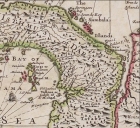
    The colonisation project that became known as the Darien Scheme or Darien Disaster was an unsuccessful attempt by the Kingdom of Scotland to become a world trading nation by establishing a colony called "Caledonia" on the Isthmus of Panama on the Gulf of Darién in the late 1690s. This pamphlet...

    Click to view
  • Podcast Series: The History of Science

    Multipage Article

    In this series of podcasts we take a look at the history of the Royal Society and the influence it has had on the history and development of science. This series features: Keith Moore, Head of Libraries and Archives at the Royal Society, Dr Jordan Goodman, Dr Patricia Fara of...

    Click to view
  • The effect of the loss of the American Colonies upon British Policy

    Article

    (1) Problems of an Empire in ruinsTwo weeks after Yorktown, but before the news of that disaster had reached England, George III wrote to Lord North that "The dye is now cast whether this shall be a great Empire or the least dignified of European states." England had not fought...

    Click to view
  • Podcast Series: The Mughal Empire

    Multipage Article

    In this set of podcasts Ushma Williams looks at the rise, fall and legacy of the Mughal Empire.

    Click to view
  • The Great Powers in the Pacific

    Article

    This pamphlet covers a very large period of history in a very important region with great detail and focus. Themes that are covered include the transition of power and dominance in the pacific region, the conflicts that frequently arose in the struggle for pacific dominance throughout the centuries, as well...

    Click to view
  • Bristol and America 1480-1631

    Article

    This pamphlet addresses the relationship between Bristol and America, charting the rising and waning interest the city and its merchants had in discovering new lands and profiting from them, and the success or more often the failure of these voyages. It provides an interesting argument which may be seen to...

    Click to view
  • Empires of Gold

    Article

    In 1660, the Company of Royal Adventurers Trading to Africa was established under the leadership of Charles II's brother James, the Duke of York. Founded as a slaving company, the Royal African Company, as it became known, also traded in gold. African gold was mined in the interior before being...

    Click to view
  • The Undergrowth of History

    Article

    We can do all kinds of things with the past - examine it analytically, or question whether it ever existed, or churn it up inside ourselves until it turns into personal experience. We can dream it as we lounge amidst a heap of ruins, or petrify it into a museum;...

    Click to view
  • Diagrams in History

    Article

    One of the gifts of the social sciences to history is the use of expository diagrams; but attention is rarely given to the history of diagrams. Maps - schematized representations of locations in spatial relation to one another - can be dated back to Babylonia in the late third millennium...

    Click to view