International Relations

Relations across the UK, Europe and globally are frequently changing, and have done so across our history. How these relations are recorded, monitored and treated are discussed in the collection of articles and podcasts here. The very concept of international relations is explored as are when boundaries and discussions between states and groups started to matter. What are the procedures, protocols and outcomes of a world according to the history of international relations are all under scrutiny?

Sort by: Date (Newest first) | Title A-Z
Show: All | Articles | Podcasts | Multipage Articles
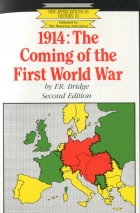
  • 1914: The Coming of the First World War

    Article

    This pamphlet argues that the outbreak of the First World War represented not so much the culmination of a long process started by Bismarck and his successors, as the relatively sudden breakdown of a system that had in fact preserved the peace and contained the dangerous Eastern Question for over...

    Click to view
  • A probable silk heirloom from Central Asia...

    Article

    This article explores precious fragments of silk, manufactured in the Byzantine Empire and Central Asia, discovered in archaeological excavations in Dublin. Dublin, situated on the east coast of Ireland, grew out of a fortified riverside camp (longphort) for overwintering marauding Vikings or ‘northmen’, who were plundering wealthy ecclesiastical establishments from the late eighth...

    Click to view
  • Alfred versus the Viking Great Army

    Article

    Stunning archaeological discoveries have shed new light on the reign of Alfred the Great and his struggles with the Vikings, revealing the might of the Viking armies and the international connections of his kingdom.

    Click to view
  • American Vikings past and present: untangling myth from reality

    Article

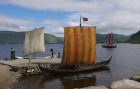
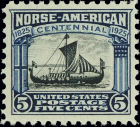
    There is now compelling evidence that Norse people – popularly known as Vikings – had some interaction with the First Peoples of North America. Martyn Whittock looks at how the appeal of a Viking legend has combined with archaeological discoveries to create a powerful attachment in the North American imagination...

    Click to view
  • Ancient Athenian inscriptions in public and private UK collections

    Article

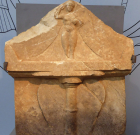
    Peter Liddel introduces us to a rich source of historical information and encourages us to make some purposeful visits to museums. From the seventeenth to the mid nineteenth century, travellers from the UK explored the Mediterranean lands of ancient civilisations in search of trophies that demonstrated the achievements of the classical world. Highly...

    Click to view
  • Anti-Americanism in Britain during the Second World War

    Article

    The Second World War saw the development of significant anti-Americanism in Britain. This article locates the centre of wartime anti-Americanism in the politics of Conservative imperialists, who believed the USA was trying to deliberately dismantle the British Empire in order to fulfil its own imperial ambitions. The Second World War...

    Click to view
  • Arctic aspirations: Britain and Icelandic independence, 1917–18

    Article

    As it sought independence, Iceland gained a new significance for Britain during the latter stages of the First World War, writes Ben Markham.  At the turn of the twentieth century, Iceland was not an independent country. Isolated in the North Atlantic Ocean, it was nonetheless considered an integral part of...

    Click to view
  • Berlin and the Berlin Wall: on-demand short course

    Multipage Article

    The Berlin Wall became a symbol of a time in history, and a physical defining point in an otherwise covert series of battles. To study and explore the Berlin Wall is to explore how the Cold War manifested itself in Central Europe and the impact it had on one nation...

    Click to view
  • Bertrand Russell's Role in the Cuban Missile Crisis

    Article

    'An attack on the United States with 10,000 megatons would lead to the death of essentially all of the American people and to the destruction of the nation.’ ‘In 1960 President Kennedy mentioned 30,000 megatons as the size of the world’s stockpile of nuclear weapons.’ In the autumn of 1962...

    Click to view
  • Bismarck after Fifty Years

    Article

    This notable essay by Dr. Erich Eyck, the most distinguished Bismarckian scholar of the mid-twentieth century was written on the invitation of the HA to commemorate the 50th anniversary of Bismark's death. Dr. Eyck, a German Liberal of the school of Ludwig Bamberger, found his way to England in the...

    Click to view
  • Blood and Iron: the violent birth of modern Germany

    Article

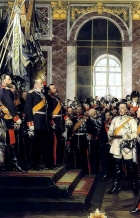
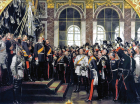
    Katja Hoyer discusses Germany’s unification 150 years ago: an event that cast a long shadow over the troubled young nation and would alter the course of European and world history. Shivering in the cold winter air that drifted in through the windows of his temporary residence in Paris, Wilhelm I, King...

    Click to view
  • Bonapartism after Napoleon III: the Prince Imperial and Eugene Loudun

    Article

    Emperor Napoleon III of France was deposed in 1870 and then died three years later. His son, known as the Prince Imperial, lived in exile in south-east England. There he and his supporters kept alive ambitions for a triumphant return of the Empire. In this article, Ian Sygrave assesses the...

    Click to view
  • Brazil and the two World Wars

    Article

    Brazil and the outbreak of the First World War At the beginning of the twentieth century Brazil was on the periphery of a world order that revolved around decisions made by the great European powers. Although it was the largest and most populated nation in South America, Brazil possessed an...

    Click to view
  • Britain and Brittany: contact, myth and history in the early Middle Ages

    Article

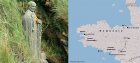
    Fiona Edmonds evidences the enduring links between Brittany and Britain throughout the early Middle Ages. Every year many thousands of British holidaymakers travel to Brittany in search of beaches, bisque and bonhomie. As they board the ferry, they may notice that they are travelling from one Bretagne to another. The names...

    Click to view
  • Britain and the Formation of NATO

    Article

    Carl Watts outlines the shift in British security policy and examines the role played by the Foreign Office during the post-War period. April 1999 marks the 50th anniversary of the signature of the North Atlantic Treaty, which came into effect in August 1949. The Cold War is over, but NATO...

    Click to view
  • Crusade in Crisis: the Siege and Battle of Antioch, 1097–98

    Article

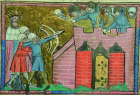
    On 28 June 1098, the forces of the First Crusade marched out from the great north Syrian city of Antioch to do battle with Karbugha, the Muslim ruler of Mosul. The odds were not in their favour: not only was the Muslim army vastly superior in size, but the crusaders had...

    Click to view
  • Cyprus: another Middle East issue

    Article

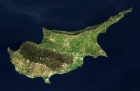
    Although Cyprus, the third largest Mediterranean island, remained nominally under Turkish suzerainty until 1914, the British were established there after the 1878 Congress of Berlin. The idea then was that, from this base, Britain could protect Turkey against threats from Russia, while ensuring that the Turks reformed their treatment of...

    Click to view
  • Czech Uranium and Stalin's Bomb

    Article

    Z.A.B. Zeman uncovers a fateful link between Czechoslovakia’s brief monopoly of uranium in Europe and the country’s subordination to the USSR. The great uranium rush started in 1943 and lasted for about seven years. Unlike the gold rushes of the past, uranium did not promise untold riches to individuals but...

    Click to view
  • Decolonising the Partition of British India, 1947

    Article

    Amrita Shodhan explores the complex legacy of Partition in India and the difficulties faced by historians in unpicking these narratives. She re-evaluates the events of August 1947 through personal stories and popular memories. The Partition that we have inherited from 1947 has a complicated lineage. It was born out of...

    Click to view
  • Do historical anniversaries matter? Case study: Arnhem 1944

    Article

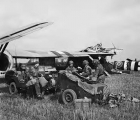
    2019 has been quite a year for historical anniversaries – Peterloo 200, D-Day 75, Monte Cassino 75, Women MPs 100 years, Apollo Moon Landings 50 years and all following on the tail of four years of the First World War centenary – and that is not counting the anniversaries that...

    Click to view