Britain & Ireland

Women and social history can be overlooked themes in periods where records tended to focus on money, religion and Kings. While those latter themes are covered in this section so are features on individual women, their relationships with power and how they were able to influence politics and the people around them. Social history is also addressed through the stories of Hermits, soldiers, tax records and revolting peasantry with nobles. Read more

Sort by: Date (Newest first) | Title A-Z
Show: All | Articles | Podcasts | Multipage Articles
  • Podcast: Why Medieval History Matters?

    Article

    Why Medieval History Matters, Professor Anne Curry, President of the HA ‘I don't mind there being some medievalists around for ornamental purposes, but there is no reason for the state to pay for them'. So, allegedly, said Charles Clarke when Education Secretary in 2003. In fact, medieval history has never...

    Click to view
  • Queenship in Medieval England: A Changing Dynamic?

    Article

    In the winter of 1235-6, Eleanor, the 12 year old daughter of Count Raymond-Berengar V of Provence and Beatrice of Savoy, left her native homeland. She travelled to England to marry King Henry III, a man 28 years her senior whom she had never met. The bride and her entourage...

    Click to view
  • Recorded webinar: The People of 1381

    Article

    This lecture with Adrian Bell, Helen Lacey and Helen Killick introduces key findings of the AHRC-funded project The People of 1381. Which people and social groups were involved in England’s biggest pre-civil war revolt? How much can we find out about their lives: where did they come from, what actions...

    Click to view
  • Richard III and the Princes in the Tower: update

    Article

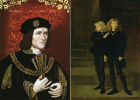
    Richard III is one of the most famous kings of England, as much for his Shakespearean mythology as for the reality of his reign. Here, the different accounts of him are explored to shed light on some of his actions and legacy. The fascination evoked by Richard III and the...

    Click to view
  • Robert Grosseteste (c. 1170-1253)

    Article

    Jack Cunningham considers a medieval philosopher, the significance of whose ideas has grown in importance through the centuries. An appreciation of Grosseteste the thinker has not always been at its appropriate level during the almost 800 years since his death. If historians have paid attention to the great man this ...

    Click to view
  • Saint Robert and the Deer

    Article

    It is almost a commonplace that there is an affinity between a holy man and the creatures of the wild. The archetype is St. Francis of Assisi but the phenomenon was well marked both before and after his time. I would like to consider briefly an episode in the life...

    Click to view
  • Saxons, Normans and Victorians

    Article

    When Queen Victoria died in 1901, the Annual Register remarked that the feeling of forlorn-ness which swept the country had no parallel since the death of King Alfred. The men of the new century were driven to seek a Saxon parallel. So too were men at the beginning of the...

    Click to view
  • Scots Abroad in the Fifteenth Century

    Article

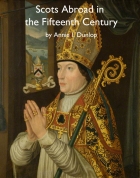
    (Historical Association Pamphlet, No. 124, 1942) Dunlop's research into the occupations and attitudes of Scots abroad during the 15th century uncovers some surprising revelations about all members of the Scottish ex-pat society. She particularly notes the ‘scurrilous' opinions of the French regarding Scotsmen's behaviour. While Scottish diplomatists and envoys tended...

    Click to view
  • Smithfield's Bartholomew Fair

    Article

    On the north-western side of the City of London, directly in front of St Bartholomew's Hospital near the ancient church of St Bartholomew the Great, there once lay a ‘smooth field', now known as Smithfield. This open space of around ten acres had a long and turbulent history. In medieval...

    Click to view
  • St Peter’s-ad-murum, Bradwell-juxta-Mare

    Article

    Marie Paterson discovered this historical and spiritual structure many years ago and it continues to affect her. In Essex, on the northern shore of the Dengie Hundred, overlooking the mouth of the Blackwater estuary, proudly stands the lonely Saxon chapel of St Peter’s-on-the-Wall. Erected on the site of the Roman...

    Click to view
  • St Theobald of Provins and evidence of charcoal-burning

    Article

    Trevor James has been researching the ‘saintly landscape’ for over 40 years. Here is a glimpse of what he has identified.

    Click to view
  • The Anglo-Saxon Kingdoms and Europe

    Article

    The riches of surviving Anglo-Saxon manuscripts showcased in a fabulous new exhibition at the British Library emphasises the essential interconnections between England and the Continent.

    Click to view
  • The Coronation of King Charles III

    Article

    2023 will see the first coronation of a British monarch for 70 years. Only those now in their 70s or above will remember the last one. The UK is the only country in Europe still to carry out a coronation, a ceremony that has its roots in traditions over a...

    Click to view
  • The English Captivity of James I, King of Scots

    Article

    This booklet tells the story of James the first, with the events leading up to his capture and detailing the eighteen years spent in it. Balfour-Melville puts into writing the colourful, if not tragic, life of the capture and mere 13 year reign James.  Brought alive in words, a King...

    Click to view
  • The First Crusade, 1095–99

    Article

    As Christianity had spread across Europe, Islam had spread across the Middle East. At the end of the eleventh century the relationship between the Muslim leader of Jerusalem and the Christian communities and travellers to the city fractured. Along with other key relationships across Europe, the Middle East and around...

    Click to view
  • The Great Charter

    Article

    The following introduction to and translation of Magna Carta was made for the use of my pupils and is here published in response to a suggestion that it may be of use to others. The Charter bristles with technical legal terms and its Latin is often ambiguous since the language...

    Click to view
  • The Great Revolt of 1381

    Article

    The Great Revolt of 1381 began in South-West Essex sometime between late May and 2 June: contemporary narratives and record sources differ irreconcilably about the dates. It all started with the arrival of a royal tax commissioner, John Bampton, at Brentwood inBarnstable Hundred. He came to inquire into the evasion...

    Click to view
  • The Insanity of Henry VI

    Article

    Carole Rawcliffe examines medieval attitudes to madness and the case of Henry VI. Mad kings are all the rage at present. The remarkable success, first of Alan Bennett’s stage play, The Madness of George III, and then of the widely acclaimed film version, has prompted a spate of newspaper articles...

    Click to view
  • The Investiture Disputes

    Article

    Historical labels are dictated by a wayward fashion; and the name which is still most commonly associated with the first struggle of Empire and Papacy (1076-1122). "The Investiture Disputes," is neither lucid or appropriate. It has been commoner for historians to name the great wars of history after the issues...

    Click to view
  • The Invisible Building: St John's in Bridgend

    Article

    Molly Cook, winner of this year's Historical Association Young Historian Local History Award, unravels the mystery of a local icon and tells us about her success in inspiring Bridgend to engage with its fascinating past. Having worked on previous projects relating to the history of Bridgend and its place in...

    Click to view