Britain & Ireland

Women and social history can be overlooked themes in periods where records tended to focus on money, religion and Kings. While those latter themes are covered in this section so are features on individual women, their relationships with power and how they were able to influence politics and the people around them. Social history is also addressed through the stories of Hermits, soldiers, tax records and revolting peasantry with nobles. Read more

Sort by: Date (Newest first) | Title A-Z
Show: All | Articles | Podcasts | Multipage Articles
  • The Jews of Medieval England

    Article

    The diversity of the history of the British Isles continues to be a subject of discussion in academic circles and in popular culture. Some communities have been around for hundreds of years, while others have been part of our societies and then disappeared or been eroded. One of the communities...

    Click to view
  • The Memory of a Saint: Managing the legacy of St Bernard of Clairvaux

    Article

    When Bernard of Clairvaux died in 1153, the Cistercian Order was faced with a problem. The self-proclaimed ‘chimera of his age’ had enjoyed an unusual and varied monastic career, as abbot of the Cistercian monastery of Clairvaux and papal confidante, making him remarkably well-known for a monk. At the funeral the...

    Click to view
  • The Nation of the Scots and the Declaration of Arbroath

    Article

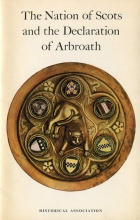
    This pamphlet seeks to chart the progress of the Scottish struggle for independence after 1291 by considering the changing nature of the Scottish resistance. The primary sources are exiguous when compared to those bearing upon the English attempt at subjugation, and the interpretation offered is at best tentative: that initially...

    Click to view
  • The Origins of Parliament

    Article

    He who would seek the origins of parliament cannot proceed without knowing that this is, and this has been, a matter much controverted. English politics have very often been conducted in terms of what has passed for history, not least because they have so frequently revolved around the rights and...

    Click to view
  • The Scottish Parliament by Robert S. Rait

    Article

    This short pamphlet by the former Historiographer Royal for Scotland, Robert S. Rait, provides an introduction to the Scottish Parliament from its early origins to the Acts of Union of 1707.

    Click to view
  • The Thirteenth Century Industrial Scene in England

    Article

    This essay forms part of a collection of three essays on Thirteenth Century England by Professor R. F. Treharne (President of the HA 1958-61). These were originally delivered as lectures and were later edited for publication by Dr C. H. Knowles. This essay looks at the industrial scene in England during...

    Click to view
  • The Thirteenth Century Political Scene in England

    Article

    This essay forms part of a collection of three essays on Thirteenth Century England by Professor R. F. Treharne (President of the HA 1958-61). These were originally delivered as lectures and were later edited for publication by Dr C. H. Knowles. This essay looks at the political scene in England during...

    Click to view
  • The Thirteenth Century Rural Scene in England

    Article

    This essay forms part of a collection of three essays on Thirteenth Century England by Professor R. F. Treharne (President of the HA 1958-61). These were originally delivered as lectures and were later edited for publication by Dr C. H. Knowles. This essay looks at the rural scene in England during...

    Click to view
  • The Tudor monarchy in Ireland

    Article

    Sean Connolly illustrates how Tudor dreams of a reformed Ireland were not realised – instead tensions between Irish magnates and the English Crown often erupted into violence.

    Click to view
  • The Undergrowth of History

    Article

    We can do all kinds of things with the past - examine it analytically, or question whether it ever existed, or churn it up inside ourselves until it turns into personal experience. We can dream it as we lounge amidst a heap of ruins, or petrify it into a museum;...

    Click to view
  • The Venerable Bede: recent research

    Article

    The eighth-century monk is renowned as the ‘Father of English History’, but recent scholarship has demonstrated how important he was as a scientist and theologian and how his writings on the Bible can illuminate his famous history.

    Click to view
  • The Vikings in Britain

    Article

    Professor Henry Loyn provides an update on recent studies of the Viking Age. Interest in the activities of the Scandinavian people in Britain during the Viking Age, c 800-1100 A.D., has been strong in the last half-century or so, and it is good to pause and assess contributions to the...

    Click to view
  • The archer's stake and the battle of Agincourt

    Article

    Our perspective on how archers performed in battle is enhanced byMark Hinsley's research into their use of protective stakes. On the approach to Agincourt in 1415 a small skirmish took place at Corbie, on the Somme. A force of French men-at-arms sallied out from the town and cut up some...

    Click to view
  • The making of Magna Carta

    Article

    Magna Carta provided a commentary on the ills of the realm in the time of King John. Sophie Ambler looks at what grievances were addressed in the Charter, how the Charter was made, and what the Charter tells us about King John himself.  The world from which Magna Carta came...

    Click to view
  • The soldier in Later Medieval England

    Article

    Traditionally, the Middle Ages have been portrayed as the ‘Feudal Age', when men were given land in return for performance of unpaid military service. Whilst this may have formed the basis of the English military system in the eleventh and twelfth centuries, it was most certainly not the way armies...

    Click to view
  • The strange death of King Harold II: Propaganda and the problem of legitimacy in the aftermath of the Battle of Hastings

    Article

    How did King Harold II die at the Battle of Hastings? The question is simple enough and the answer is apparently well known. Harold was killed by an arrow which struck him in the eye. His death is depicted clearly on the Bayeux Tapestry in one of its most famous...

    Click to view
  • Thomas Parkinson: the Hermit of Thirsk

    Article

    About the year 1430 the citizens of Thirsk decided that their ancient parish church of St. Mary was old-fashioned and unworthy of the developing town, so they decided to build a new one. As a result, over the next eighty years or so, they produced what Pevsner described as ‘without...

    Click to view
  • Towards Reform in 1809

    Article

    Two hundred years ago it must have seemed to some as if the time for political and economic reform in Britain had arrived. A number of the necessary conditions appeared to be in place: recent examples from America and France showing how readily and rapidly established systems could be overturned...

    Click to view
  • Update: The Princes in the Tower

    Article

    A subject of endless fascination for the historian, the story of the ‘princes in the Tower’ hit the news again recently, following the discovery of Richard III’s body in Leicester and Philippa Langley’s ensuing quest to show that the much-maligned king was not responsible for the princes’ deaths. In this...

    Click to view
  • Virtual Branch Recording: The Women of the Anarchy

    Article

    In 1135 Stephen of Blois usurped the throne, stealing it from his cousin Empress Matilda and sparking a nineteen-year civil war that would become known as the Anarchy, one of the bloodiest periods in English history. On the one side is Empress Matilda. On the other side is her cousin,...

    Click to view