Britain & Ireland

Women and social history can be overlooked themes in periods where records tended to focus on money, religion and Kings. While those latter themes are covered in this section so are features on individual women, their relationships with power and how they were able to influence politics and the people around them. Social history is also addressed through the stories of Hermits, soldiers, tax records and revolting peasantry with nobles. Read more

Sort by: Date (Newest first) | Title A-Z
Show: All | Articles | Podcasts | Multipage Articles
  • The Vikings in Britain

    Article

    Professor Henry Loyn provides an update on recent studies of the Viking Age. Interest in the activities of the Scandinavian people in Britain during the Viking Age, c 800-1100 A.D., has been strong in the last half-century or so, and it is good to pause and assess contributions to the...

    Click to view
  • The archer's stake and the battle of Agincourt

    Article

    Our perspective on how archers performed in battle is enhanced byMark Hinsley's research into their use of protective stakes. On the approach to Agincourt in 1415 a small skirmish took place at Corbie, on the Somme. A force of French men-at-arms sallied out from the town and cut up some...

    Click to view
  • The making of Magna Carta

    Article

    Magna Carta provided a commentary on the ills of the realm in the time of King John. Sophie Ambler looks at what grievances were addressed in the Charter, how the Charter was made, and what the Charter tells us about King John himself.  The world from which Magna Carta came...

    Click to view
  • The soldier in Later Medieval England

    Article

    Traditionally, the Middle Ages have been portrayed as the ‘Feudal Age', when men were given land in return for performance of unpaid military service. Whilst this may have formed the basis of the English military system in the eleventh and twelfth centuries, it was most certainly not the way armies...

    Click to view
  • The strange death of King Harold II: Propaganda and the problem of legitimacy in the aftermath of the Battle of Hastings

    Article

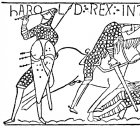
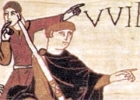
    How did King Harold II die at the Battle of Hastings? The question is simple enough and the answer is apparently well known. Harold was killed by an arrow which struck him in the eye. His death is depicted clearly on the Bayeux Tapestry in one of its most famous...

    Click to view
  • Theodore of Tarsus, Archbishop of Canterbury (602–690)

    Article

    The remarkable career of Theodore of Tarsus, Archbishop of Canterbury, shows how the political and religious turmoil in the seventh-century eastern Mediterranean had a direct impact upon the English kingdoms. Asked to name the most significant archbishops of Canterbury, it is likely that few would name the seventh-century monk, Theodore of...

    Click to view
  • Thomas Parkinson: the Hermit of Thirsk

    Article

    About the year 1430 the citizens of Thirsk decided that their ancient parish church of St. Mary was old-fashioned and unworthy of the developing town, so they decided to build a new one. As a result, over the next eighty years or so, they produced what Pevsner described as ‘without...

    Click to view
  • Towards Reform in 1809

    Article

    Two hundred years ago it must have seemed to some as if the time for political and economic reform in Britain had arrived. A number of the necessary conditions appeared to be in place: recent examples from America and France showing how readily and rapidly established systems could be overturned...

    Click to view
  • Update: The Princes in the Tower

    Article

    A subject of endless fascination for the historian, the story of the ‘princes in the Tower’ hit the news again recently, following the discovery of Richard III’s body in Leicester and Philippa Langley’s ensuing quest to show that the much-maligned king was not responsible for the princes’ deaths. In this...

    Click to view
  • Using financial records to gain insights into medieval society

    Article

    While conceding that medieval accounting and tax records can appear to be dull at first sight, Alisdair Dobie demonstrates here how they can provide fascinating insights into many aspects of life at the time. Not only do these records teach historians about economic and financial affairs: they also enhance our...

    Click to view
  • Virtual Branch Recording: The First King of England

    Article

    Æthelstan was the early medieval king whose territorial conquests and shrewd statesmanship united the peoples, languages, and cultures that would come to be known as the 'Kingdom of the English.' In this panoramic talk, David Woodman draws on his research and recent book to create a portrait of this immensely...

    Click to view
  • Virtual Branch Recording: The Women of the Anarchy

    Article

    In 1135 Stephen of Blois usurped the throne, stealing it from his cousin Empress Matilda and sparking a nineteen-year civil war that would become known as the Anarchy, one of the bloodiest periods in English history. On the one side is Empress Matilda. On the other side is her cousin,...

    Click to view
  • Was Richard II Mad? An evening with Terry Jones

    Article

    On 19th June Terry Jones, 'Python', historian, broadcaster, actor, director and comedian called King Richard II a victim of spin at the annual Historical Association/English Association lecture at the Bishopsgate Institute. Here he sets out to rescue his reputation and lift the lid on the turbulent world of 14th century...

    Click to view
  • Welsh archers at Agincourt: myth and reality

    Article

    Adam Chapman debates the evidence for a Welsh presence among Henry V’s highly-successful force of archers at Agincourt in 1415. Michael Drayton, in his poem of 1627, The Bataille of Agincourt, described the Welsh presence in Henry V's army: ‘who no lesse honour ow'd To their own king, nor yet...

    Click to view
  • William the First and the Sussex Rapes

    Article

    During his reign, and in particular in the five years after the battle of Hastings, William I carried out the most thorough reallocation of land in England ever to take place in so short a period of time; the results were summarized in Domesday Book in 1086.That great record shows...

    Click to view
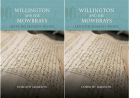
  • Willington and the Mowbrays: After the Peasants’ Revolt

    Article

    Willington and the Mowbrays: After the Peasants’ Revolt, Dorothy Jamieson, Bedford Historical Record Society Vol 95, Boydell Press, 2019, 241p, £25-00, ISSN 0067-4826. At one level this scholarly and meticulous study introduces us to the Willington neighbourhood in Bedfordshire. Based on Dorothy Jamieson’s careful transcription of its manorial court rolls,...

    Click to view
  • Women in Late Medieval Bristol

    Article

    During the fourteenth and fifteenth centuries Bristol was one of England's greatest towns, with a population of perhaps 100,000 after the Black Death of 1348. Its status was recognised in 1373, with its creation as the realm's first provincial urban county, but only in 1542, with the creation of the...

    Click to view
  • Woodland in the East Staffordshire landscape

    Article

    Richard Stone explains that the natural landscape can be a resource for anyone exploring local topography. The idea for researching this topic came while reading Oliver Rackham’s excellent Trees and Woodland in the British Landscape. Calculations based on woodland recorded in Domesday Book revealed my home county of Staffordshire, with...

    Click to view
  • Æthelflæd, Lady of the Mercians, 918-2018

    Article

    Many fascinating individuals appear in the British Library’s Anglo-Saxon Kingdoms exhibition – Bede, Alfred, Canute, Emma, William the Conqueror – but one deserves to be much better known, especially in this her anniversary year: one of the most important women in British history, hers is a classic case of the...

    Click to view
  • ‘A little bird told me’: spies and espionage in the early medieval world

    Article

    Spies were a common feature of political, diplomatic and courtly life in the period of early medieval Europe. In this article, Jenny Benham explores some interesting contemporary representations of spies, in both literature and art. These stories and images reveal key features of the culture and practices surrounding these so-called...

    Click to view