Britain & Ireland

What was it about industrialisation that led to the emergence of a woman’s movement in Victorian Britain? Why do we see so many people fighting for so many rights and liberties in this period and what are the origins of some of the issues we still campaign on today? This section includes our major series on Social and Political Change in the UK from 1800 to the present day. There are also articles and podcasts on the often violent relationship between England and Ireland during this period and England’s changing relationship with Scotland and Wales. Read more

Sort by: Date (Newest first) | Title A-Z
  • Mapping a disability history perspective onto the history of the British Empire

    Article

    Disabled peoples could be found across the British Empire; at the same time, the process of colonisation could create forms of disability, while the concept of ‘disability’ became embedded in discourses of race and gender. In this article, Esme Cleall demonstrates how thinking about disability is essential to understanding the...

    Click to view
  • Real lives: important lessons from the childhood experiences of Harry Drabble

    Article

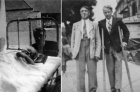
    Helen Parker-Drabble shows how the experiences of her father, Harry Drabble, who was hospitalised for bovine tuberculosis as a child, remain fiercely relevant for families, medical practitioners and policymakers in twenty-first century Britain...

    Click to view
  • Out and about: The Witney Blanket Mills

    Article

    In this account of the history of blanket weaving in Witney (West Oxfordshire), Young Historian essay prize-winner Isabella Duncan reflects on the importance of local history for better understanding our place in the present...

    Click to view
  • Doing history: Exploring behind the scenes in the corridors of power

    Article

    As the official repository for records of government of England, Wales and the UK, The National Archives at Kew offers so many opportunities for revelationary research. In this article, Steve Illingworth shows how documents in this treasure trove provide new insights on activities and debates behind closed doors...

    Click to view
  • Jeeves and the British Empire

    Article

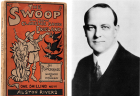
    The writer P.G. Wodehouse is best remembered for his comic portrayals of the exploits of wealthy, young ‘men about town’ during the interwar years, but his writing often contained a multi-layered commentary on British society and politics, the extent of which has not yet been fully appreciated. In this article,...

    Click to view
  • Update: Disability history

    Article

    Expansion into new periods and places, new revelations of human diversity and difference, and a rethink of the tools we use to recover the past – disability history is not just thriving but is also exciting, as Daniel Blackie and Alexia Moncrieff demonstrate in their update on the state of...

    Click to view
  • Relief and resistance in Imre Kiralfy’s siege of Peking (1901)

    Article

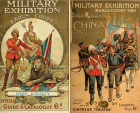
    In 1901, at the height of empire, public shock at the vulnerability of British colonial interests was accompanied by public appetite for spectacular re-enactments of British battlefield victories. Robert Brown shows how one performance of the ‘Relief of the Legations’ at the Military Exhibition in Earl’s Court, London, was reshaped...

    Click to view
  • ‘I am your most troublesome pauper’: disability and the New Poor Law

    Article

    In nineteenth-century England and Wales, the New Poor Law was the state’s solution for those who wouldn’t – as well as those who couldn’t – work. Even for disabled paupers, the line between the two wasn’t always clear cut. In this article, Carol Beardmore shows how those with physical disabilities...

    Click to view
  • Webinar series: The Forgotten Generations – Black British experience in the RAF from 1918

    30th June 2026

    What does this series cover? This series covers the sometimes hidden and controversial history of how the RAF has recruited and treated its black service personnel over time, particularly from the British Caribbean from 1918 onwards. Using newly researched evidence from surviving black RAF veterans of the West Midlands it...

    Click to view
  • Losing sight of the bigger picture: public policy and the visual arts

    Article

    From the 1940s to the late twentieth century, the visual arts in England were promoted and encouraged in a variety of ways by politicians and other policymakers, at both national and local level. Recent decades have seen a marginalisation of the arts, particularly in education. In this article Pauline Wood...

    Click to view
  • Out and About: The Black Country Living Museum

    Article

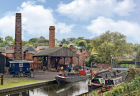
    In this article, Rob Pritchard reflects on his long-standing engagement with the Black Country Living Museum, exploring how visits to this ‘living history’ site transformed his approach to teaching history...

    Click to view
  • Doing history: A historian in the Round Tower

    Article

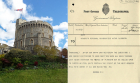
    In this article Michael McLaughlin explains how he felt quite intimidated initially at the prospect of visiting the Royal Archives in the ‘fortress’ of Windsor Castle. However his research there proved to be both enjoyable and productive, as he discovered fascinating insights into the royal visit to Plymouth at the height...

    Click to view
  • Out and About: Leavesden Country Park

    Article

    Concerns about demobilised soldiers after the Second World War were widespread, reflecting both the practical challenges faced by returning servicemen and broader anxieties about their reintegration into civilian life. In this article, Helen George explores how a temporary education facility in Hertfordshire helped prepare demobilised Canadian soldiers for higher education...

    Click to view
  • Film: Proto-feminism in Britain and Ireland – 1714 to 1785

    Article

    In Episode 11, Dr Mary Jo MacDonald of the University of Jyväskylä explores how the end of the Licensing Act, sweeping political change, and a revolution in intellectual culture opened unprecedented opportunities for women to shape political, social, and intellectual life in Britain and Ireland. The film highlights major proto‑feminist thinkers...

    Click to view
  • Making and breaking Britain’s national energy order

    Article

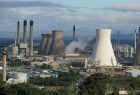
    British history flows through energy. Changes to fuel sources, technologies, workplace organisation and power along with government policy and ownership have been defining turning points in British economic history. In this article Ewan Gibbs traces the making, development and subsequent breaking of a national British energy order across the second half of...

    Click to view
  • Out and About: Bedfordshire’s airship memory

    Article

    This article explores the Cardington airship hangars in Bedfordshire as reminders of Britain’s ambitious but short-lived airship programme. Built during the First World War, Cardington became central to the 1924 Imperial Airship Scheme and the construction of the R-100 and R-101. Celebrated as symbols of technological optimism, the programme ended...

    Click to view
  • Real Lives: Alexander Stewart

    Article

    Our series ‘Real Lives’ seeks to put the story of the ordinary person into our great historical narrative. If you have any people that you think might also fit this category and would like to write about them, please do contact: martin.hoare@history.org.uk  Alexander Stewart’s life combined hardship, resilience and moral conviction....

    Click to view
  • The success of the Salford General Strike of 1911

    Article

    As we approach the centenary of Britain’s only national general strike, this article by Steve Illingworth tells the story of a successful local sympathetic strike in Salford in 1911. He analyses the reasons for the success of the Salford workers and considers why this kind of concerted industrial action could...

    Click to view
  • Film: Queer British History – 1714 to 1785

    Article

    In episode 10, Dr Declan Kavanagh (University of Kent), reflects on Queer British history 1714-1785. Dr Kavanagh looks at the history of the language of LGBTQ+, in particular the term ‘queer’ in its very recent usage and how the language of descriptors for these communities has been influenced. Dr Kavanagh draws...

    Click to view
  • Film: Power and Protest in Wales – 1714 to 1785

    Article

    In Episode 9, Dr Eryn White (Aberystwyth University) discusses who had power in Wales in 1714, the changing relationship between Wales and the wider United Kingdom and the key developments that took place in Wales between 1714-1785. Dr White reflects upon the rapid expansion of print and literacy in Wales...

    Click to view