Britain & Ireland

What was it about industrialisation that led to the emergence of a woman’s movement in Victorian Britain? Why do we see so many people fighting for so many rights and liberties in this period and what are the origins of some of the issues we still campaign on today? This section includes our major series on Social and Political Change in the UK from 1800 to the present day. There are also articles and podcasts on the often violent relationship between England and Ireland during this period and England’s changing relationship with Scotland and Wales. Read more

Sort by: Date (Newest first) | Title A-Z
  • Out and About: Leavesden Country Park

    Article

    Concerns about demobilised soldiers after the Second World War were widespread, reflecting both the practical challenges faced by returning servicemen and broader anxieties about their reintegration into civilian life. In this article, Helen George explores how a temporary education facility in Hertfordshire helped prepare demobilised Canadian soldiers for higher education...

    Click to view
  • Losing sight of the bigger picture: public policy and the visual arts

    Article

    From the 1940s to the late twentieth century, the visual arts in England were promoted and encouraged in a variety of ways by politicians and other policymakers, at both national and local level. Recent decades have seen a marginalisation of the arts, particularly in education. In this article Pauline Wood...

    Click to view
  • Out and About: The Black Country Living Museum

    Article

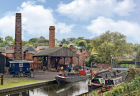
    In this article, Rob Pritchard reflects on his long-standing engagement with the Black Country Living Museum, exploring how visits to this ‘living history’ site transformed his approach to teaching history...

    Click to view
  • Doing history: A historian in the Round Tower

    Article

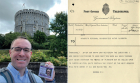
    In this article Michael McLaughlin explains how he felt quite intimidated initially at the prospect of visiting the Royal Archives in the ‘fortress’ of Windsor Castle. However his research there proved to be both enjoyable and productive, as he discovered fascinating insights into the royal visit to Plymouth at the height...

    Click to view
  • The success of the Salford General Strike of 1911

    Article

    As we approach the centenary of Britain’s only national general strike, this article by Steve Illingworth tells the story of a successful local sympathetic strike in Salford in 1911. He analyses the reasons for the success of the Salford workers and considers why this kind of concerted industrial action could...

    Click to view
  • Out and About: Bedfordshire’s airship memory

    Article

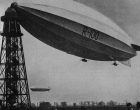
    This article explores the Cardington airship hangars in Bedfordshire as reminders of Britain’s ambitious but short-lived airship programme. Built during the First World War, Cardington became central to the 1924 Imperial Airship Scheme and the construction of the R-100 and R-101. Celebrated as symbols of technological optimism, the programme ended...

    Click to view
  • Real Lives: Alexander Stewart

    Article

    Our series ‘Real Lives’ seeks to put the story of the ordinary person into our great historical narrative. If you have any people that you think might also fit this category and would like to write about them, please do contact: martin.hoare@history.org.uk  Alexander Stewart’s life combined hardship, resilience and moral conviction....

    Click to view
  • Making and breaking Britain’s national energy order

    Article

    British history flows through energy. Changes to fuel sources, technologies, workplace organisation and power along with government policy and ownership have been defining turning points in British economic history. In this article Ewan Gibbs traces the making, development and subsequent breaking of a national British energy order across the second half of...

    Click to view
  • Opinion: the populist politics of Joseph Chamberlain and Donald Trump

    Article

    What are the pitfalls and pluses of comparing historical figures with contemporary politicians? Chris Godden argues that recent comparisons of Donald Trump with one of his predecessors may be wide of the mark, but that a more illuminating parallel may be found with one of Britain’s most controversial nineteenth-century politicians.

    Click to view
  • White heat or hot air? The politics of science in 1960s Britain

    Article

    Britain in the 1960s was captivated by scientific advancements. The public interest in ‘science’ was reflected in popular culture during this period. This zeitgeist for scientific revolution also captured aspects of British politics. The government of Harold Wilson sought to encourage scientific progress. Yet the difference between political aims and...

    Click to view
  • Social Darwinism: the myth and its reinvention

    Article

    ‘Social Darwinism’ has been associated in academia and popular consciousness with negative concepts such as hyper-nationalism and eugenics. Geoffrey M. Hodgson challenges the notion that Social Darwinism or its proponents were ever well-defined. By tracing the use of ‘Social Darwinism’ across academic disciplines and globally over a long period, Hodgson...

    Click to view
  • Tunnel visions: London’s wartime shelters

    Article

    Ronan Thomas describes two different Second World War shelters in London. One was the top-secret Mayfair bunker in which Winston Churchill sheltered during the Blitz and governed the country from underground; the other protected thousands of south Londoners and went on to provide shelter to visitors to the capital for several years...

    Click to view
  • Doing history: reconstructing the life of physician, psychiatrist and anthropologist James Cowles Prichard

    Article

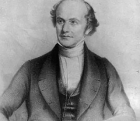
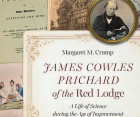
    Margaret Crump’s Doing History explains how she went about researching the life of a Victorian scientist, gathering material about the man himself from a variety of sources including newspapers, genealogical databases, and archives, supplemented by contextual knowledge of the period.

    Click to view
  • Out and About: The historical significance of the Botanic Garden in Oxford

    Article

    The Oxford Botanic Garden was Britain’s first botanic garden and is world-renowned. Mia Andreasen, who knows it well, explores why they have been so successful and how they reflect not only plant life but also the global history of the past 400 years.

    Click to view
  • Film series: Power and Freedom in Britain and Ireland, 1714–2010

    30th October 2025

    From royal courts to radical protests, from industrial revolutions to global empires – this compelling new film series traces the dramatic evolution of power, rights, and freedom across three centuries of British and Irish history. We will trace Britain and Ireland’s transformation from 1714 to 2010, unpacking power struggles, social revolutions, and...

    Click to view
  • Out and About: Locating the Local Lockup

    Article

    If you are arrested for a crime today, you will very likely be taken to a police station and locked in a cell while officers decide if they have enough evidence to charge you. But have you ever wondered what happened to criminals and other disorderly folk – roughs, drunks...

    Click to view
  • Doing history: Contemporary narratives and the legacy of the Dagenham Ford Factory Strike of 1968

    Article

    In this article, Zubin Burley looks at how a visit to the local archive can transform our understanding of an important event in British social history...

    Click to view
  • Finding Bad Bridget: the lives and crimes of Irish immigrant women in America

    Article

    From the early nineteenth century until the First World War, millions of Irish women emigrated to North America in search of better lives. Elaine Farrell and Leanne McCormick, co-leads for the AHRC-funded Bad Bridget research project, tell us how poverty, discrimination, isolation from family as well as greed and opportunism...

    Click to view
  • Imperial spaces of a ‘miniature world’: the case of Rugby School, c.1828–1850

    Article

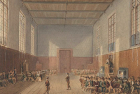
    English public schools in the nineteenth century were training grounds not just for society’s elites but also for careers in Britain’s imperial service. In this article, Holly Hiscox explores the ways in which schools such as Rugby provided pupils with a miniature world of domestic and professional life which prepared...

    Click to view
  • Schools of Vice: how a medical scandal led to the dismantling of Britain’s last prison hulks

    Article

    Hulks – former naval ships used as prisons for those convicted of serious crime and sentenced to transportation – were intended to be a temporary solution to a penal crisis caused by the American Revolutionary Wars. These ‘schools of vice’, or ‘floating hells’ lasted 80 years, casting a shadow over...

    Click to view