
Britain & Ireland
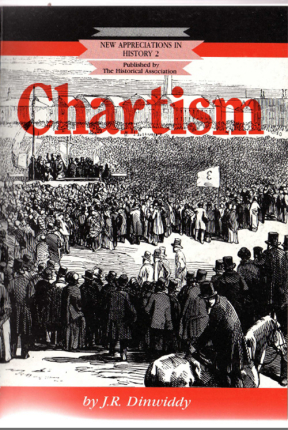
It is not surprising that Chartism has attracted a great deal of interest from historians and students, for at no other period in British history, with the possible exception of the second and third decades of the twentieth century, has so much excitement and activity been aroused at the working-class...
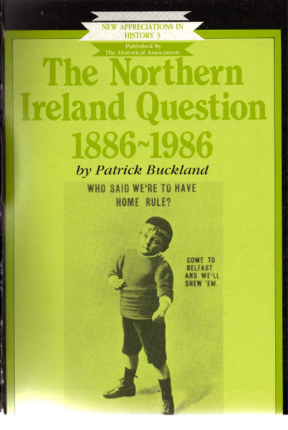
The nature of the rights of majorities and minorities is one of the most intractable of the issues raised by the Northern Ireland question, especially since much depends on definitions. Ulster Protestants are a majority in that province but a minority in both Ireland and the United Kingdom, while Catholics,...
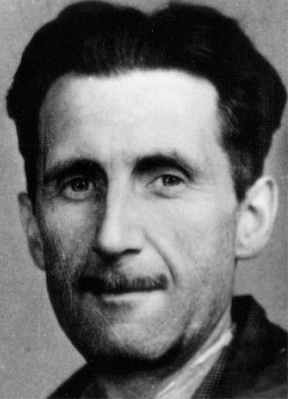
George Orwell is best known for Animal Farm and Nineteen Eighty Four - one book an allegory of The Russian Revolution, and the other a science fiction dystopia about a globalized world. Before these two last works, the heart and soul of Orwell's writing had been about England and the...

Why did the British get pensions when they did? What part did the great social surveys (Booth and Rowntree) play? Was there something rotten at the heart of Empire? What part did fears of a Red Peril play? Was Britain slow, with Bismarck and even the Tsar providing some measures...
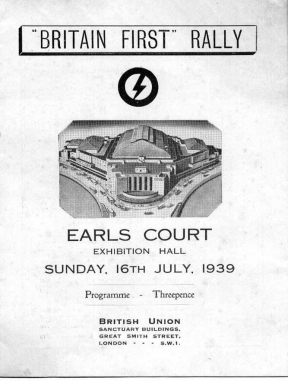
In the spring and early summer of 1940, the British government carried out a programme of mass internment without trial. On 11 May, the first of thousands of ‘enemy aliens' were interned. Many of these internees were refugees from Nazi Germany, often Jews who had fled Germany in fear of...
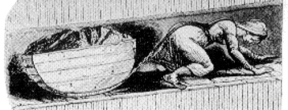
On 1 March 1771, thirteen year-old John Davies, a London charity school boy, left his home in Half MoonAlley and made his way to Bishopsgate Street. There he joined thirteen other boys of similar age who, like him, were new recruits of the Marine Society, a charity that sent poor...
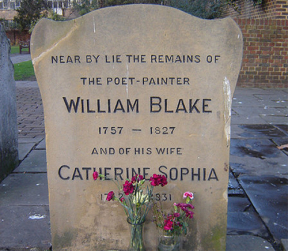
The grave markers in churchyards and cemeteries are for the most part depressingly unimaginative both in their design and in their inscriptions but one occasionally meets with an attempt at striking an individual note, such as a sculpted depiction of a motor vehicle, or an animal, or the head-gear worn...
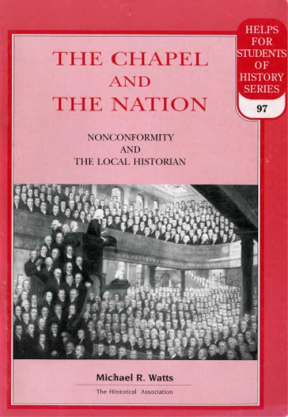
The Noncoformitst chapel has played a crucial role in the history of the English and Welsh nations. When the great French historian Elie Halevy sought to explain the contrast between the turbulent history of his own country and the peaceful evolution of England in the late eighteenth and nineteenth centuries...
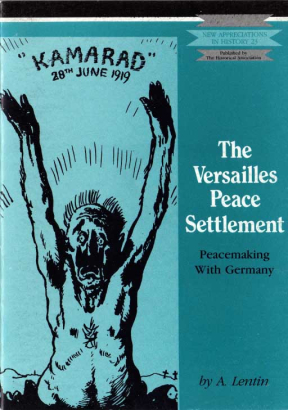
This classic pamphlet takes you through the Paris Peace Conference and the 'German Question', Peacemaking and the Treaty of Versailles, Europe and the German question after Versailles.
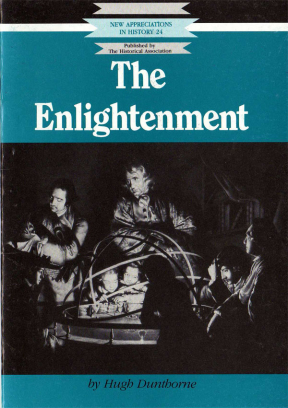
Can a movement as varied and diffuse as the Enlightenment of the eighteenth century be contained within the covers of a short pamphlet? The problem would certainly have appealed to the intellectuals of that time. Generalists rather than specialists, citizens of the whole world of knowledge, they relished the challenge...
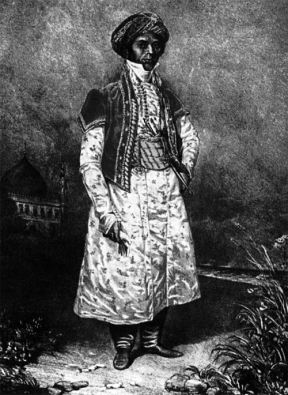
The National Portrait Gallery in London is home to many thousands of portraits, photographs and sculptures of the great and the good, as well as those who travelled on the darker side of history. In 2007 it hosted a small exhibition in the Porter Gallery entitled Between Worlds: Voyagers to...
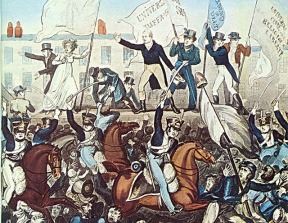
The BBC News at 10 on Saturday 5 July included an announcement that Manchester's campaign to have a memorial erected to the victims of the Peterloo Massacre had ‘got under way'. That afternoon, a workshop organised by the Peterloo Memorial campaign had encouraged members of the public to express their...
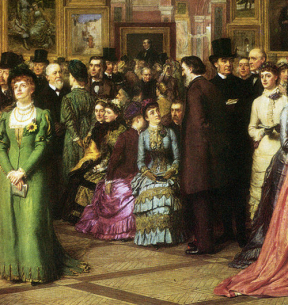
First referred to by Richard Morton (1637-98) in his Phthisiologia under the denomination phthisis nervosa as long ago as 1689, anorexia nervosa was given its name in a note by Sir William Gull (1816-90) in 1874. Gull had earlier described a disorder he termed apepsia hysterica, involving extreme emaciation without...

Though people are still sometimes prosecuted for repeatedly marrying immigrants to rescue them from the attentions of the Home Office, while forgetting to get divorced between times, one uncovenanted result of the now common practice of living together without matrimony is the decline of that celebrated Victorian institution: bigamy. In...
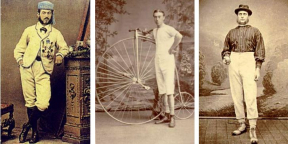
Forty-six years before the modern Olympics began, the small Shropshire market town of Much Wenlock was the seemingly unlikely setting for the establishment of an ‘Olympian Games'. Commencing in 1850, they were to become an annual festival in the town. The architect of this sporting enterprise was a local surgeon...
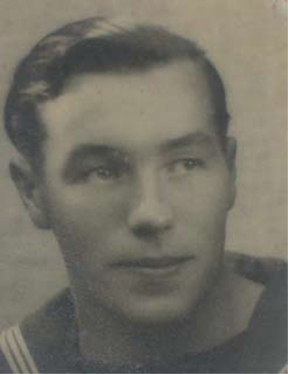
16-year-old Daisy Black of Newcastle-under-Lyme School in Staffordshire was the Senior Award winner in the Spirit of Normandy Trust Young Historian competition in 2007. Having been judged the winner by the Young Historian panel, the Spirit of Normandy Trsutees were so taken with her entry that they gave her an...
An anomaly of the British honours system is the name of the award most frequently given - the Order of the British Empire created in 1917. Each medal carries the words: ‘For God and the Empire'. When the connection between the person honoured and the church is often very tenuous...
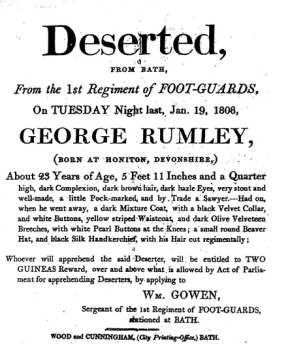
Wellington's Soldiers in the Napoleonic Wars The war with France, which began in 1793, had moved to the Iberian Peninsula by 1808. This year is therefore the two-hundredth anniversary of the commencement of the Peninsular War campaigns. War on the Peninsula demanded huge resources of manpower in order to defeat...
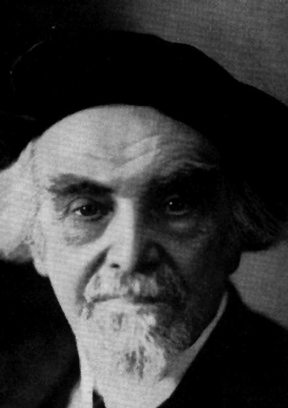
More and more historians, from diverse political viewpoints, are now expressing concern at the fragmentation of history, especially in the schools curriculum. The fragmentation of the subject has followed upon the collapse of sundry Grand Narratives, such as the ‘March of Progress', which once swept all of history into a...
Robert Stewart, 2nd Marquess of Londonderry, better known to his contemporaries and to history as Viscount Castlereagh, committed suicide on 12 August 1822, at the age of fifty-three, when Foreign Secretary and Leader of the House of Commons. He was one of the great statesmen of his age: as Chief...