
Britain & Ireland
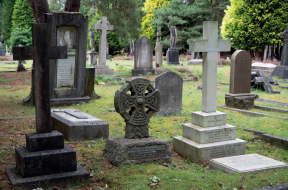
Diana Laffin considers what study of the styles, planning and planting of Brookwood cemetery reveals about nineteenth century mindsets. Graves are serious sources for historians. There is nothing casual about the choices made at death: the size and design of the monument, the text on the stone, even the location...
Roisin Inglesby introduces us to the life and work of a lesser known member of the Arts and Crafts movement, Arthur Heygate Mackmurdo, who helped to change the face of European architecture and interior design. Arthur Heygate Mackmurdo (1851–1942) may not be a household name, but he is arguably one...
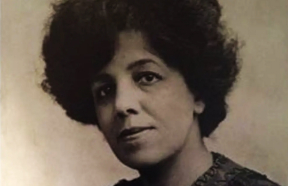
Stephen Bourne examines the life of Amanda Ira Aldridge, the multi-talented singer, composer and voice teacher. Amanda Ira Aldridge may have lived a quiet life but she was a trailblazer in the world of music. After a career as a concert singer, she became a composer in a male-dominated profession,...
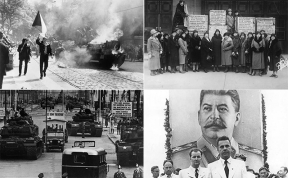
For a long time, history curricula on the 20th century prioritised the narrative of a slide from World War I to World War II and fascism above many other topics. But the history of the 20th century is both far more complicated and far more interesting than that. For the...
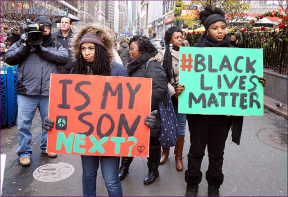
2020 has been an interesting year in many ways – both as a year to make history and one that has sought to tackle many representations of the past. The Black Lives Matter campaign that has taken on new energy across the globe in response to the killing of a...
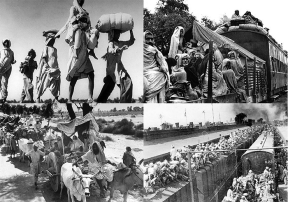
Historians often debate when, exactly, the twentieth century began; that is, when the themes and trends that we have come to understand as defining this tumultuous, rapidly changing period first started, and when they ended. One place we can look to answer this question is the available primary resources that...
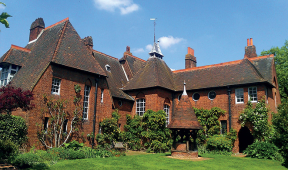
Tim Brasier tempts others to visit the iconic Arts and Crafts Red House, home to William and Jane Morris in Bexleyheath, London. This is a favourite historical venue of mine because it is so accessible. We literally live around the corner from the Red House in its location of the...
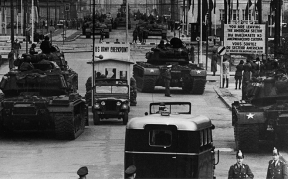
Almost 30 years after the end of the Cold War, diversity is suddenly galvanising the field of scholarly research into the Cold War. As the historian Federico Romero has argued, older, simpler interpretations ‘seem to be giving way to a looser understanding of the Cold War as an era that...
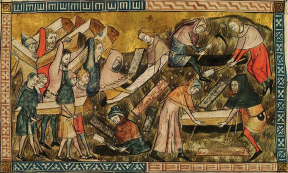
Christine Merie Fox compares the impact of the Black Death on fourteenth-century London with our present-day experience. In 1347, a terrifying disease was carving a path from the East into Northern Africa and Europe. Its entry point into Europe was the south of Italy, via merchant ships from the Black...
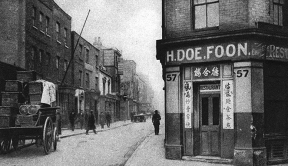
Panikos Panayi explores the way in which immigration has transformed British eating habits over the last two centuries, whether through the rise of the restaurant and the development of eating out, or the culinary revolution at home. Those people who voted to leave the European Union in 2016 because of...
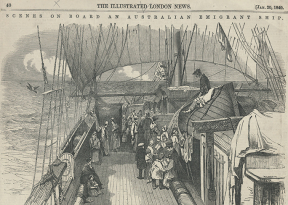
Edward Washington gives us a fascinating insight into life on an emigration ship – the John Knox – taking a group of orphan girls to Sydney, through a letter written after the voyage by the man charged with improving their education during the sea voyage. After his arrival in Sydney...
Edward Washington explores the story of William Noah who was sentenced to death for burglary in 1797 at the age of 43. He, and two others, were found guilty of breaking and entering the dwelling-house of Cuthbert Hilton, on the night of the 13 February. From Newgate Prison he was...
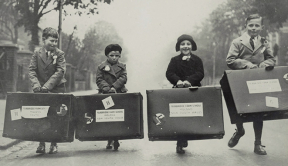
Murray Watson uses oral history interviews to try to explain the many and varied reasaons people had for emigrating from Britain after World War II. When I was invited to write this article about postwar emigration from the UK my first action was to Google the search term ‘postwar emigration...
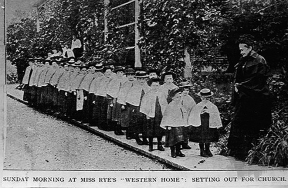
Alf Wilkinson explores the controversial story of Maria Rye, who founded the Female Emigration Society in 1861 in order to take ‘surplus’ young ladies to Australia and New Zealand to work as teachers and governesses. As there was insufficient demand for these, she refocused her work on taking pauper children...
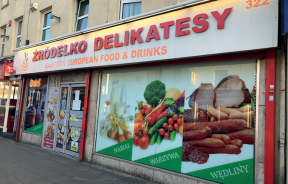
Sam Scott and Lucy Clarke explore the data covering more recent migration to the United Kingdom, most especially from the EU. They discover that since 2000 migrant destinations have changed. No longer do migrants head exclusively to the big cities and industrial areas, but to rural areas, like Boston in...
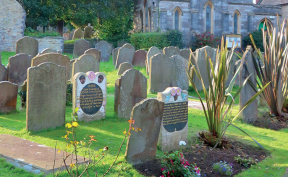
In what has become a very a topical article that was commissioned in late 2019, Jill Sudbury explores some of the known graves of the enslaved and formerly enslaved throughout Britain, and asks for help in recording others as yet unknown. Along the bleak shore of Morecambe Bay, beyond the...
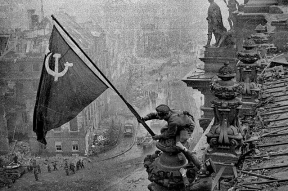
There is a peculiar tension at the heart of scholarship about the years and decades after the Second World War. On the one hand, the political developments following the breakdown of the war-time alliance between the United States and the Soviet Union have spawned an enormous literature, in parts as...
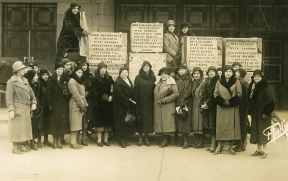
The years between the Armistice of November 1918 and the German attack on Poland in September 1939 were undoubtedly a period of massive transformations. Public appetite to learn about specific aspects of this era remains strong. The making of communist rule in revolutionary Russia, the tribulations of Weimar Germany, the...
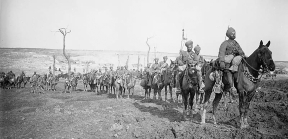
In the past, the two world wars have been mainly studied as military history, focused on armies, campaigns and battles. Historians have concentrated on wars in Europe and in particular on the Western Front in 1914–18 and on the war with Nazi Germany in the west. This has given rise...
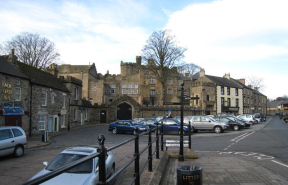
Tony Fox introduces us to two battlefields and the work of the Battlefields Trust. Stanhope takes its name from the ‘stony valley’ in which it sits. It is the most significant town in beautiful Upper Weardale. Like many towns in this area Stanhope’s growth accelerated in the nineteenth century as...