
Britain & Ireland
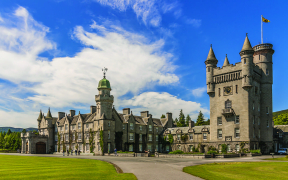
History Abridged: This feature seeks to take a person, event or period and abridge, or focus on, an important event or detail that can get lost in the big picture. Think Horrible Histories for grownups (without the songs and music). See all History Abridged articles Royal majesty is buttressed by...
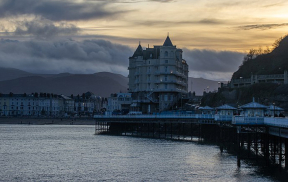
Millie Punshon is a sixth form student in North Wales and was one of this year's finalists in the HA's Great Debate public speaking competition. It is no unknown fact that the Victorian city-slickers adored the north coast of Wales, and without them towns such as Llandudno, Beaumaris, and Betws-y-Coed...
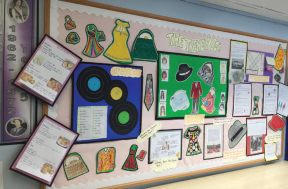
As part of the Historical Association’s recognition of our patron the Queen’s Platinum Jubilee, The Historical Association asked our members and followers to put together a collection of 70 ‘things’ that tell the story of the last 70 years: how the UK and the world have changed; how they have...
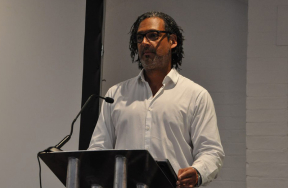
Professor David Olusoga is a revered TV historian, a writer and a practising academic at Manchester University. In 2022 he was the recipient of the Historical Association's annual Medlicott medal, awarded for outstanding contributions to history. The recipient of the medal provides the closing lecture of the HA's annual awards...
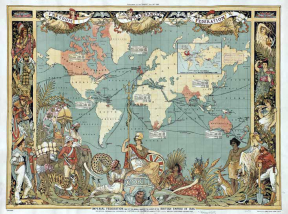
Concerned by the growing tendency of politicians and press to revive the moral balance-sheet approach to British imperial history and by some evidence of its resurgence in schools, Alex Benger set about devising a framework which would keep pupils’ analysis rigorously historical, rather than moral and politicised. In this article,...
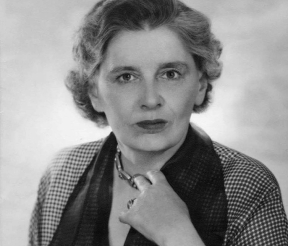
Our series ‘Real Lives’ seeks to put the story of the ordinary person into our great historical narrative. We are all part of the rich fabric of the communities in which we live and we are affected to greater and lesser degrees by the big events that happen on a...
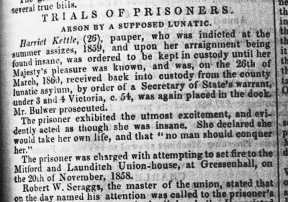
Harriet Kettle had a remarkable life. She was on the receiving end of everything that the institutions of social control in Victorian England could throw at her, but resisted, survived and fought back. Harriet’s defiance earned her references in the records of a workhouse, two prisons, two asylums and, in...
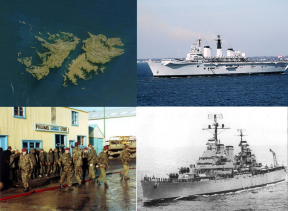
This month (April 2022) is the 40th anniversary of the start of the Falklands Conflict. On 2 April 1982 an Argentinian Force of 3,000 men invaded the Falkland Islands taking the Islanders and the 80 Royal Marines stationed there by surprise. Despite pressure from the United Nations to withdraw the...
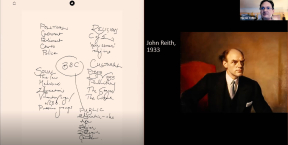
In the centenary year of the BBC, this Virtual Branch talk from Marcus Collins relates the strange tale of how the BBC did and did not broadcast about homosexuality in the 1950s and 1960s and what it tells us about sexuality, broadcasting and the origins of permissiveness in mid-twentieth century...
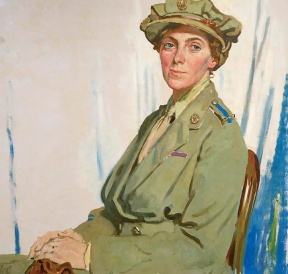
Our series ‘Real Lives’ seeks to put the story of the ordinary person into our great historical narrative. We are all part of the rich fabric of the communities in which we live and we are affected to greater and lesser degrees by the big events that happen on a...
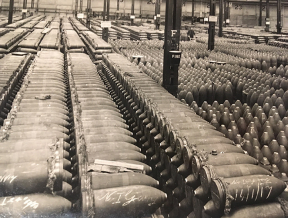
Philip Hamlyn Williams introduces us to the commercial and industrial background to modern-day warfare. When I think of war, I immediately see men and women in one of three uniforms: Royal Navy, RAF and Army. My research over the past seven years into how the British army was supplied in...
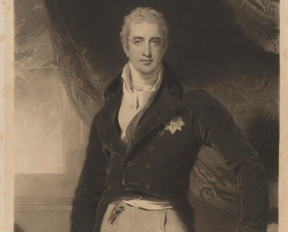
Richard A. Gaunt explores a tragedy at the heart of early nineteenth century British politics, with the suicide of Viscount Castlereagh. At 7.30 in the morning on Monday 12 August 1822, Robert Stewart, second Marquess of Londonderry, died from self-inflicted injuries caused by cutting the carotid artery in his neck...
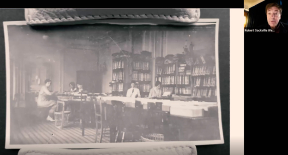
Historian Robert Sackville-West joined the HA Virtual Branch in November 2021 to talk about the topic of his book The Searchers: The Quest for the Lost of the First World War. By the end of the First World War, the whereabouts of more than half a million British soldiers were...
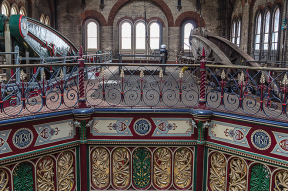
In an unusual Out and About feature, the Young Historian Local History Senior Prize winner Flora Wilton Tregear shows us what her local area can tell us about the history of public health. Taking the DLR out from Lewisham you pass through Deptford Bridge station towards Greenwich. Here my father...
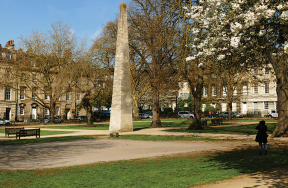
Some years ago, on the shore of Loch Lomond, I met a Scotsman. As we started to converse he asked me where I was from. When I replied ‘Bath’, his response was ‘Ah, the most beautiful city in Britain,’ adding, out of patriotism or good judgement, ‘Edinburgh is second.’ The...
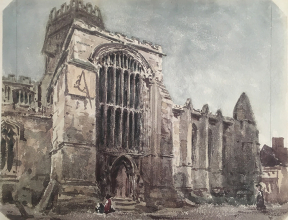
Tiffany Igharoro, a Young Historian Award-winner, introduces us to the artwork of Revd John Louis Petit, showing that art not only reflects the times in which it is created, but can also be used to shape opinions. The Revd John Louis Petit (1801–68) created thousands of paintings in his lifetime,...
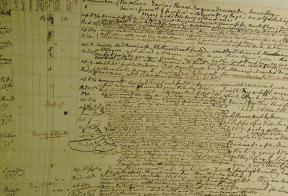
John Coffey shows us what insights can be gained from the diaries of leading abolitionist, William Wilberforce. The diary is a distinctively modern genre... In English, the first diaries date from the Tudor era, but it is in the seventeenth century that the trickle becomes a flood. Alongside the famous...
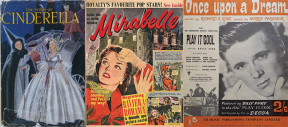
In a lecture given to the Cambridge branch, Carol Dyhouse explains changing attitudes to marriage in the 1950s and 60s. Women teachers in the 1950s and 1960s regularly complained about how hard it was to keep girls’ attention on their schoolwork. Educationist Kathleen Ollerenshaw pointed out that the prospects of...
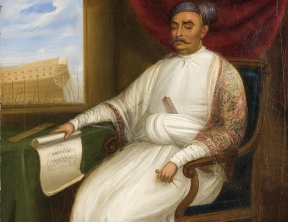
The historiography of the British Empire has taken a long course since the era of decolonisation. Political histories of the late twentieth century considered the mechanisms connecting crises at the ‘periphery’ with metropolitan decision-making. One rather overused stereotype was the so-called ‘man on the spot’ pushing empire forward, be they...
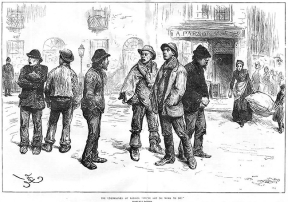
Peter Hounsell looks at the role of the Waterbury Watch Company in both the Queen’s Jubilee and the attempt to record and alleviate unemployment in London in the 1880s. In Britain generally, but for London in particular, 1887 was a year of great contrasts. On 27 June, Londoners lined the...