Society

How people group together, organise their rules and systems are all part of what create a society. In this section articles examine the nature of society how it interacts with other themes of culture, power, etc. and how societies have developed and changed over time. The structures of the ancient world are explored as are the complex feudal systems and the varied societies of Empire and modernity.

Sort by: Date (Newest first) | Title A-Z
  • In conversation with David Turner

    Article

    Disabled people have always been present in Britain’s past. Yet they have often appeared only at the edge of historical narratives: as recipients of charity, as objects of medical attention, as casualties of war or work, or as figures in stories told by institutions rather than by themselves. In Disability:...

    Click to view
  • Update: Disability history

    Article

    Expansion into new periods and places, new revelations of human diversity and difference, and a rethink of the tools we use to recover the past – disability history is not just thriving but is also exciting, as Daniel Blackie and Alexia Moncrieff demonstrate in their update on the state of...

    Click to view
  • Deaf marriages and sign language recognition

    Article

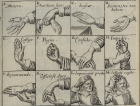
    In the pre-modern world, the ability to speak and to hear were fundamental to participation in civil society. How, then, could prelingual deaf people survive and thrive? Rosamund Oates, author of the recently published Silent Histories: Deafness in Early Modern England, charts the long struggle for the recognition of sign...

    Click to view
  • ‘I am your most troublesome pauper’: disability and the New Poor Law

    Article

    In nineteenth-century England and Wales, the New Poor Law was the state’s solution for those who wouldn’t – as well as those who couldn’t – work. Even for disabled paupers, the line between the two wasn’t always clear cut. In this article, Carol Beardmore shows how those with physical disabilities...

    Click to view
  • Broken bodies and racial lessons: disabled Wehrmacht veterans in Nazi Germany

    Article

    Throughout history, war has been one of the great producers of disability, and the disabled veteran has often provoked feelings of pride and pity. In this article, Christopher Thomas Goodwin explores the multiple meanings of the disabled soldier in Nazi Germany...

    Click to view
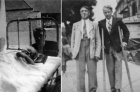
  • Real lives: important lessons from the childhood experiences of Harry Drabble

    Article

    Helen Parker-Drabble shows how the experiences of her father, Harry Drabble, who was hospitalised for bovine tuberculosis as a child, remain fiercely relevant for families, medical practitioners and policymakers in twenty-first century Britain...

    Click to view
  • The Historian 170: Disability

    Article

    Please note: print copies of this edition will start arriving with members from 11 August.  4 Letters 5 Editorial (Read article) 6 Update: Disability history – Daniel Blackie and Alexia Moncrieff (Read article) 10 Deaf marriages and sign language recognition – Rosamund Oates (Read article) 16 Thinking with disability: mapping...

    Click to view
  • Filmed lecture: How (not) to historicise the contemporary United States

    Article

    For the last two and a half centuries, the USA has been shaped by a remarkable sense of its own unique place in world history, yet consumed by never-ending battles over what this means. 250 years after the Declaration of Independence was signed, the United States appears to be at...

    Click to view
  • Losing sight of the bigger picture: public policy and the visual arts

    Article

    From the 1940s to the late twentieth century, the visual arts in England were promoted and encouraged in a variety of ways by politicians and other policymakers, at both national and local level. Recent decades have seen a marginalisation of the arts, particularly in education. In this article Pauline Wood...

    Click to view
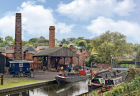
  • Out and About: The Black Country Living Museum

    Article

    In this article, Rob Pritchard reflects on his long-standing engagement with the Black Country Living Museum, exploring how visits to this ‘living history’ site transformed his approach to teaching history...

    Click to view
  • ‘My sweet San Gimignano’: a Tuscan commune in the Middle Ages

    Article

    The northern Italian town of San Gimignano is famous for its high-rise medieval towers. The size of these fortified buildings might lead to the assumption that the town was a place of constant conflict and discord. Here John Law uses a wide variety of evidence to argue that San Gimignano...

    Click to view
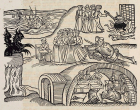
  • To see the witch: understanding the European witch craze through visual art

    Article

    During the European witch craze, visual art played a powerful role in shaping belief in witches. The printing press allowed images of witchcraft to circulate widely, amplifying fear and suspicion. In this article, Natasha Brockman explores how such imagery did more than illustrate witchcraft: it helped create it, teaching people what witches...

    Click to view
  • Making and breaking Britain’s national energy order

    Article

    British history flows through energy. Changes to fuel sources, technologies, workplace organisation and power along with government policy and ownership have been defining turning points in British economic history. In this article Ewan Gibbs traces the making, development and subsequent breaking of a national British energy order across the second half of...

    Click to view
  • Eastern Nigeria market women and European businesses in colonial Nigeria 1900–29

    Article

    In this article Folusho Alabi reveals a relatively unknown story from the history of the British Empire. She analyses the issues and strategic manoeuvres in an ongoing struggle between Nigerian market women and the British colonial authorities in the early twentieth century. Despite an innate imbalance of power in this struggle,...

    Click to view
  • Film: Queer British History – 1714 to 1785

    Article

    In episode 10, Dr Declan Kavanagh (University of Kent), reflects on Queer British history 1714-1785. Dr Kavanagh looks at the history of the language of LGBTQ+, in particular the term ‘queer’ in its very recent usage and how the language of descriptors for these communities has been influenced. Dr Kavanagh draws...

    Click to view
  • Real Lives: the long life of Old Tom Parr

    Article

    Our series ‘Real Lives’ seeks to put the story of the ordinary person into our great historical narrative. If you have any people that you think might also fit this category and would like to write about them, please do contact: martin.hoare@history.org.uk  In this article, Dexter Plato tells us about the...

    Click to view
  • Film series: Power and Freedom in Britain and Ireland, 1714–2010

    30th October 2025

    From royal courts to radical protests, from industrial revolutions to global empires – this compelling new film series traces the dramatic evolution of power, rights, and freedom across three centuries of British and Irish history. We will trace Britain and Ireland’s transformation from 1714 to 2010, unpacking power struggles, social revolutions, and...

    Click to view
  • Film: Disability in Britain and Ireland – 1714 to 1785

    Article

    In Episode 6, Dr Declan Kavanagh (University of Kent) discusses the development of ideas around, and responses to, disability in Britain and Ireland in the 18th century. Dr Kavanagh examines the definition given in Samuel Johnson’s Dictionary in 1755 and looks at the medical and charity models of responding to disability...

    Click to view
  • Witchcraft, Werewolves and Magic in European History: on-demand short course

    Multipage Article

    This self-guided short course provides an introduction to European witchcraft history from the fifteenth century to the present. Using a range of primary sources, the course explores important themes and questions relating to witchcraft history, examining how witchcraft has been imagined and understood at different times and in different places, and why...

    Click to view
  • Film: Black British History – 1714 to 1785

    Article

    In Episode 4, Dr Montaz Marché (University College London) and Professor Ryan Hanley (University of Exeter), discuss the lives and experience of 18th century Black Britons. In this discussion they look at the lives of both the exceptional and the ordinary, and reflect upon the politics of race and gender in...

    Click to view