Society

How people group together, organise their rules and systems are all part of what create a society. In this section articles examine the nature of society how it interacts with other themes of culture, power, etc. and how societies have developed and changed over time. The structures of the ancient world are explored as are the complex feudal systems and the varied societies of Empire and modernity.

Sort by: Date (Newest first) | Title A-Z
  • Gaming the medieval past

    Article

    Matthew Bennett and Ryan Lavelle explore how the devising, playing and discussion of war games can contribute to historical understanding. Games as tools for learning are engaging for teachers and students alike. Whether computer-driven, board games, miniatures, role-play or re-enactment, they all provide scenarios within which learners can use a...

    Click to view
  • Gone with the Wind: a great book?

    Article

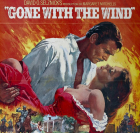
    HA President Tony Badger examines the historical context which shapes our understanding of Margaret Mitchell’s enduring novel. I had been a historian of the American South for 50 years and like Ringbaum, I had a secret. I had never read Gone with the Wind. As I came up to retirement...

    Click to view
  • Grave matters

    Article

    Diana Laffin considers what study of the styles, planning and planting of Brookwood cemetery reveals about nineteenth century mindsets. Graves are serious sources for historians. There is nothing casual about the choices made at death: the size and design of the monument, the text on the stone, even the location...

    Click to view
  • Harriet Kettle, Victorian rebel

    Article

    Harriet Kettle had a remarkable life. She was on the receiving end of everything that the institutions of social control in Victorian England could throw at her, but resisted, survived and fought back. Harriet’s defiance earned her references in the records of a workhouse, two prisons, two asylums and, in...

    Click to view
  • Havelock Hall: the East India Company college gymnasium at Addiscombe

    Article

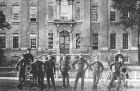
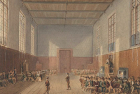
    Trevor James emphasises the importance of this structure in England’s sporting landscape. Tucked behind the houses in Havelock Road in the East Croydon suburb of Addiscombe is a seemingly unprepossessing building, known locally as ‘Havelock Hall’. Now converted into flats, it derives its name from its late nineteenth-century religious use,...

    Click to view
  • History Abridged: Language and the African continent

    Article

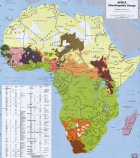
    History Abridged: This feature seeks to take a person, event or period and abridge, or focus on, an important event or detail that can get lost in the big picture. Think Horrible Histories for grownups (without the songs and music). See all History Abridged articles Africa is a huge continent...

    Click to view
  • History Abridged: Migration – the Potato

    Article

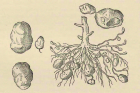
    History Abridged: This feature seeks to take a person, event or period and abridge, or focus on, an important event or detail that can get lost in the big picture. Think Horrible Histories for grownups (without the songs and music). See all History Abridged articles The gradual move of humans...

    Click to view
  • History Abridged: Publishing

    Article

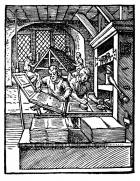
    History Abridged: This feature seeks to take a person, event or period and abridge, or focus on, an important event or detail that can get lost in the big picture. See all History Abridged articles For centuries the only way the written word could be communicated was by it being...

    Click to view
  • History Abridged: The census

    Article

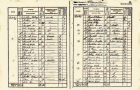
    History Abridged: This feature seeks to take a person, event or period and abridge, or focus on, an important event or detail that can get lost in the big picture. Think Horrible Histories for grownups (without the songs and music). See all History Abridged articles Most of us are aware...

    Click to view
  • Homes fit for heroes? James Cecil and the public interest

    Article

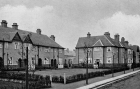
    Hugh Gault reminds us that the provision of adequate and price-accessible housing stock has been a matter of public debate and concern for over a hundred years. Economics and financial priorities have continued to undermine the methodologies and good intentions needed to solve the problem. This year is the hundredth...

    Click to view
  • Homosexuality in Britain Since 1967

    Article

    Harry Cocks marks the 50th anniversary of the 1967 Sexual Offences Act with an examination of what has happened since this crucial piece of legislation.

    Click to view
  • How did the Civil Rights movement change America?

    Article

    In 1984 Jimmy Carter reflected on growing up in the segregated South. He recalled that, as a young child, he, like many white children, had had an African American child as his closest friend. The two children spent all their play time together. One day they travelled on the train...

    Click to view
  • How hidden are ordinary people in later medieval England?

    Article

    Tim Lomas explores some documents from the Bishop and Priory of Durham that shed interesting light on the lives of ‘ordinary people’ in medieval England. It is largely a truism to state that the majority of documents from medieval Britain were not designed to shed much light on the lives...

    Click to view
  • How is the source base of the twentieth century different from that of earlier periods?

    Article

    Historians often debate when, exactly, the twentieth century began; that is, when the themes and trends that we have come to understand as defining this tumultuous, rapidly changing period first started, and when they ended. One place we can look to answer this question is the available primary resources that help...

    Click to view
  • Immigration and the making of British food

    Article

    Panikos Panayi explores the way in which immigration has transformed British eating habits over the last two centuries, whether through the rise of the restaurant and the development of eating out, or the culinary revolution at home. Those people who voted to leave the European Union in 2016 because of...

    Click to view
  • Imperial spaces of a ‘miniature world’: the case of Rugby School, c.1828–1850

    Article

    English public schools in the nineteenth century were training grounds not just for society’s elites but also for careers in Britain’s imperial service. In this article, Holly Hiscox explores the ways in which schools such as Rugby provided pupils with a miniature world of domestic and professional life which prepared...

    Click to view
  • In conversation with Lyndal Roper

    Article

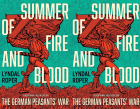
    This year is the 500th anniversary of the German Peasants’ War (1524–25), the largest popular uprising in Western Europe before the French Revolution. The Peasants’ War broke out a few years after Martin Luther published his Ninety-Five Theses (1517) that launched the Reformation and inspired the peasants’ demands, although Luther...

    Click to view
  • In conversation with Nicholas Radburn

    Article

    The Historian sat down with historian Nicholas Radburn to discuss his latest book, Traders in Men, which examines the role of merchants in the expansion and transformation of the Transatlantic Slave Trade in the eighteenth century.

    Click to view
  • James Macpherson: a Scottish Robin Hood

    Article

    James Macpherson led a notorious gang of robbers in late seventeenth-century Scotland, and he became infamous for robbing rich lairds to give to the poor. Anne-Marie Kilday explains how his notoriety is also significant for revealing how people in early modern Scotland could hold complex attitudes towards the Gypsy Roma...

    Click to view
  • Jewish settlements in Medieval England

    Article

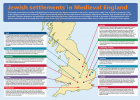
    The Jewish communities of medieval England lived in towns and cities directly connected to the crown, usually with a castle close at hand for protection. Due to the religious needs of the community, Jewish families stayed close to the key requirements of synagogue and butcher. However, they would live side by...

    Click to view