Society

How people group together, organise their rules and systems are all part of what create a society. In this section articles examine the nature of society how it interacts with other themes of culture, power, etc. and how societies have developed and changed over time. The structures of the ancient world are explored as are the complex feudal systems and the varied societies of Empire and modernity.

Sort by: Date (Newest first) | Title A-Z
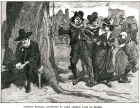
  • King James’s Book of Sports, 1617

    Article

    Forty years after his higher degree research into the history of sport, Trevor James explores the much wider context in which that research now stands. Four hundred years ago, in 1617, James I made a decisive intervention into the simmering debate which had existed since the puritanical upsurge in Queen...

    Click to view
  • Kings and coins in later Anglo-Saxon England

    Article

    The study of Anglo-Saxon coins shows the sophistication of tenth- and eleventh-century government and of the economy. But they carried a moral and religious message too.

    Click to view
  • Linking Law: Viking and medieval Scandinavian law in literature and history

    Article

    Ongoing interdisciplinary developments have cast light on the surprisingly sophisticated world of Viking-age and medieval Scandinavian law and its wide-ranging influence in these societies. In many ways, the Viking Age and its inhabitants are more familiar than ever before. From video games to television and films, new narrative frontiers and bigger...

    Click to view
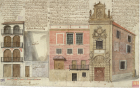
  • Mercurial justice: a Jesuit chaplain’s view of life in the prisons of sixteenth-century Seville

    Article

    Justice in the early modern period was discretionary, which meant it could be both violent and deeply unfair. Elites often escaped the most severe punishments inflicted on the poor and minoritised groups. Clare Burgess shows how a Jesuit chaplain in sixteenth- century Seville used his spiritual discretion and zealous belief...

    Click to view
  • Migration into the UK in the early twenty-first century

    Article

    Sam Scott and Lucy Clarke explore the data covering more recent migration to the United Kingdom, most especially from the EU. They discover that since 2000 migrant destinations have changed. No longer do migrants head exclusively to the big cities and industrial areas, but to rural areas, like Boston in...

    Click to view
  • Monty’s school: the benign side of Viscount Montgomery of Alamein

    Article

    Field-Marshal Montgomery has a reputation as a strong-willed battle-hardened leader, with a touch of the impetuous. Few know of his charitable side and yet in his later years this side was just as important to his activities. In this article we find out a bit more of this often simplistically...

    Click to view
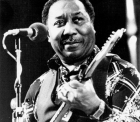
  • Muddy Waters: from migrant to music icon

    Article

    Matt Jux-Blayney explores the impact of the blues singer Muddy Waters against a backdrop of significant social and racial change in the United States of the mid-twentieth century. On 3 July 1960, a man from Mississippi was introduced onto the stage of the Newport Jazz Festival in Rhode Island. He...

    Click to view
  • My Favourite History Place: A Short History of Brill

    Article

    In this article Josephine Glover discusses the long history of her ‘favourite history place’, the Buckinghamshire village of Brill. She explains how there has been a human settlement there since Mesolithic times. Using various fragments of evidence, she pieces together the extent to which the village was important to early...

    Click to view
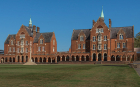
  • My Favourite History Place: Gladstone’s Library at Hawarden

    Article

    When I first visited Gladstone’s residential library in 1977 for a pre-university History degree reading week, I barely knew who Gladstone was. I had just come back from a holiday in Italy and the contrast between Florence and Hawarden, a Welsh border town, was startling. I came from the sunny remains...

    Click to view
  • My Favourite History Place: The Tenement Museum, New York

    Article

    The Tenement Museum is not remotely like any museum I had previously visited. It is an old tenement building where generations of New York migrants lived and loved, worked and had families before moving both on and out. The Tenement Museum tells the story of the Lower East Side through the...

    Click to view
  • New Universities of the 60s

    Article

    New Universities of the 60s: One professor's recollections: glad confident morning and after Living history How long do professional historians wait before writing about their own personal involvement in episodes of lasting significance in history? If they wait too long they are dead, and their evidence is lost. A striking recent...

    Click to view
  • Ofsted and History in Schools

    Article

    HM Inspector John Hamer reviews the evidence. In a lecture marking the 150th anniversary of Her Majesty’s Inspectorate of Schools, Peter Gordon recalled a nineteenth century HMI, the Reverend W.H. Brookfield. His circle of friends included Tennyson, the Hallams and Thomas Carlyle.

    Click to view
  • Old age care in the time of crisis: London in the sixteenth century

    Article

    In her lecture to the General Strand of the HA Conference, Christine Fox describes the successes and failures of London institutions in dealing with the sixteenth-century crisis of poverty and elderly care. In late medieval and early modern thinking, human life was divided into three stages; youth, maturity, and old age. The latter...

    Click to view
  • On Black Lives Matter

    Article

    2020 has been an interesting year in many ways – both as a year to make history and one that has sought to tackle many representations of the past. The Black Lives Matter campaign that has taken on new energy across the globe in response to the killing of a...

    Click to view
  • Opinion: Who was ‘the man of his time’?

    Article

    In this new, occasional section of The Historian, contributors share their thoughts on matters of public historical debate. We invite our readers to respond, either by writing to the editors at thehistorian@history.org.uk or by writing their own opinion piece. Here, Lorenzo Kamel shares his thoughts on why saying ‘he was a...

    Click to view
  • Out and About in Derry/Londonderry

    Article

    Jenni Hyde was out and about in Derry in 2016 and describes how the sights of the city tell the story of a history which is so much more than just the legacy of the Troubles.

    Click to view
  • Out and About in Paestum

    Article

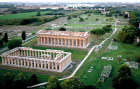
    Trevor James introduces the extraordinary archaeological remains from Greek and Roman occupation to be found at Paestum. Paestum is the more recent name of a location originally known as Poseidonia, named in honour of Poseidon, the Greek god of the sea. Poseidonia was a Greek settlement or colony on the west...

    Click to view
  • Out and About in Ryedale

    Article

    Tom Pickles explores Ryedale in Yorkshire, where an extraordinary network of churches bears witness to the social, political, and religious transformations of the Anglo-Saxon period.

    Click to view
  • Out and About in ‘The most Loyal and Ancient City of Taunton’

    Article

    The Somerset town of Taunton featured prominently in the highly significant political and religious conflicts of the seventeenth century. Isabella Peach examines Taunton’s role in these events and the impact they had on the town. Her article is based on her winning entry in the 2023 Young Historian Post-16 Local...

    Click to view
  • Out and About with homing pigeons in the Great War

    Article

    Trevor James emphasises the role and importance of ‘messenger’ pigeons on the Western Front. Amidst the one-hundredth anniversary commemorations of the ending of the Great War, there has been a sudden burst of interest, in such varying locations as both Houses of Parliament and the Antiques Roadshow, in the role...

    Click to view