Society

How people group together, organise their rules and systems are all part of what create a society. In this section articles examine the nature of society how it interacts with other themes of culture, power, etc. and how societies have developed and changed over time. The structures of the ancient world are explored as are the complex feudal systems and the varied societies of Empire and modernity.

Sort by: Date (Newest first) | Title A-Z
  • Real Lives: Alice Daye: mother of the English book trade

    Article

    Our series ‘Real Lives’ seeks to put the story of the ordinary person into our great historical narrative. We are all part of the rich fabric of the communities in which we live and we are affected to greater and lesser degrees by the big events that happen on a daily...

    Click to view
  • Real Lives: Beatrice Alexander

    Article

    Our series ‘Real Lives’ seeks to put the story of the ordinary person into our great historical narrative. We are all part of the rich fabric of the communities in which we live and we are affected to greater and lesser degrees by the big events that happen on a daily...

    Click to view
  • Real Lives: Charlie Mitchell, Tuke's top model

    Article

    Our series ‘Real Lives’ seeks to put the story of the ordinary person into our great historical narrative. We are all part of the rich fabric of the communities in which we live and we are affected to greater and lesser degrees by the big events that happen on a daily...

    Click to view
  • Real Lives: Harry Daley

    Article

    Our series ‘Real Lives’ seeks to put the story of the ordinary person into our great historical narrative. We are all part of the rich fabric of the communities in which we live and we are affected to greater and lesser degrees by the big events that happen on a daily...

    Click to view
  • Real Lives: Maria Rye’s emigration home for destitute little girls

    Article

    Alf Wilkinson explores the controversial story of Maria Rye, who founded the Female Emigration Society in 1861 in order to take ‘surplus’ young ladies to Australia and New Zealand to work as teachers and governesses. As there was insufficient demand for these, she refocused her work on taking pauper children...

    Click to view
  • Real Lives: the long life of Old Tom Parr

    Article

    In this article, Dexter Plato tells us about the real, or perhaps not so real, life of Old Tom Parr, who was supposedly born during the Wars of the Roses and died during a visit to the court of Charles I.

    Click to view
  • Recruiting volunteers to fight in the First World War

    Article

    ‘Your Country Needs You’ and other posters are still remembered today as a prominent vehicle by which men were encouraged to fight in the First World War. Virtually absent from the literature, however, is analysis of the impact of thousands of recruitment meetings and their speakers. Robert Bullard explores the contribution...

    Click to view
  • Robert Branford: a faithful servant of Southwark

    Article

    Stephen Bourne explains how he pieced together the story of Robert Branford, the earliest known mixed-race officer in the Metropolitan Police, who faithfully served the people of Southwark in the Victorian era.

    Click to view
  • Sacred waters: Bath in the Roman Empire

    Article

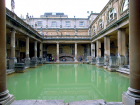
    Eleri Cousins explores the dynamics of Romano-British religion at the sanctuary at Bath. What do you think of when you think of Roman Bath?  Most of us probably think of, well, the Baths – in particular the iconic image of the Great Bath, with its Roman swimming basin and its...

    Click to view
  • Schools of Vice: how a medical scandal led to the dismantling of Britain’s last prison hulks

    Article

    Hulks – former naval ships used as prisons for those convicted of serious crime and sentenced to transportation – were intended to be a temporary solution to a penal crisis caused by the American Revolutionary Wars. These ‘schools of vice’, or ‘floating hells’ lasted 80 years, casting a shadow over...

    Click to view
  • Secular acts and sacred practices in the Italian Renaissance church interior

    Article

    Joanne Allen reveals a fundamental structural and architectural development in Italian churches in the Renaissance era, demonstrating that careful observation of structures and archives can substantially inform our appreciation of all church buildings.  In the opening to The Decameron (c. 1350), Boccaccio described how the ten young people who would become storytellers...

    Click to view
  • Space and behaviour at the court of Alexander the Great

    Article

    Why do we behave in the way that we do? In this article, Stephen Harrison shows how our behaviour is intrinsically linked to the spaces we inhabit and he argues that Alexander the Great adopted spatial features from Persian architecture which altered the nature of his relationship with his subjects....

    Click to view
  • Sparta and war: myths and realities

    Article

    Stephen Hodkinson explains how images of ancient Sparta have been distorted and misused. On 15 April 2017, at a violent right-wing rally in Berkeley, California, some striking ancient Greek symbols were visible amidst the swastikas and ‘Make America Great Again’ hats. Several demonstrators wore replica ‘Corinthian’ helmets, as worn by...

    Click to view
  • The 1620 Mayflower voyage and the English settlement of North America

    Article

    On the 400th anniversary of the arrival of the Pilgrims in New England on the Mayflower, Martyn Whittock explores the reasons for migration to the New World in 1620 and later, and the significance of those migrants, both at the time and their impact on the evolution of the USA...

    Click to view
  • The Advent of Decimalisation in Britain: 1971

    Article

    Decimal Day in Britain was Monday 15 February 1971. New coins and notes were circulated. There was no special issue postage stamp to commemorate the occasion, only a new series with some unfamiliar values, such as 7½p instead of 1s 6d. The fortieth anniversary of the arrival of decimal currency...

    Click to view
  • The Aztec Empire: a surprise ending?

    Article

    Matthew Restall explores current ideas about the end of the Aztec Empire. For an empire that existed half a millennium ago in a hemisphere far away, we have a remarkably clear sense of what brought the Aztecs down. Or at least, we think we do. Our general assumption is that the very nature of...

    Click to view
  • The Diabolical Cato-Street Plot

    Article

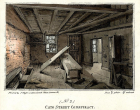
    Richard A. Gaunt reminds us that it is still possible to visit the site of a notorious conspiratorial challenge to Lord Liverpool’s government, and why this event was so significant. At around 7.30pm on Wednesday 23 February 1820, a dozen Bow Street Runners in plain clothes, led by George Thomas...

    Click to view
  • The Georgian Papers – a virtual ‘madness’

    2nd December 2019

    Last month the Georgian Papers Programme released a new virtual exhibition available online. Exploring the myth and reality of the alleged ‘madness of King George III’, the exhibition is an interesting step in examining the past and exploring its relevance for contemporary discourses. Entitled ‘George III: the Eighteenth Century’s Most...

    Click to view
  • The Great Spa Towns of Europe: a UNESCO World Heritage Site

    Article

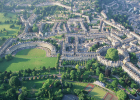
    Catherine Lloyd introduces us to an international heritage initiative to celebrate ‘spa’ culture. From ancient times, people believed that gods and spirits brought the means of natural healing. Step back in time to imagine an eerie wilderness, a glade in a wood, or a pool by a river, where the snow...

    Click to view
  • The Importance of Truth, Quality and Objectivity in the BBC German Service from 1938 to 1945

    Article

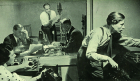
    Throughout the Second World War the BBC produced and transmitted regular broadcasts in German to Germany and other European countries occupied by the Germans. In this article Hattie Simpson evaluates the style and success of the BBC German Service. The article is based on her winning entry in the senior...

    Click to view