Society

How people group together, organise their rules and systems are all part of what create a society. In this section articles examine the nature of society how it interacts with other themes of culture, power, etc. and how societies have developed and changed over time. The structures of the ancient world are explored as are the complex feudal systems and the varied societies of Empire and modernity.

Sort by: Date (Newest first) | Title A-Z
  • Volunteers to a man: an industrial workplace goes to war

    Article

    In this article Edward Washington explores how the Royal Mint in Sydney, Australia was affected by the First World War, through the loss of professional staff and the legacy of experiencing conflict. The Royal Mint, Sydney, which opened in 1855 in response to the Australian gold rushes, was the first...

    Click to view
  • We will remember them: well, most of them

    Article

    Richard Broadhead provides a personal view on whether the mammoth task of the Commonwealth War Graves Commission can always be fulfilled, especially at a time of so many anniversaries.

    Click to view
  • What Have Historians Been Arguing About... the consequences of the industrial revolution

    Article

    The British industrial revolution stands out as a pivotal moment in human history. Its timing, causes and consequences have all been major topics of historical enquiry for well over one hundred years. Many of the great Victorian commentators – Engels, Dickens, Blake to name a few – who lived through...

    Click to view
  • What caused the decline of trams in West Yorkshire?

    Article

    In an article based on his award-winning essay for the Young Historian competition, Christopher Barnett describes the development, decline and potential resurrection of West Yorkshire’s tram network...

    Click to view
  • What did it mean to be a city in early modern Germany?

    Article

    Alexander Collin examines the significance of cities within the Holy Roman Empire in early modern times. With a strong political identity of their own, cities were at the heart of the Empire’s economy and, also, centres of theological and social change. If you have ever read a description of a...

    Click to view
  • What difference has the opening (and closing) of archives after 1991 made to the historiography of the Cold War?

    Article

    Prior to the East European revolutions of 1989, and the collapse of the Soviet Union in 1991, commentators outside the region were largely reliant on printed material collected by specialist research libraries, informal rrangements with contacts ‘behind the iron curtain’, information that could be gleaned from visits to the region, and...

    Click to view
  • What is interesting about the interwar period?

    Article

    The years between the Armistice of November 1918 and the German attack on Poland in September 1939 were undoubtedly a period of massive transformations. Public appetite to learn about specific aspects of this era remains strong. The making of communist rule in revolutionary Russia, the tribulations of Weimar Germany, the rise...

    Click to view
  • When was the post-war?

    Article

    There is a peculiar tension at the heart of scholarship about the years and decades after the Second World War. On the one hand, the political developments following the breakdown of the war-time alliance between the United States and the Soviet Union have spawned an enormous literature, in parts as old...

    Click to view
  • Who only history know? Cricket, society, and the historical oversight of sport

    Article

    The early 2020s have seen various investigations and reports about discrimination in English cricket. As well as finding many examples of racial and gender prejudice, these investigations have unearthed a long history of social elitism in the sport. In this article, Duncan Stone explores some of the historical background to...

    Click to view
  • Willington and the Mowbrays: After the Peasants’ Revolt

    Article

    Willington and the Mowbrays: After the Peasants’ Revolt, Dorothy Jamieson, Bedford Historical Record Society Vol 95, Boydell Press, 2019, 241p, £25-00, ISSN 0067-4826. At one level this scholarly and meticulous study introduces us to the Willington neighbourhood in Bedfordshire. Based on Dorothy Jamieson’s careful transcription of its manorial court rolls,...

    Click to view
  • Women and the French Revolution: the start of the modern feminist movement

    Article

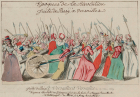
    Luke Rimmo Loyi Lego explores the role of women in the French Revolution, and how their challenges to traditional gender roles laid the foundations for the modern feminist movement.  The study of the French Revolution is often restricted to its impact on the Enlightenment ideas of influential men such as Rousseau,...

    Click to view
  • Women, education and literacy in Tudor and Stuart England

    Article

    To booke and pen: Women, education and literacy in Tudor and Stuart England As a student in the early 1970s, I became acutely aware that formal provision for women's education was a relatively recent development. I was at Bedford College, which originated in 1849 as the first higher education institution...

    Click to view
  • Women’s friendship in late eighteenth-century America and its relevance to lockdown

    Article

    Rowan Cookson offers us the opportunity to compare our contemporary anxieties with a stressful era in American history. Eighteenth-century women’s friendship is worth considering at this time. In my undergraduate dissertation, I concluded that white wealthy women’s friendship in eighteenth-century America equired long distance communication, involved labour and perpetuated race and class...

    Click to view
  • Writing Lilian Harrison into history

    Article

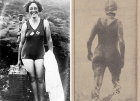
    In this article Matthew Brown and Pablo Scharagrodsky introduce us to the little-known story of Anglo-Argentinian swimmer Lilian Harrison, who in 1923 became the first person to swim the 42km from Uruguay to Argentina at the estuary of the Rio de la Plata. Her story shows how she had to battle against not only tides and...

    Click to view
  • ‘A little bird told me’: spies and espionage in the early medieval world

    Article

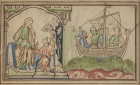
    Spies were a common feature of political, diplomatic and courtly life in the period of early medieval Europe. In this article, Jenny Benham explores some interesting contemporary representations of spies, in both literature and art. These stories and images reveal key features of the culture and practices surrounding these so-called...

    Click to view
  • ‘The cradle of the Industrial Revolution’

    Article

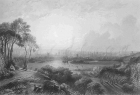
    Michael Winstanley challenges assumptions about Lancashire's new industrial landscape, inviting us to re-imagine what Manchester and the country around it looked like. Lancashire, especially the cotton textile district to the east of the county, is widely regarded as the ‘cradle of the industrial evolution’. But what did this burgeoning industrial landscape actually look like in the early nineteenth century?...

    Click to view
  • ‘The story of her own wretchedness’: heritage and homelessness

    Article

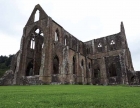
    David Howell uses eighteenth-century beggars at Tintern Abbey as a starting point for his research into the use of heritage sites by the homeless. In 1782, the Reverend William Gilpin published his Observations on the River Wye, a notable contribution to the emerging picturesque movement. A key element of his work is a commentary on Tintern Abbey....

    Click to view