International Relations

Relations across the UK, Europe and globally are frequently changing, and have done so across our history. How these relations are recorded, monitored and treated are discussed in the collection of articles and podcasts here. The very concept of international relations is explored as are when boundaries and discussions between states and groups started to matter. What are the procedures, protocols and outcomes of a world according to the history of international relations are all under scrutiny?

Sort by: Date (Newest first) | Title A-Z
  • Virtual Branch Recording: The Lines we Draw

    Article

    In this Virtual Branch Tim Franks, acclaimed BBC Journalist, talks about his personal history and identity drawing on his new biography The Lines we Draw: The Journalist, The Jew and an argument about identity.  We will delve into Tim's experiences as a journalist in some of the world's major conflict zones,...

    Click to view
  • Recorded webinar: Researching the history of migration and refugees in Europe

    Article

    Research on the history of migration continues to flourish and grow, but scholarship is also becoming increasingly splintered, often focusing on particular settings or population groups. Migration is often used as a way to discuss questions of national identity or diverse religious, ethnic, religious and local identities in the UK,...

    Click to view
  • Recorded webinar: Ottoman trade with Europe in the early modern era

    Article

    For European states in the early modern era the Ottoman empire represented a huge trading bloc, stretching at its height from Hungary in the west to Iran in the east, from Ukraine in the north to Egypt in the south, and along the southern shores of the Mediterranean to the...

    Click to view
  • Recorded webinar: Histories of Indigenous peoples of North America

    Article

    Any study of the intercultural relationships between the Indigenous peoples of North America and British settlers usually focuses on the differences that resulted in disputes and violence. However, on closer examination, the interaction also involved the exchange of ideas and the forging of alliances, which required diplomacy and respect for...

    Click to view
  • Virtual Branch Recording: Crusader Criminals

    Article

    The religious wars of the Crusades are renowned for their military engagements. But the period was witness to brutality beyond the battlefield. More so than any other medieval war zone, the Holy Land was rife with unprecedented levels of criminality and violence. In the first history of its kind, Steve Tibble explores...

    Click to view
  • Filmed Lecture: Medlicott Lecture 2024 - Professor Catherine Hall

    Article

    Addressing issues of the legacies of racism created by the transatlantic slave trade and the narratives of its abolition  The Medlicott Medal is awarded annually for outstanding services and contributions to history. This year the Medal went to Professor Catherine Hall, who is Emerita Professor of Modern British Social and Cultural History at...

    Click to view
  • Virtual Branch Recording: From Pirates to Princes: Normans in Eleventh Century Europe

    Article

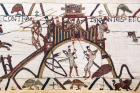
    Normandy originated from a grant of land to Rollo, a Viking leader, in the early tenth century. By the end of that century Normans were to be found in southern Italy, then in Britain and, at the end of the eleventh century, in the near East on the First Crusade....

    Click to view
  • Recorded webinar: John F. Kennedy and the Vietnam War

    Article

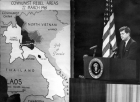
    Would US President John F. Kennedy have avoided the catastrophe that became the Vietnam War if Lee Harvey Oswald had not assassinated him in Dallas on that fateful day of 22 November 1963? This question – or a version of it – has animated discussions of the Vietnam War for...

    Click to view
  • Recorded webinar series: Commemorating the 75th anniversary of the UN Convention on Genocide

    Multipage Article

    9 December 2023 was the 75th anniversary of the passing of the United Nations Convention on the Prevention and Punishment of the Crime of Genocide (known as the UN Convention on Genocide). The convention was a clear statement by the international community that crimes of that nature should never happen...

    Click to view
  • Virtual Branch recording: The Women's World Committee against War & Fascism

    Article

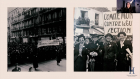
    How did a group of women activists with varied ideological backgrounds construct several important campaigns against fascism in the interwar period? How did this Women's World Committee against War and Fascism (Comité Mondial des Femmes contre la Guerre et le Fascisme) undertake effective humanitarian and propaganda work and forge extensive...

    Click to view
  • Virtual Branch recording: Empires of the Normans

    Article

    How did descendants of Viking marauders come to dominate Western Europe and the Mediterranean, from the British Isles to North Africa, and Lisbon to the Holy Land and the Middle East? In this Virtual Branch talk Levi Roach, author of Empires of the Normans, tells a tale of ambitious adventures...

    Click to view
  • Film: Living with Violence at the End of the British Empire

    Article

    In the 1950s, Britain fought a series of brutal wars against insurgents in the colonies of Malaya, Kenya, and Cyprus. How did people at home experience these wars? How did they learn about the use of torture and other unsettling tactics? And how did they respond to this knowledge? In...

    Click to view
  • Developments in Indochina after World War II

    Podcast

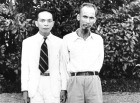
    French Indochina, officially known as the Indochinese Union, was a grouping of French colonial territories in Southeast Asia until its demise in 1954. It comprised Cambodia, Laos (from 1899), the Chinese territory of Guangzhouwan (from 1898 until 1945), and the Vietnamese regions of Tonkin in the north, Annam in the centre, and Cochinchina in the south. The capital for most of its history (1902–1945) was Hanoi; Saigon was the capital from...

    Click to view
  • Virtual Branch recording: The survival strategies of the Near Eastern powers facing Mongol invasion

    Article

    The Mongol invasions into the Near East had a devastating effect upon many societies, sultanates, empires and kingdoms. For decades, wave after wave of armies swept across the area, defeating every army sent against them and utterly reshaping the area’s complex political ecosystem. Some powers fell in battle; some submitted...

    Click to view
  • Film: Rome in the world/the world in Rome with Dr Lucy Donkin

    Article

    To give you a taster of the fantastic sessions on offer at the HA's annual conference, we've published one of the sessions from the 2022 HA Conference on Rome in the world/the world in Rome with Dr Lucy Donkin.   In many cultures, earth has been used to represent a place...

    Click to view
  • Recorded Webinar: Female slave-ownership in 18th- and 19th-century Britain

    Article

    There is a great deal of discussion at the moment about how we engage with and confront the history and legacies of slavery in twenty-first century Britain. A lot of attention has been placed on men like slave trader Edward Colston or merchant and slave-owner Robert Milligan, both of whom were memorialised...

    Click to view
  • Film: Heligoland: Britain, Germany, and the Struggle for the North Sea

    Article

    Professor Jan Rüger joined the Virtual Branch on 9th February 2023 to talk about his book Heligoland: Britain, Germany, and the Struggle for the North Sea, tracing a rich history of contact and conflict from the Napoleonic Wars to the Cold War. For generations this North Sea island expressed a German...

    Click to view
  • Recorded Webinar: Ukraine and the Soviet Politics of Empire

    Article

    Dr Zbigniew Wojnowski is a historian based at the University of Oxford. He specialises in the history of the Cold War and is particularly interested in the history of Soviet social, cultural, and political interactions with Eastern Europe after 1945. In 2017, he published a book entitled The Near Abroad:...

    Click to view
  • Recorded Webinar: India and the Second World War

    Article

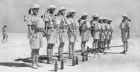
    Two-and-a-half million men from undivided India served the British during the Second World War.  Their experiences are little remembered today, neither in the West where a Euro/US-centric memory of the war dominates, nor in South Asia, which privileges nationalist histories of independence from the British Empire. What was it like...

    Click to view
  • Recorded Webinar: ‘Drawing the Line’: the 1947 Partition of India

    Article

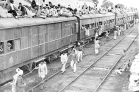
    August 2022 marks 75 years since British India was divided at independence into two separate states: India and Pakistan (the latter including today’s Bangladesh). As with the 70th commemoration in 2017, this anniversary will trigger a great deal of collective remembering in Britain just as in South Asia itself. Freedom from...

    Click to view