

Black History Month 2026: Honouring Our Communities
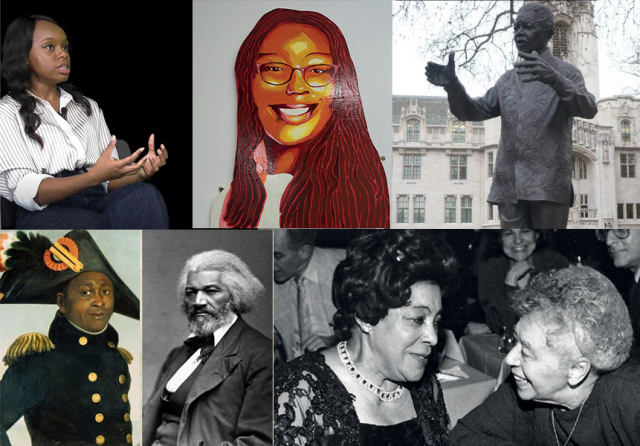
October 2026 marks 39 years since the first Black History Month was celebrated in the UK. In this time, it has evolved from early efforts to highlight the achievements and contributions of Black people throughout history, to become an integral part of the year in both public history and history education.
Black History Month still faces criticism. Critics are concerned that Black history could be viewed only as a specialist subject to be celebrated once a year rather than studied all year round. Ideally the histories of Black peoples or people of colour should not be viewed as an add-on subject to the school curriculum, only to be explored for one month. The histories of Black peoples should be continuously integrated into the history of Britain and can be found woven into the past of our cities, our industries, sports, the arts, and through family history. However, it is still deeply important to celebrate Black History Month as it can be a starting point for schools and the public to explore Black history and counter resistance from those who are uncomfortable with the discussions that this history inevitably raises about Britain’s past on topics such as slavery, colonialism and systematic or institutionalised racism.
This year’s theme for the month is 'Honouring Our Communities.’ There is no one single story in Black history: it is a subject made up of the experiences of many different communities. The HA has a wealth of resources to explore the history of Black communities both in Britain and further afield, and we have made a selection of these available open-access for October. These range from the experience of Black women in sport (History journal*) to the arts with Stephen Bourne’s article on Black Britons on BBC Television, 1936 to 1956 (available on our website soon).
The history of Black business communities is examined in The Historian in ‘Eastern Nigeria market women and European businesses in colonial Nigeria 1900–29.’ Teaching History contains valuable insights in how to teach secondary students to take a long view of African economies, bringing the agency of African communities to the fore within, and beyond, imperial economic structures. Educator Steven Kenyon looks at how the history of Black British communities can be explored with Primary students through the use of local history archives.
It is important to study the history of both oppression and resistance within Black history to understand the racial inequalities that still exist across the globe today. Our film on Black British History – 1714 to 1785 gives an excellent introduction to the social and political consciousness of Black Britons during the Transatlantic Slave Trade. While the lives and experiences of enslaved peoples have traditionally been left out of history textbooks, historian Tiya Miles’ radical approach of ‘informed imaginings’ is being used to explore the lives of enslaved people in the latest edition of Teaching History. Resistance is explored in two webinar recordings, Sudhir Hazareesingh’s lecture on ‘Rebellion and Resistance of the Enslaved in the Atlantic World’ and Thulasizwe Simpson’s talk on ‘Apartheid in global context: transnational dimensions of South Africa’s racial state’.
These resources can be used both inside and outside the classroom to learn about Black history both during this month and any day of the year as we continue to ask what histories we tell and whose stories may historically have been overlooked.
The HA continues to add to its resources on this subject throughout the year.
*History journal access:
HA members have access to all History journal articles (Wiley Online Library site). To access History content:
1. Sign in to the HA website (top right of any page)
2. Then click this link to allow access to History content on the Wiley site.