General

Foundation Stage planning is a very different approach to Key Stage 1 or 2. Children in Nursery and Reception classes often have ‘continuous provision” - a variety of activities which children are free to move around among and choose for themselves. Sometimes activities will be provided where the teacher or classroom support works with all the children at different points during the week. Read more

Sort by: Date (Newest first) | Title A-Z
Show: All | Articles | Podcasts | Multipage Articles
  • Developing historical understanding across all areas of the EYFS framework

    Article

    Children in nursery and reception classes do not, of course, learn history. They meet the subject for the first time when they start Year 1. However, what children learn – and how they learn – in EYFS is important for preparing them to learn history. This goes beyond building knowledge...

    Click to view
  • Animals who help us: teaching past and present in EYFS

    Article

    Remembrance Day is a useful time to explore with EYFS pupils the people who help us. But of course animals also play a part in human conflicts. This article explores animals who have helped us in wartime now and in the past. The article includes useful teaching ideas and picture...

    Click to view
  • ‘Golden threads’ in primary history

    Article

    The term ‘golden threads’ has become increasingly part of primary history planning. It is often recommended as a means of avoiding curriculum atomisation and aiding retrieval. In this article Tim Lomas attempts to unpack what is meant by the term, what are some of the most popular ‘golden threads’ and...

    Click to view
  • Artificial Intelligence (AI) in primary history – take CARE!

    Article

    Teaching has embraced many revolutionary changes before: the photocopier, the calculator, the internet, even the smartboard!  The Assistant Director-General of UNESCO (2023) though feels that these could pale into insignificance when compared to the rise of AI. This article looks at ways in which Generative AI might be used by...

    Click to view
  • Creativity in history

    Article

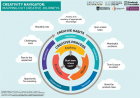
    Ask anyone for a list of creative subjects in schools and it is unlikely that history will be top of that list. However, over the last two-and-a-half years we have been working as part of a Creativity Collaborative of schools that seeks to foster creativity across the whole curriculum, including...

    Click to view
  • Exploring sustainability in the Early Years

    Article

    Lucy Hawker has thought about how we might begin to explore the idea of sustainability with very young children. She suggests focussing on why we might save or reuse materials and objects. She presents a loose structure that could be used to develop talk. She also considers how we might...

    Click to view
  • EYFS Medium Term Plan - Toys and Games

    Article

    This EYFS Medium Term Plan is based around the theme of Toys and Games. It is designed to give teachers and early years practitioners different starting points for learning about the past, across all areas of learning. The activities could be led with a whole class or as small group...

    Click to view
  • How to incorporate EYFS as a subject leader

    Article

    As a subject leader you often have a lot on your plate and not always the time provided to do so. I have always been fortunate in that I have had support but I appreciate that in certain schools it can be difficult to fit everything in. Hopefully with this...

    Click to view
  • Pupil voice: Democratising history lessons in Key Stage 1

    Article

    Why is pupil voice important? Children are at the centre of everything we do and safeguarding their well-being and ensuring their progress across the curriculum is a key emphasis for schools. Recognising the importance of pupil voice in this is key. Robin Alexander’s Towards Dialogic Teaching: Rethinking Classroom Talk (2017)...

    Click to view
  • Using stories to support history in the EYFS

    Article

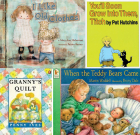
    Stories can be used as starting points for planning topics. Activities suggested below relate to ‘Understanding the world’ including Early Learning Goal 13 – People and communities:  Children talk about past and present events in their own lives and in the lives of family members. They know about similarities and...

    Click to view
  • Primary History Summer Resource 2019: Diversity

    Article

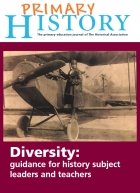
    This free summer resource for primary members is designed to help primary subject leaders and teachers consider the implications of developing a school policy for teaching of diversity in history. This comprehensive guide provides timely advice and considers questions associated with teaching diversity and provides a rationale for its essential role in providing an understanding...

    Click to view
  • Primary history and British values

    Article

    In this article, Michael Maddison provides an overview of what schools must do in relation to promoting British values, as well as preventing extremism and radicalisation, and why it is so important that opportunities are taken in history to  deal with these two pressing issues. It is an updated version...

    Click to view
  • Using artefacts to develop young children’s understanding of the past

    Article

    In the children’s picture book Wilfrid Gordon McDonald Partridge, Wilfrid is a small boy who meets Miss Nancy, an old lady who has lost her memory. Wilfrid wants to help, and so he carefully fills a basket with special objects and takes them to her. He places a medal in...

    Click to view
  • Role play and the past

    Article

    The role-play area is often the most popular feature of a foundation stage classroom. For children, it's a source of great fun; for Early Years teachers, it is a wonderful way to develop pupils' language, communication and social development skills. An effective role-play area can also be instrumental in helping...

    Click to view
  • KS1: Teaching about significant individuals

    Article

    Teaching about significant individuals at Key Stage 1. Workshop by Professor Penelope Hartnett, University of the West of England The history programme of study for Key Stage 1 requires pupils to be taught about: The lives of significant individuals in the past who have contributed to national and international achievements, some...

    Click to view
  • What your local Archive Service can offer to schools

    Article

    Imagine a place where your pupils become detectives working on mysteries from the past such as the tale of Thomas Sargeant, a 15-year-old factory worker who died in a chemical works in 1898. Your local archive is bursting with stories about real people like this which can give children an...

    Click to view
  • The importance of history vocabulary

    Article

    Teachers and schools should surely be forgiven for quickly turning to the pages containing the ‘subject content' - within the new 2014 history curriculum - and finding out ‘what' they should be teaching. This is especially true for Key Stage 2 where children must now learn British history from the...

    Click to view
  • Using 'Development Matters' in the Foundation stage

    Article

    Using ‘Development Matters' to plan learning for history in the Foundation stage You won't find the term history in the Early Years curriculum framework at all. That being so, it can be difficult to know how best to support our Nursery and Reception colleagues when developing historical understanding within the...

    Click to view
  • Ideas for Assemblies: Lest we forget

    Article

    Over the next three editions of Primary History our assemblies pages will be linked to the theme of commemorating the First World War. We have found that while many teachers wish to remember these events in school, they are unsure how to approach the subject with primary aged children. It...

    Click to view
  • Implementing the 2014 curriculum in Year 2

    Article

    The chance to pilot the new National Curriculum presented me with the opportunity I was looking for to revamp a tired Year 2 curriculum. I began teaching in Year 2 two years ago, having previously spent five years working in Key Stage 2. As in many other schools across the...

    Click to view