Living Memory

Studying events within living memory can help young children to gain an early understanding of chronology and that history is made all of the time. It also helps them to understand the world and their place within it. Through this Key Stage 1 unit of study, children are introduced to historical concepts, vocabulary and representations through exploring the ways in which life has changed over the time of their parents, grandparents and great-grandparents. This can be used to reveal aspects of national events or changes where possible. Popular areas for this topic include family, toys, holidays, the climate, technology, school, among many others.  In this section you will find articles and guidance to help you plan exciting and creative ways to introduce your children to the study of history.

Sort by: Date (Newest first) | Title A-Z
Show: All | Articles | Podcasts | Multipage Articles
  • Is There a Place for The Holocaust in the Primary Curriculum?

    Article

    The Holocaust – the murder of approximately six million Jewish men, women and children by Nazi Germany and its collaborators during the Second World War – is possibly the most difficult event that any history teacher will ever have to teach. Most obviously, it can be deeply upsetting, for educators...

    Click to view
  • Ideas for Assemblies: Refugee stories

    Article

    Please note: this piece was written before Sir Mo Farah’s 2022 disclosure that he was trafficked to the UK as a child, so some of its content is no longer accurate. An assembly could focus on the achievements of their lives, experiences as child refugees and migrants, and how they overcame...

    Click to view
  • ‘Not again!’ - an additional viewpoint on using railways

    Article

    ‘Not again!’ I can remember my son muttering as his football thudded against the kitchen wall, ‘I went there in Year 2 and then in Year 4 and now I have to go there again in Year 6.’ He was referring to his school trips to the remains of the gunpowder factories in our village,...

    Click to view
  • Learning about the past through a study of houses and homes

    Article

    A thematic study based on houses and homes is an excellent way to link learning about the past with something all children will be able to relate to – where they live. Planned carefully, it can provide a range of learning opportunities for both inside and outside the classroom. Let’s look outside Learning about houses...

    Click to view
  • Learning about the past through ‘ourselves and our families’

    Article

    ‘Ourselves and our families’ is a popular theme in foundation settings and Reception classes. It is often undertaken at the beginning of the academic year, although it can be taught later when teachers have a better understanding of children’s home circumstances. This theme can provide many opportunities for children to...

    Click to view
  • Learning about the past through toys and games

    Article

    A learning theme centred on toys and games is perfect for younger children as the Early Years curriculum is, of course, all about learning through play. Planned carefully, it can also provide many opportunities for children to develop their understanding of the past. Adult-directed learning opportunities Provide the children with...

    Click to view
  • Planning for 'Changes within Living Memory'

    Article

    While changes to the Key Stage 1 subject content are not as extensive as Key Stage 2 it is necessary to be aware of the changing emphasis within the different themes. ‘Changes within Living Memory' has a couple of key issues to be aware of. First, ‘living memory' refers to...

    Click to view
  • Role play and the past

    Article

    The role-play area is often the most popular feature of a foundation stage classroom. For children, it's a source of great fun; for Early Years teachers, it is a wonderful way to develop pupils' language, communication and social development skills. An effective role-play area can also be instrumental in helping...

    Click to view
  • Using 'Development Matters' in the Foundation stage

    Article

    Using ‘Development Matters' to plan learning for history in the Foundation stage You won't find the term history in the Early Years curriculum framework at all. That being so, it can be difficult to know how best to support our Nursery and Reception colleagues when developing historical understanding within the...

    Click to view
  • Using the back cover image: Westonzoyland War Memorial

    Article

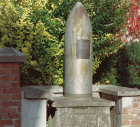
    The image on the back cover is of the war memorial in Westonzoyland, Somerset. It consists of a concrete plinth with a metal shell-case set on top, on the front of which is a plaque which reads: ‘This shell was presented by Westonzoyland Parish Council to commemorate the memory of...

    Click to view
  • Chronology: Developing a coherent knowledge

    Article

    Chronology: Developing a coherent knowledge and understanding of Britain's past and of the wider world First, this article considers the reasons why it is essential for children to develop a chronological framework. Next it considers ways in which this framework is necessary for the development of the time concepts set...

    Click to view
  • World War II evacuation project - A living history experience

    Article

    Editorial note: The WOW factor. When we first received and read the World War II Evacuation Project case study we simply went WOW! It was genuinely mind-blowing. Below we publish the main sections of the report. They bring to life an invaluable, ground-breaking case-study of national significance. The case-study involved...

    Click to view
  • Learning to engage with documents through role play

    Article

    Please note: this article pre-dates the 2014 National Curriculum and some content may be outdated. First let me say that I did not research the materials used or plan this lesson. For this I must acknowledge, with thanks, that this is the work of my colleague, Mike Huggins, and the senior...

    Click to view
  • Using classic fiction to support the study of childhood in Victorian times

    Article

    Please note: This article pre-dates the current National Curriculum and some content and references may be outdated. Classic fiction provides useful sources of information for investigating the lives, beliefs and values of people in the past. In this article Ann Cowling describes activities undertaken with student teachers which may also serve as models...

    Click to view
  • Oral history - a source of evidence for the primary classroom

    Article

    Please note: this article pre-dates the 2014 National Curriculum and some content may be outdated. To help children develop a more rounded awareness of historical understanding, they should have the opportunity to examine different types of evidence. The National Curriculum states that, "children should recognise that the past is represented and interpreted...

    Click to view
  • A history of the world - 100 objects that tell a story

    Article

    Please note: this article pre-dates the 2014 National Curriculum and some content may be outdated. Editorial comment: A History of the World is the most creative, imaginative and dynamic development in primary History Education for thirty years. It ties in perfectly with and supports the government's re-vitalisation of primary education that...

    Click to view
  • History...about lives and living

    Article

    Please note: this article pre-dates the 2014 National Curriculum and some content may be outdated. Let me start with a personal experience and then move on to a classroom example. I went to Paris for a few days recently and sat in the bar where Hemingway used to drink with...

    Click to view
  • Introducing history at Key Stage 1: a view from the classroom

    Article

    Please note: this article pre-dates the 2014 National Curriculum and some content may be outdated. ‘What are we doing this for?’ I was asked this question as we entered the churchyard to look at the local War memorial. The curiosity and directness of a six year old child is guaranteed...

    Click to view
  • What was it like to live here in the past? Resourcing the local study

    Article

    Finding sources for your local study can be a challenge, particularly if you are not familiar with the history of the area around your school. Please note: this article uses the Images of England website which has now closed down. The images can still be found via the Historic England website. This...

    Click to view
  • Oral history in primary schools

    Article

    Although this article focuses on a distinctive and effective historical activity it is important from the outset to recognise that involvement in oral history also has the potential to enhance learning across the ‘formal curriculum’ and beyond. Talking to older people about their lived experience and recording their memories provides...

    Click to view