
Curriculum Support     Foundation Stage & Key Stage 1         Planning             General             Cross Curricular             Local History             Chronological Understanding             Outside the classroom             Developing enquiries         Progression & Assessment         Enquiries         Classroom Resources     Key Stage 2         Planning             General             Local History             Chronological Understanding             Outside the classroom             Developing enquiries             Cross Curricular         Progression & Assessment         Enquiries         Classroom Resources         Transition KS2-KS3     Primary History resources         The Stone Age to the Iron Age         Ancient Civilisations             Greece             Rome             Egypt             Sumer & Mesopotamia             Shang Dynasty             Indus             Persia         Roman Britain         The Anglo-Saxons, Vikings & the Normans         Local Study         World Study             Africa             Central & South America             The Middle East             Asia         Individuals & Events         Living Memory         Beyond 1066             Chronology             Big Picture History             The Victorians             Britain since 1930             Crime and Punishment             Science & Industry             The Tudors         Connecting Classrooms through Global Learning         Primary classroom posters         Assessment         Lessons & Exemplars             Teaching Methods & Leading Primary History             Exemplars & Study Units             Lessons - Key Stage 1             Lessons - Britain since the 1930s             Lessons - The World Wars             Lessons - Tudors & Stuarts             Ancient Greece, Egypt, Sumeria & the Aztecs             Lessons - The Victorians             Lessons - Urban Spaces             Lessons - Romans, Anglo-Saxons and Vikings     Curriculum Issues         Planning             Developing enquiries             Whole School             Inclusion             Local history             Outside the classroom         Interpretations         Change and continuity         Causation         Significance         Chronological Understanding         Inclusion         Using Sources         Similarity & difference         Diversity         Big Picture         Controversial issues         Literacy     Schemes of Work         EYFS & Key Stage 1         Key Stage 2

Progression & Assessment
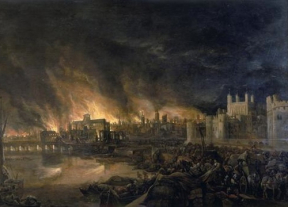
The Great Fire of London is a favourite National Curriculum teaching topic. This paper draws on the latest resources and teaching ideas to suggest how you can meet both the NC history requirements and the wider ones of the National Curriculum, particularly in integrated programmes that include teaching about the...
Please note: this article pre-dates the 2014 National Curriculum and some content may be outdated. "The focus for much of the planning and the teaching is on pockets of knowledge at basic levels. Thus, the notion that pupils can progress and do better over time in history is not well...

Please note: this article pre-dates the 2014 National Curriculum and some content may be outdated. Much of the recent guidance related to assessment, monitoring and recording in primary history has focused more on what does NOT have to be done rather than on practical advice on what might be done....
Synopsis: Self-assessment sheets for Early Years literacy, which the child completes in discussion with the teacher. Review: This would be useful if Early Years staff have not got any other assessment strategy in place. It contains colour sheets for the child to complete, stating what level they are on and...
This article pre-dates the 2014 National Curriculum and some content may be outdated. Once upon a time, educators believed that there was a property of children’s minds known as ‘understanding of time’. According to this belief, young children had little ability to understand when things happened, even within their own...
Please note: this article pre-dates the 2014 National Curriculum. In September 2000, the introduction of a foundation stage for children aged three to the end of the reception year was widely welcomed for the way in which it confirmed a distinct identity for the early years in education. The recent...