
Teaching History articles

The benefits of learning in historical sites and museums are well documented. De Silva, Smith and Tranter wrote in Teaching History 102, Inspiration and Motivation Edition, about exploring identity through the biography of a house, suggesting the possibility of teaching from the local to capture the national picture. However, students...
Val Messalina is a lively and engaging young student teacher who has come straight to the PGCE course after completing her history degree. She has made a positive start to teaching but is quite nervous and tends to look for very clear guidance and support. She is now half way...
Historians and history teachers understand well that students, when they ‘answer’ questions, are creating their own interpretation. We take account of this in our teaching too: we do not pretend that, beyond the level of the simplest closed questioning, there is ever a ‘right’ or ‘wrong’ answer approach to history....
Robin Conway suspected that his students’ concepts of the significance of different aspects of historical periods was affected by the preconceptions that they brought to his lessons. These preconceptions were leading his students into making unhistorical judgments, without any real understanding on their part of what had affected their thinking....
No longer is historical significance the ‘forgotten key element.’ Indeed, it is now being remembered at last – by politicians, telly-dons and the media in any case. Matthew Bradshaw suggests that the popular emphasis on significant events is wrong. Instead, we should be enabling our pupils to make their own...
October 17 saw thousands of people writing a blog of a normal Tuesday as part of the ‘History Matters’ campaign. There was great media interest in the event and the papers were full of the blogs of the famous and not so famous; people were keen to write up their...
Reflection and evaluation are key tools in the box of the successful history teacher. However, a focus on resources or exam results is futile unless a desire to develop pupils’ historical understanding is at the heart of the evaluation process. Maria Osowiecki’s department faced two problems: how to develop their...
This Issue's Problem: Steve Cloye is over half way through his first main teaching placement and has been struggling with the PGCE. His degree was in American Studies, and although this included American history he lacks confidence in his subject knowledge, and particularly in his understanding of the nature of...
The Director of the National Academy for Gifted and Talented Youth (NAGTY), Deborah Eyre, is one of the foremost advocates of gifted and talented children, and their education, in the UK. She plans to improve the education of the most able students by asking subject communities to work on how...
Arthur Chapman and James Woodcock have collaborated before: Woodcock extended Chapman’s familiar casual metaphor of the final straw breaking a poor abused camel’s back. Here, they collaborate more explicitly to suggest a means of teaching students to produce adequately nuanced historical explanation. Their two central ideas are to produce a...
Dan Moorhouse begins with a complaint about ICT. It is not the clichéd teacher-complaint – that the computers keep crashing, and the students are messing around on the Internet (and how, exactly, do you turn the things on?) Instead, he observes that the use of ICT in the classroom is...
The most able can be challenged in a variety of ways and at a number of levels, from the extension question for the individual child to the extended enquiry for the most able class. In a Leading Edge History project, Guy Woolnough and his colleagues took the concept of challenge...
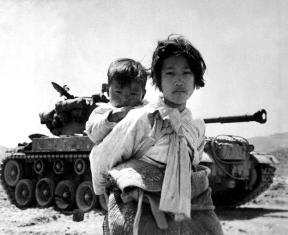
Interpretation of the Cold War is a fascinating area. Many students begin to study it certain pre-formed ideas – gleaned from their parents, perhaps, or from films or computer games. Historians have interpreted it in different ways – and those who believe in the ‘twenty-year rule’ that historical judgment is...
Are top sets always our top priority? Of course, we know that every child matters (should that now have capital letters?) but those of us who teach in an ability-setted context also know that a bottom set left unable to access the curriculum is likely to pose bigger problems than...
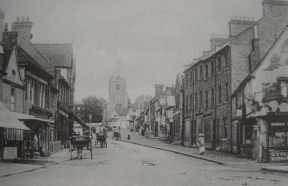
This Issue's problem: Lucy Hutchinson is finding it difficult to teach local history well. Now her new mentor has asked her to plan a local history dimension into the 1750-1900 scheme of work.
Asses, archers and assumptions: strategies for improving thinking skills in history in Years 9 to 13
Thinking skills’ is a term that has been substantially over-used. It often seems to be rather a lazy shorthand for justifying the teaching of history by suddenly bolting on some ‘thinking’ - as if history is not all about thought in the first place. Arthur Chapman suggests using techniques from...
Three years ago, Séan Lang argued that narrative, which had gone rather out of fashion, needed to be brought back into our teaching. Alf Wilkinson goes further. It is not just narrative which is needed: it is story. The move away from story is not a problem confined uniquely to...
However imaginative and enquiring classroom history may be, the history itself is usually constructed by a historian, a textbook author or a teacher. It is rare that pupils gain the opportunity to construct original histories of their own. Oral history can offer this opportunity. Yet as a methodology, oral history...
Essay writing is at the very heart of school history, yet despite the wide range of developments in this area over the past decade, pupils still struggle. Alex Scott and his department decided to investigate a variety of methods to see what methods worked in enabling pupils to construct essays...
One of the biggest challenges which any history teacher faces is how to make sources fun! Source work does struggles in terms of pupil excitement, understanding and motivation when pitted against the roleplays, dramas and debates. As a history teacher, I am constantly looking for fresh and novel ways to...