
Teaching History articles
Please note: this article pre-dates the 2014 National Curriculum and some content may be outdated. Teaching History 109, Examining History Edition, launched a range of debates about the role and value of our public examinations in history, debates which have continued in these pages and in history teacher conferences (such...
Please note: this article pre-dates the 2014 National Curriculum and some content may be outdated. Oliver Knight is an experienced Advanced Skills Teacher who has taught in four different secondary schools, three of them multi-ethnic, multi-lingual and multi-cultural and at least two wrestling with significant problems arising from social deprivation....

Please note: this article pre-dates the 2014 National Curriculum and some content may be outdated. Giles Fullard and Kate Dacey wanted to enrich their department's planning for progression across Key Stage 3 with a strong sequence of activities fostering argument. They wanted an opportunity for students to draw together their...
Please note: this article pre-dates the 2014 National Curriculum and some content may be outdated. Pupil involvement is at the heart of every good history lesson. Its planning ensures that pupils are given the opportunity to think for themselves, share ideas, discuss evidence and debate points. The history education community...
Please note: this article pre-dates the 2014 National Curriculum and some content may be outdated. Matt Stanford is not exactly fed up of marking essays, but he could do with a change. His pupils, he realises, could too. History assessments have often been based on words - either the written...

Please note: this article pre-dates the 2014 National Curriculum and some content may be outdated. Ian Dawson's seminal work on developing chronological understanding - in Teaching History 117, on the website thinkinghistory.co.uk and elsewhere - will be familiar to readers. In this article Dawson considers the question, very much on...
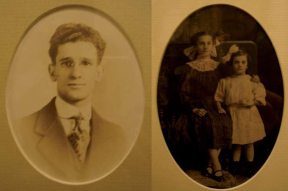
Please note: this article pre-dates the 2014 National Curriculum and some content may be outdated. Pupils are eternally curious about their teachers. Do they really have lives outside the classroom? Could Miss Jones have once been a child? Does she have parents and grandparents and a past of her own?...
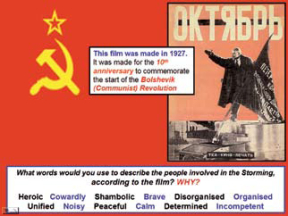
It was period 5 on a wet Wednesday afternoon deep into the winter term. Year 9 were even more difficult than usual. Being cooped up inside at lunch, without supervision, had not helped the situation. What was I going to do with this untamed bunch? Put on a trusted video?...
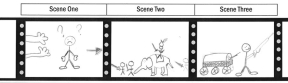
Please note: this article pre-dates the 2014 National Curriculum and some content may be outdated. Rosalind Stirzaker has introduced some fascinating topics at Key Stage 3. Her pupils, living in Dubai, have the opportunity to study the Islamic Empire, the Mughal Empire and Mespotamia as well as many of the...
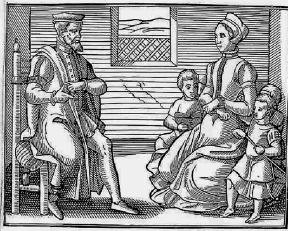
Please note: this article pre-dates the 2014 National Curriculum and some content may be outdated. What are textbooks for and how do we think of them? As inevitably partial views of the past that reflect their purpose and moment of construction and their authors' location in physical and ideological time...
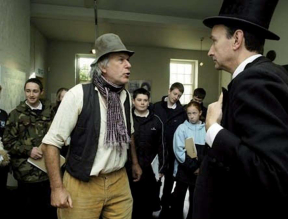
Please note: this article pre-dates the 2014 National Curriculum and some content may be outdated. Have you stuggled to find an invigorating, exciting local enquiry to motivate your Year 9 class ? How do you engage students in lively debate? This was the challenge for one Norfolk school who wanted...
Have you stuggled to find an invigorating, exciting local enquiry to motivate your Year 9 class ? How do you engage students in lively debate? This was the challenge for one Norfolk school who wanted to develop a local study on the Poor Law and to create opportunities for students...
This Issue's Problem: Dot Bradford would love to generate much more productive small group talk and worthwhile class discussion but can't work out how to manage it. Dot came to the PGCE straight from a history degree and was originally inspired by approaches quite different from her own school experience....
This Issue's Problem: Ajmal Khan has recently started his second school placement. Although he is very pleased to be working now in an ethnically diverse urban school (after a first placement in a largely white suburban setting), he is feeling somewhat overawed at the prospect of teaching Year 9 about...
Kate Hammond sets out a rationale for linking the National Curriculum requirement to study interpretations of history with her pupils’ own evidence handling skills. She makes connections with history-teacher-led debates and innovations in both areas, but particularly the work of Howells (2005). She describes and evaluates a learning sequence that...
Sometimes particular problems can lead to unexpected solutions. In this case, Sally Burnham decided to solve a problem that she had identified among her Year 12 students by changing the way in which she teaches Year 7. Her Year 12s were finding it difficult to set appropriate questions for their...
Jennifer Evans and Gemma Pate, history teachers in two Essex schools, had noticed that sometimes a writing frame did the opposite of what was intended. Sometimes a card sort fostered rich discussion and ownership; sometimes it led the students down a reductive rather than mind-opening path. Sometimes modelling of paragraphs...
The work of Gary Howells will be familiar to many readers of Teaching History—indeed, his last article is heavily cited elsewhere in this edition. He presents here the case in favour of using sources at AS level (16-17 years old). Clearly, historians need to have some form of acquaintance with...
It is possible for teachers to learn a great deal within their own classrooms, departments and schools. However, stepping outside that daily experience, whether by reading a journal, contributing to a web debate or attending a conference, can always provide refreshing ideas. Evelyn Sweerts takes the concept of sharing good...
In popular perception, anthropologists and historians cut very different figures. The anthropologist, a hybrid of Indiana Jones and a Kiplingesque colonial official, wears a bush hat or pith helmet and tirelessly trudges up mountains or hacks through jungle in search of lost tribes and ancient, unchanging, folklore. The historian, a...