
Supporting professional learning

Argument is at the heart of history. The historically literate student can argue. Historical speaking and writing is about presenting an evidence-based argument, even when producing a narrative. History students need to bring together knowledge of different kinds to form an argument. They need to know how to defend and...

We know that it is difficult for teachers to get to events too far from school. As a national charity, the HA recognises the importance and need to build strong regional networks for the history teaching community. Many of these are already existing or organically growing across the country at...

Michael Bird has a long-standing interest in the power of classroom dialogue, not only as a means of elicting students’ prior knowledge or checking their understanding of new ideas and information, but also as a powerful tool for generating new knowledge through a collective process of meaning-making. In this article,...

Move Me On is designed to build critical, informed debate about the character of teacher training, teacher education and professional development. It is also designed to offer practical help to all involved in training new history teachers. Each issue presents a situation in initial teacher education/training with an emphasis upon...
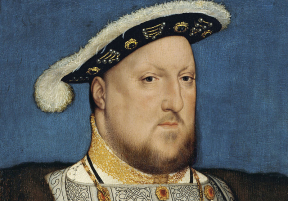
Consequence easily becomes ‘causation’s forgotten sibling’, as Fordham noted, in the title of a workshop presented at the 2012 Historical Association conference. The choice to treat consequence separately from causation in this series of articles is, therefore, a very deliberate one. Yet an emphasis on the importance of consequences should...

Subject knowledge updating is enjoyable and a huge challenge in a busy teacher's life. There are fantastic initiatives which make this process more collegiate. And some historians are incredibly generous with their time and engage with history teachers on social media and at conferences. Nevertheless, there can’t be many of...

What, exactly, is learned knowledge - and why does it matter in history teaching? Michael Fordham seeks to use the general tenets of cognitive psychology to inform the debate about how history teachers might get the best from their students, in particular in considering the role of memory. Fordham surveys...

Faced with the introduction of a two-year key stage and a new whole-school assessment policy, Rachel Arscott and Tom Hinks decided to make a virtue out of necessity and reconsider their whole approach to planning, teaching and assessment at Key Stage 3. In this article they give an account of...

The history department at Cottenham Village College has one more member than you might expect. Ruth Brown is a teaching assistant (TA) and one of the longest-standing members of the department, and this article is about how her work has an impact on specific pupils, whole classes and teachers. The...
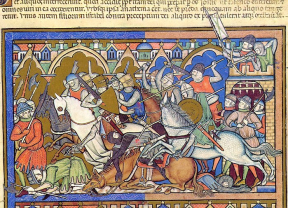
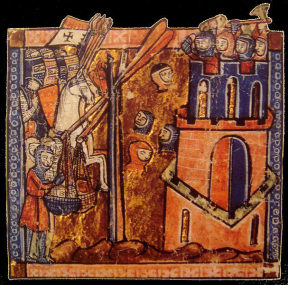
Medieval history has always been a Cinderella era for post-16 students. Some schools offer A-levels in classical civilisation, but most A-level history courses focus on the early-modern and modern periods. A few schools teach an A-level medieval module, with the Crusades being a popular choice. I was therefore excited at...

Historical significance first appeared in England’s National Curriculum for history in 1995. It entered the assessment framework (Level Descriptions) in 2008. In 2014, it became part of the History NC ‘Aims’. One thing never changes, however: it is hard. But history teachers have written a great deal about historical significance...

Alex Alcoe was concerned that mastery of certain keywords and question formulae at GCSE perhaps obscured fundamental gaps in his students’ understanding of the nature of causation. These gaps were revealed when he invited Year 12 students to make explicit, by annotating a diagram, their understanding of the relationship between...

Readers of Teaching History will be familiar with the benefits and difficulties of cross-curricular planning, and the pages of this journal have often carried analysis of successful collaborations with the English department, or music, or geography. Harry Fletcher-Wood describes in this article a collaboration involving maths, providing for us the...
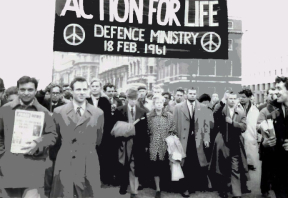
Dan Smith was concerned that his pupils were drawing on over-simplified generalisations about different periods of the past when they were considering why interpretations change over time. This led him to consider how pupils’ contextual knowledge and chronological fluency might be used more explicitly in order to avoid weak generalisations...

This issue’s problem: James Connolly is finding it difficult to judge how much or what kind of reading he should expect of his students. James Connolly, an eager and knowledgeable historian, has frequently struggled to pitch things appropriately for students. This applies particularly to his expectations of their reading, but...

It is my passion for history and interest in young people that has sustained me both as a teacher and latterly as a PGCE history tutor. Last term a number of seemingly unrelated issues began to coalesce in my mind. Over the summer I met a number of teachers that...
In Teaching History 157, Assessment Edition, a number of different teachers shared the ways in which their departments were approaching the assessment and reporting of students’ progress in a ‘post-levels’ world. This article adds to those examples, first by illustrating how teachers from different schools in the Bristol area are...

Until the 1990s, it was unusual for the majority of England's secondary school students to write history essays. The traditional essay was a staple of the old History O Level examinations, but fewer than 20% of pupils did these history exams. In the 1980s, various history teachers became increasingly concerned...
This issue's problem: Hannah Mitchell would like to wean pupils off the use of writing frames. Hannah Mitchell has embarked on her PGCE training after a year spent working as a Teaching Assistant. Her varied experiences in that role - sometimes working one-to-one with young people, within a targeted intervention...
Ten years ago, two heads of department in contrasting schools presented a powerfully-argued case for resisting the use of level descriptions within their assessment regimes. Influenced both by research into the nature of children's historical thinking and by principles of assessment for learning, Sally Burnham and Geraint Brown argued that...