
Cross Curricular

Teach Environmental Histories is a network that helps secondary school history teachers based in England to address young people’s concerns about the future of the planet. History has huge potential for educating pupils about the climate and ecological emergency. Crucially, the history that pupils learn in school can help them...
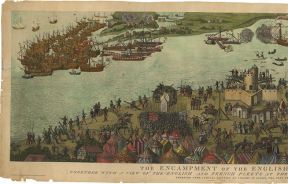
The raising of Henry VIII’s warship, the Mary Rose, from the sea bed set in train an extraordinary programme of interdisciplinary research, relentlessly pursuing the clues to Tudor life and death provided by the remains of the ship, its cargo and crew. In this article Clare Barnes offers fascinating insights...
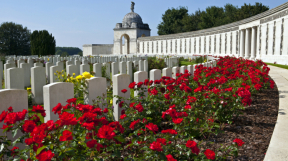
A year after the end of the First World War, George V stated: "I believe that my people in every part of the Empire fervently wish to perpetuate the memory of the Great Deliverance and those who laid down their lives to achieve it." From that moment, the idea of...

Connecting Classrooms: bringing together Bradford and Peshawar, primary and secondary schools, history and English In this article, Dianne Excell shares her experience of a crossphase, collaborative project funded by the British Council that brought together teachers and pupils from three schools in Bradford and five schools in Peshawar, Pakistan. Although...
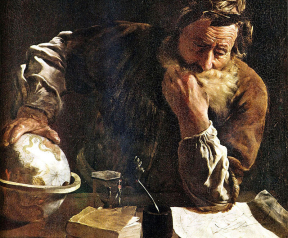
Readers of Teaching History will be familiar with the benefits and difficulties of cross-curricular planning, and the pages of this journal have often carried analysis of successful collaborations with the English department, or music, or geography. Harry Fletcher-Wood describes in this article a collaboration involving maths, providing for us the...

Inspired by the news that Bristol had become the UK’s first Green Capital, Kate Hawkey, Jon James and Celia Tidmarsh set out to explore what a ‘Green Capital’ School Curriculum might look like. They explain how they created a cross-curricular project to deliver in-school workshops focused on the teaching of...
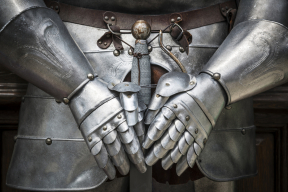
Do they learn about Agincourt in France? 2015 was a year of anniversaries. As part of our funded commemoration projects surrounding the 600th anniversary of the Battle of Agincourt, we have commissioned an enquiry looking at the battle and how it has been remembered, particularly aimed at pupils in years...
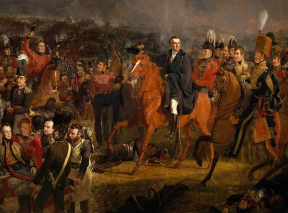
2015 is something of a year of anniversaries. It is 50 years since Churchill's death, 200 years since Waterloo, 300 since the Jacobite ‘Fifteen', 600 since Agincourt, 800 since Magna Carta. Clearly every year brings around its own crop of anniversaries; this year just seems to have quite a few...
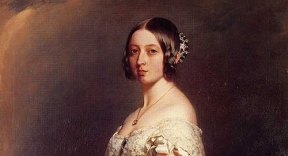
What do 14 Year 7 students, an art teacher, a history teacher and the Victoria and Albert Museum have in common? They are all part of the ‘Stronger Together' Museum Champion project run by The Langley Academy and the River & Rowing Museum and supported by Arts Council England, designed...
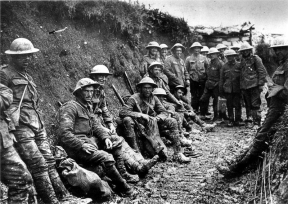
Year 9 think they know a lot about the First World War. After all, they read Michael Morpurgo's novel Private Peaceful in their English lessons all the way back in Year 7, they've seen Blackadder so many times they can recite it, and in the centenary year of the war's...
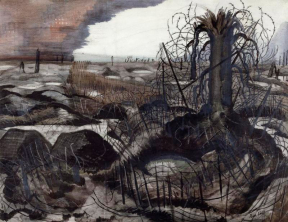
A world turned molten: helping Year 9 to explore the cultural legacies of the First World War Rachel Foster shows how her own study of cultural history led to a new dimension in her planning. She wanted to show her students not only that historians are interested in many different...
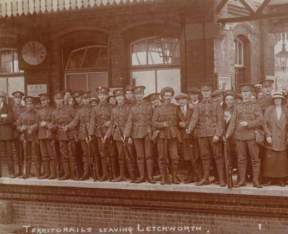
Writing Letchworth's war: developing a sense of the local within historical fiction through primary sources Local history, historical fiction, and one of the most significant events of the twentieth century come together in this article as Jon Grant and Dan Townsend suggest a way to enable students to produce better...
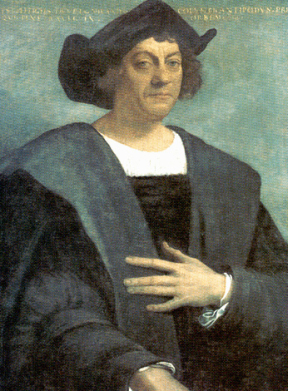
Combating a Cook-centric past through co-curricular learning: Year 9 dig out maps and rulers to challenge generalisations about the Age of Discovery Paula Worth presents in this article a means of challenging students' tendency to generalise even when they know that they should not. How can we encourage our students...
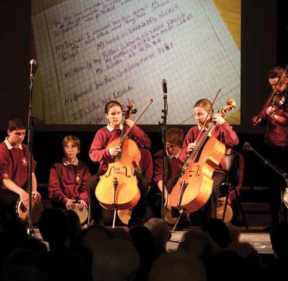
James Woodcock continues his theme from Teaching History 138 about the difference between superficial, thematic cross-curricularity and much more rigorous interdisciplinarity. His concern is to retain rather than compromise the integrity of the subject disciplines. Woodcock argues that interdisciplinary working adds value to learning only when the knowledge and the...
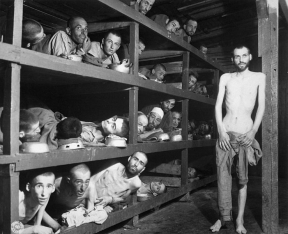
Patterns of genocide: can we educate Year 9 in genocide prevention? Alison Stephen, who has wrestled for many years with the challenges of teaching emotional and controversial history within a multiethnic school setting, relished the opportunity to link her school's teaching of the Holocaust with a comparative study of other...

It is common practice to invite survivors of the Holocaust to speak about their experiences to pupils in schools and colleges. Systematic reflection on the value of working with survivors of the Holocaust and other genocides and on how to make the most of doing so is rarer, however. In...
Employment, employability and history: helping students to see the connection Five years ago, in Teaching History 132, Harris and Haydn drew attention to the fact that while the vast majority of Key Stage 3 students claimed to enjoy history and even to regard it as a useful subject, relatively few...

This issue's problem: Emma Norman finds the analogies that she's using to make historical ideas meaningful end up distracting or confusing the students. Emma has come into history teaching after a number of years at home looking after children. Her previous work was as a fundraiser for an environmental campaign...
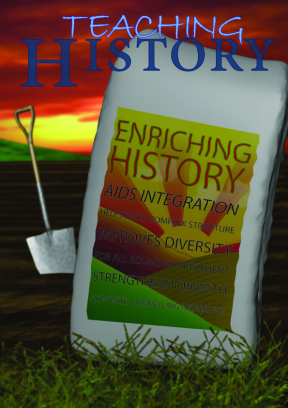
02 Editorial 03 HA Secondary News 04 Alf Wilkinson: Making cross-curricular links in history: some ways forward (Read article) 08 James Woodcock: Disciplining cross-curricularity? Cottenham Village College history department's inter-disciplinary projects: an evaluation (Read article) 13 Michael Monaghan: Having ‘Great Expectations' of Year 9 Inter-disciplinary work between English and history...

Please note: this article pre-dates the 2014 National Curriculum and some content may be outdated. Alf Wilkinson has been working as ‘National Subject Lead' for History, co-ordinating a programme of support for schools, funded by the DCSF and delivered in partnership with the Historical Association and the CfBT. Here he...