
Extended Reading
In England, a curriculum review is imminent. Following a recent ‘call for evidence' by the government, further consultation on the future shape of history in schools will follow. The HA is currently consulting its membership and will be publishing discussion papers in January 2012. At such a time, everyone in...
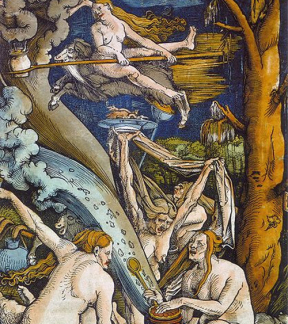
Which women were executed for witchcraft? And which pupils cared? Paula Worth was concerned that her low-attaining set were only going through the motions when tackling causal explanation. Identifying, prioritising and weighing causes seemed an empty routine rather than a fascinating puzzle engaging intellect and imagination. She was also concerned...

Rachel Foster reports here on research that she conducted into how students engage with academic texts. Unhappy with the usual range of texts that students encounter, often truncated and ‘simplified' in the name of accessibility, she designed a scheme of work which sought to find out how her students responded...

In this article, Lindsay Cassedy, Catherine Flaherty and Michael Fordham draw upon their empirical research to assess what understandings their students had of historical interpretations at the end of their compulsory education in history. They found that most students operated with an underlying epistemological model that did not reflect the...

Understanding historical interpretation involves understanding how historical knowledge is constructed. How do sixth formers model historical epistemology? In this article Arthur Chapman examines a small sample of data relating to sixth form students' ideas about why historians construct differing interpretations of the past. He argues that understanding interpretation requires students...
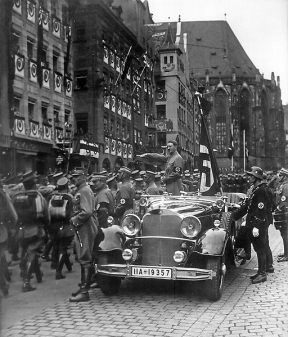
What do our students make of the history that we teach them? As part of an introductory module on historiography, Marcus Collins asked his undergraduate students to analyse the history that they had been taught at school and college using historiographic concepts. The results make for interesting reading. What do...
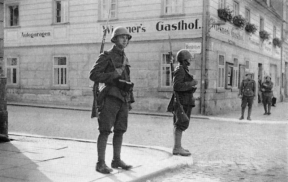
The Holocaust is often framed, in textbooks and exam syllabi, from a perpetrator perspective as a narrative of Nazi policy. We are offered a different orientation here. Interrogating and understanding the Holocaust involves understanding why the people who perpetrated the Holocaust did the things that they did. As Wolf Kaiser...
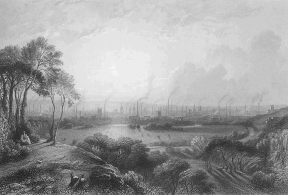
‘Empathy with edge' was the editorial description given eight years ago to the kind of historical fiction that Dave Martin and Beth Brooke first argued history students should be writing (TH 108). The winning entries from the annual ‘Write Your Own Historical Story Competition' to which their work gave rise...
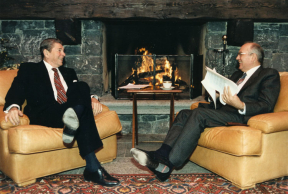
The end of the Cold War is a controversial subject. Contemporary analysts did not see it coming. Any explanation of its ending which seeks to build up a network of causation will therefore be forced to make arguments based on events whose significance was not necessarily seen at the time....

Please note: this article pre-dates the 2014 National Curriculum and some content may be outdated. Conventionally, students learn to read before they come to secondary school. As a result, for the majority of our students, reading can be taken for granted. Yet sometimes, as history teachers, we can find that...
Three years ago, Séan Lang argued that narrative, which had gone rather out of fashion, needed to be brought back into our teaching. Alf Wilkinson goes further. It is not just narrative which is needed: it is story. The move away from story is not a problem confined uniquely to...
Please note: this article pre-dates the 2014 National Curriculum and some content may be outdated. What’s the hardest part of history? Heads of Year 9 at options time seem depressingly clear - ‘Don’t do history, there’s too much writing.’ David Hellier and Helen Richards show that at The Green School...
Unusually, instead of moving from a narrative to an analytic structure, David Waters moves his pupils from causal analysis to narrative. By the time pupils are ready to produce their storyboard narrative, their thinking about the Great Fire has been shaped and re-shaped not only by structural exercises and argument...
Edna Shoham and Neomi Shiloah describe a process by which they taught their 15-year-old students to read historians’ accounts for sub-text, meaning and assumptions. In its emphasis on ‘meeting the historian’, their work overlaps with much of the thinking about teaching pupils about historical ‘interpretations’ as specifically required by the...
When presenting their practical approaches to post-16 teaching in Teaching History 103, both Richard Harris and Rachael Rudham argued that students need to ‘do’ things with information, to process it, play with it, classify it, if they are ever to understand or remember it. They made a case for not...
Dale Banham and Ian Dawson show how active learning deepens students’ understanding of attitudes and reactions to the Norman Conquest. At the same time they build a bold argument for active learning, including a direct strike at the two most common objections to it. Many teachers still see it as...