Planning

This section organises material on Key Stage 3 planning into three categories. In KS3 planning: general, you will find general advice on planning in the lower secondary years. This includes examples of how history teachers and other history education experts have planned everything from single activities and lessons to two or three years of work.  You will find examples of planning for local history in KS3 planning: local history.  The third category, KS3 planning: Learning outside the classroom embraces fieldwork of all kinds, from studying landscape and cities, to museums, galleries and memorials, as well as inter-school activities, work with outside organisations and assorted international collaborations, real and virtual. Read more

Sort by: Date (Newest first) | Title A-Z
Show: All | Articles | Podcasts | Multipage Articles
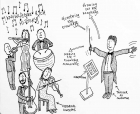
  • Conducting the orchestra to allow our students to hear the symphony

    Article

    Alex Ford and Richard Kennett both welcome the renewed emphasis on knowledge within recent curriculum reforms in England, but are concerned about some of the ways in which the principle of a ‘knowledge-rich’ curriculum has been interpreted and transformed into particular pedagogical prescriptions. In this article they explain their reasons...

    Click to view
  • Film: Making an effective History curriculum

    Article

    Richard Kennett is a senior leader, teacher, blogger, text-book author and member of HA secondary committee. In November 2018, Richard visited the Yorkshire History Forum to talk about his school’s experience of reviewing and re-planning their Key Stage 3 curriculum. This film is of Richard’s keynote speech at the Forum....

    Click to view
  • Questions to help you review your KS3 curriculum

    Article

    This resource is free to everyone. For access to our library of high-quality secondary history materials along with free or discounted CPD and membership of a thriving community of history teachers and subject leaders, join the Historical Association today  With Ofsted incorporating curriculum into inspections from September 2019 and finally...

    Click to view
  • Structuring a history curriculum for powerful revelations

    Article

    When planning a Key Stage 3 curriculum with his department, Will Bailey-Watson began to question some of the commonsense orthodoxies regarding chronological sequencing and curriculum design. Drawing on pre-existing debates about curricular structuring in the history education community both in England and internationally, Bailey-Watson identified cognitive, motivational, and disciplinary justifications...

    Click to view
  • How diverse is your history curriculum?

    Article

    The past was full of diverse people and our students are entitled to learn about this diverse past. History lessons should enable students to see their connection to the past and to understand the world today. Here are a list of questions for history teachers to use to support a...

    Click to view
  • Redesigning the curriculum: a short guide for the new, novice or nervous

    Article

    A short guide to making a start with redesigning the curriculum  We realise that the task of curriculum redesign is huge and these steps are to help you make a start. It's also important to note that Heather Fearn, Ofsted Curriculum and Development lead, has said: that Ofsted is NOT expecting...

    Click to view
  • Historical anniversaries calendar

    Article

    Historical anniversaries can be a great way to get children and young people interested in a subject or to raise awareness about a particular issue. This resource is free to everyone. For access to hundreds of other high-quality history and education resources along with free or discounted CPD and membership of a thriving community of...

    Click to view
  • New approaches to teaching the History of Appeasement in the classroom

    Multipage Article

    This project has been created on the initiative of Professor Julie. V. Gottlieb, Dept. of History, University of Sheffield. British political history, political conflict, appeasement and the Munich Crisis (1938) itself is the focus of her research and publications. Rather than approach these topics from ‘traditional’, elite and history from...

    Click to view
  • Using oral history in the classroom

    Multipage Article

    The Oral History Society has kindly agreed to produce two new films aimed at history teachers who are new to carrying out or using oral histories either in their teaching or with students. These two films will equip teachers with the essential tools and knowledge for using and devising effective...

    Click to view
  • Learning from a pandemic

    Article

    In order to contextualise and make sense of the Covid-19 pandemic, Verity Morgan worked with her school’s long-standing partner school in Ghana to devise an innovative project combining history and science, past and present. In this article, Morgan sets out the rationale for the project, her detailed adaptation of a British Council...

    Click to view
  • Creating a progression model for teaching historical perspectives in Key Stage 3

    Article

    Jacob Olivey set out to design enquiries which would enable his pupils to reconstruct, using evidence, the perspectives of people in the past. In this article he shares in detail the planning and outcomes of two enquiries: one for Year 7 and one for Year 8. Olivey offers a example...

    Click to view
  • Cunning Plan 186: teaching Samurai Japan in Key Stage 3

    Article

    Like many history departments we have been seeking to develop schemes of work that are more outward-looking, and, as the National Curriculum describes, ‘enable pupils to know and understand significant aspects of world history’.  To my mind, Samurai Japan offers students the opportunity to explore a time and place that is...

    Click to view
  • ‘Weaving’ knowledge

    Article

    Diane Relf was concerned by what felt like an unbridgeable gulf between Year 7’s vocabulary and comprehension, and her aspirations both for their inclusion in history and their later academic success. As a subject leader without the benefit of any history-specific training at the start of her career, she embarked on...

    Click to view
  • Dialogue, engagement and generative interaction in the history classroom

    Article

    Michael Bird has a long-standing interest in the power of classroom dialogue, not only as a means of elicting students’ prior knowledge or checking their understanding of new ideas and information, but also as a powerful tool for generating new knowledge through a collective process of meaning-making. In this article, he...

    Click to view
  • Historical learning using concept cartoons

    Article

    Although perhaps unfamiliar to the majority of our readers, concept cartoons are not a new educational tool. Christoph Kühberger here lays out his rationale for using this technique, borrowed from science education, in history teaching. Concept cartoons provide a means for pupils to express such difficult historical concepts as the...

    Click to view
  • Planning a more diverse and coherent Year 7 curriculum

    Article

    In this article, Jacob Olivey describes his department’s efforts to both diversify their Key Stage 3 curriculum and secure greater curricular coherence. Building on a large body of research and practice, Olivey sought new forms of curricular coherence through the selection and sequencing of substantive content across the curriculum. He...

    Click to view
  • Broadening and deepening narratives of Benin for Year 8

    Article

    Josh Garry describes his effort to refresh his approach to teaching the British transatlantic slave trade. Drawing on reading, lectures and discussions during an Historical Association Teacher Fellowship programme, Garry built a sequence of lessons designed to contextualise the trade while showing African agency and complexity. The result was a sequence...

    Click to view
  • ‘One big cake’: substantive knowledge of the mid-Tudor crisis in Year 7 students’ writing

    Article

    While looking to revamp his department’s Year 7 enquiry on the Tudors, Jack Mills turned to historiographical debates regarding the ‘mid-Tudor crisis’ to inform his curricular decision making. In doing so, Mills noted that the debate hinged on interpretations of substantive concepts such as ‘crisis’. He therefore also drew on previous...

    Click to view
  • Deepening Year 9’s knowledge for better causation arguments

    Article

    Frustrated by her students’ glib use of catch-all terms such as ‘militarism’ in addressing causation, Alexia Michalaki wanted her Year 9 students to produce mature causal explanations of World War I. To encourage this to happen she went back into decades of pedagogical writing and research, teasing out the ways...

    Click to view
  • Move Me On 182: thinks that substantive knowledge is all that matters

    Article

    Lina Power has interpreted an emphasis on knowledge organisers and factual knowledge tests to mean that substantive knowledge is all that matters. Move Me On is designed to build critical, informed debate about the character of teacher training, teacher education and professional development. It is also designed to offer practical...

    Click to view