
Chronology
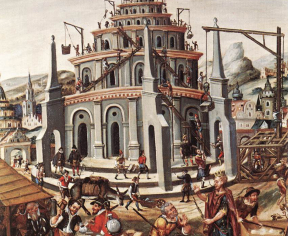
My students struggle with... Every student has an entitlement to learn history and to high quality history teaching. In this section you will find support for helping students who struggle with specific aspects of learning history. For each aspect of learning history that students struggle with you will find: A...
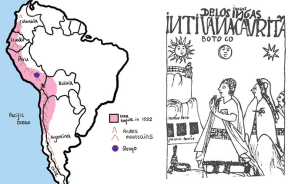
As part of her department’s effort to diversify the history curriculum, Paula Worth began a quest to research and then shape a lesson sequence around the Inkas. Her article shows how she allowed the new topic and its historiography to challenge and extend her own use of sources, particularly oral...

Last year I was working with colleagues on a project examining Rosenshine’s principle of beginning lessons with a short review of previous learning.1 At the same time I was working with a history trainee who had been using recall quizzes as a starter with GCSE students. Following a lesson observation,...
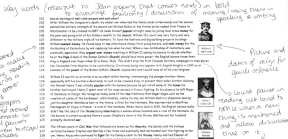
Faced with cutting her Key Stage 3 curriculum to two years, Natalie Kesterton and her department were determined to do more with less. Not only did they want to ensure that their pupils developed a secure, wide-ranging knowledge of British and world history, they also wanted to address deficits in...
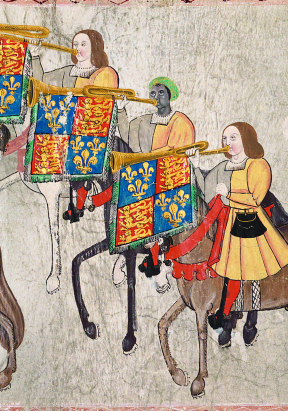
Readers of this journal will be familiar with a number of ways of approaching the Tudors. Kerry Apps provides here an article detailing her concerns about the differences between what she had been delivering at Key Stage 3 and the broader, connected experience she had as an undergraduate historian. How...
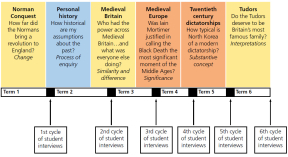
When planning a Key Stage 3 curriculum with his department, Will Bailey-Watson began to question some of the commonsense orthodoxies regarding chronological sequencing and curriculum design. Drawing on pre-existing debates about curricular structuring in the history education community both in England and internationally, Bailey-Watson identified cognitive, motivational, and disciplinary justifications...
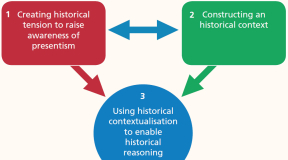
In this article, which is based on Huijgen’s PhD dissertation Balancing between the past and the present, Tim Huijgen and Paul Holthuis present the results of an experimental method of teaching 14–16-year-old students to contextualise their historical studies in a different way. In the four lessons described, students’ initial reactions...
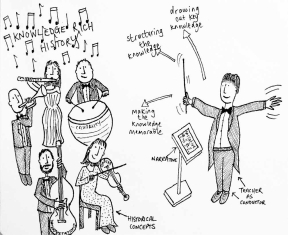
Alex Ford and Richard Kennett both welcome the renewed emphasis on knowledge within recent curriculum reforms in England, but are concerned about some of the ways in which the principle of a ‘knowledge-rich’ curriculum has been interpreted and transformed into particular pedagogical prescriptions. In this article they explain their reasons...

Danielle Donaldson began to notice the verbs that her pupils used to express their ideas. She noticed that more successful pupils were using carefully chosen verbs to express their conceptual thinking about causation or change, and wondered how this might relate to, and reflect, the breadth and security of their...

This page is for those new to the published writings of history teachers. Each problem you wrestle with, other teachers have wrestled with too... History is a complex enterprise. In order to produce sophisticated arguments, pupils need firm foundations. One foundation is knowledge of the argumentative structures that historians deploy,...
I started teaching ‘crime and punishment through time’ thematically a few years ago. I was teaching it as a Schools History Project ‘study in development’. We had moved from ‘medicine through time’ in order to keep things fresh. After six times through the content, much as I loved it, crime,...
For all that history teachers appreciate the need to build substantive knowledge and conceptual understanding systematically over time, they are also likely to have experienced that sickening moment when they realise that a Year 11 pupil has somehow missed something fundamental. In Anna Fielding's case, her pupil's misconception was related...
Using regular, low-stakes tests to secure pupils' contextual knowledge in Year 10 Lee Donaghy was concerned that his GCSE students' weak contextual knowledge was letting them down. Inspired by a mixture of cognitive science and the arguments of other teachers expressed in various blogs, he decided to tackle the problem...
Bridging a twenty-year gap in their practice, Elizabeth Carr and Christine Counsell bring out the similarities in their use of timelines in their planning, teaching and assessment. What they also have in common is the fact that their experimentation with timelines as a way of strengthening cumulative knowledge emerged in...

This issue's problem: Rose Valognes feels she hasn't got enough ways of getting knowledge across to the students before they can do something with it. After a positive start to her training year, Rose Valognes seems to have got stuck in a rut in her thinking, with her lessons falling...
When Michael Fordham was introduced to Dr Seuss's Butter Battle Book he immediately recognised its potential value in the classroom as a popular interpretation of the Cold War. Wanting his Year 9 pupils to explain how and why the past has been interpreted in different ways he shows the potential...
Where's the other ‘c'? Year 9 examine continuity in the treatment of mental health through time Helen Murray, Rachel Burney and Andrew Stacey-Chapman show how they strengthened three goals of their practice - secure knowledge, narrative shapes and conceptual analysis - by securing strong connection between them. The curricular focus...
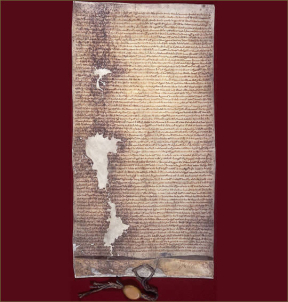
Weaknesses in pupils' grasp of historical chronology are a commonplace in popular discussion of the state of history education. However, as Blow, Lee and Shemilt argue, although undoubtedly necessary and fundamental, mastery of chronological conventions is not sufficient: the difficulties that pupils experience when learning history are conceptual, as much...
Please note: This unit was produced before the 2014 National Curriculum and therefore while much of the advice is still useful, there may be some out of date references or links. For more recent resources on key concepts, see our What's the Wisdom on series. The key concepts can be...
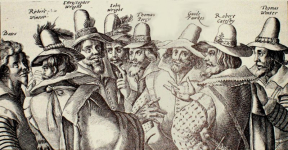
Analogies for teaching about causation abound. Rick Rogers is alert, however, to the risks inherent in drawing on everyday ideas to explain historical processes. What most often gets lost is the importance of the chronological dimension; both the length of time during which some contributory causes may have been present,...