
Sense of period
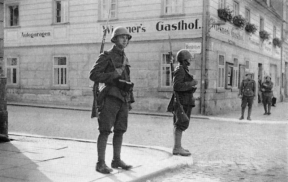
The Holocaust is often framed, in textbooks and exam syllabi, from a perpetrator perspective as a narrative of Nazi policy. We are offered a different orientation here. Interrogating and understanding the Holocaust involves understanding why the people who perpetrated the Holocaust did the things that they did. As Wolf Kaiser...
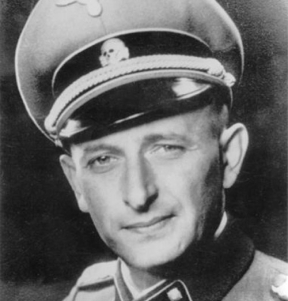
Almost 60 years ago Adolf Eichmann went on trial for crimes committed against the Jews while he was in the service of the Nazi regime. His capture by the Israeli secret service and his abduction from Argentina triggered a number of journalistic books that portrayed him as a pathological monster...

In this powerfully argued article Paul Salmons focuses directly on the distinctive contribution that a historical approach to the study of the Holocaust makes to young people's education. Not only does he question the adequacy of objectives focused on eliciting purely emotional responses; he issues a strong warning that turning...
‘Empathy with edge' was the editorial description given eight years ago to the kind of historical fiction that Dave Martin and Beth Brooke first argued history students should be writing (TH 108). The winning entries from the annual ‘Write Your Own Historical Story Competition' to which their work gave rise...
Please note: this article pre-dates the 2014 National Curriculum and some content may be outdated. In this article, Andrew Wrenn explores some issues that teachers might consider when supporting 14 and 15 year olds in their study of war memorials as historical interpretations. Tony McAleavy has argued that ‘popular' and...
Deborah Robbins charts a story of her own learning during the PGCE year. She explains how she identified a point of interest in her own practice - the use of modern-day examples. Turning this into a focus for testing her own hypotheses, she theorised from her own lessons to produce...
Up until the early 1990s, historical knowledge sometimes had rather a bad press. Various developments, in National Curriculum, at GCSE and, importantly, in ordinary teachers’ practice and debate, then led to a much closer integration of what we once called ‘content’ and ‘skills’. Tony McAleavy examined changing perceptions of the...
Challenging stereotypes and avoiding the superficial: a suggested approach to teaching the Holocaust
Alison Kitson provides a rationale for a scheme of work for Year 9 (13-14 year-olds). She argues that teachers should analyse the kind of historical learning that is taking place when the Holocaust is studied. Critical of the assumption that learning will take place as a result of exposure, she...
Claire Riley explains how she developed and improved the ‘layers of inference' diagram-already a popular device since Hilary Cooper's work-as a way of getting pupils fascinated by challenging texts and pictures. Working with the whole ability range in Year 9 she analyses her successes and failures, offering many practical suggestions...