
Sense of period
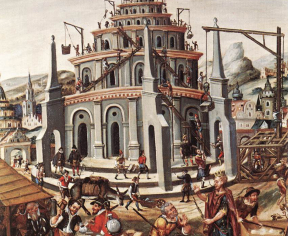
My students struggle with... Every student has an entitlement to learn history and to high quality history teaching. In this section you will find support for helping students who struggle with specific aspects of learning history. For each aspect of learning history that students struggle with you will find: A...
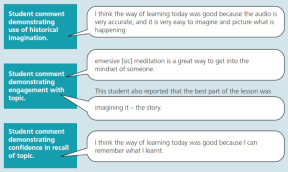
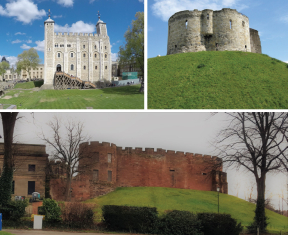
James Hopkins’s Year 10 class had been excited by their course on medicine through time, but were less enthused about their new study of Norman England. They told him that the topic felt ‘distant’ and ‘not real’. Recalling his own experience as a student, Hopkins was interested in the ways...
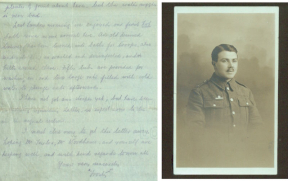
Deep into my PGCE year, I found myself discussing with my mentor how to pre-empt the barriers to understanding the past that students may face. One barrier we discussed was presentism: the tendency of students to interpret the past in light of their own modern knowledge, values and experiences. In...
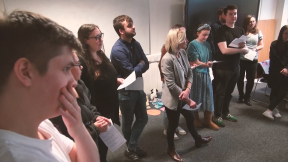
Active learning strategies are engaging but, far more importantly, they make history learning memorable, they encourage resilience and independence, and they are an excellent way to make complex history accessible for all. When used with clear purpose and with knowledge of specific students' needs, they are a tried and tested...
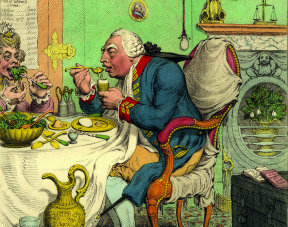
As ardent advocates of eighteenth-century history, Rhian Fender and Stephen Ragdale were determined to ensure that the period found a secure place within their department’s Key Stage 3 curriculum. Given the extraordinary range of contrasts that epitomise the long eighteenth century, and only ten lessons within which to explore them,...
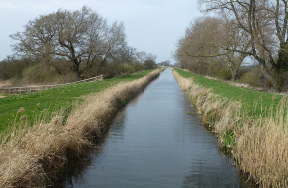
Confined to his home during lockdown in 2020, teacher Josh Mellor became eager to explore the history of the physical environment on his doorstep. After reading about different approaches to using environmental history in the classroom, Mellor decided to design an enquiry to explore the changing landscape of the Fens...
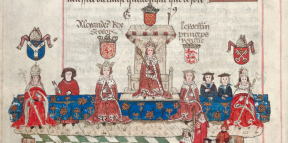
In this article, Jessica Phillips returns to a theme explored in the Historical Association’s publication Exploring and Teaching Medieval History in Schools – the challenge of teaching about the medieval past in ways that acknowledge its vibrant complexity and create a genuine sense of resonance rather than condescension or blank...
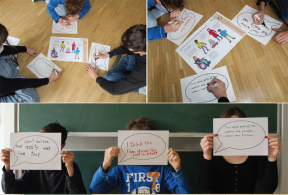
Although perhaps unfamiliar to the majority of our readers, concept cartoons are not a new educational tool. Christoph Kühberger here lays out his rationale for using this technique, borrowed from science education, in history teaching. Concept cartoons provide a means for pupils to express such difficult historical concepts as the...
Michael Bird has a long-standing interest in the power of classroom dialogue, not only as a means of elicting students’ prior knowledge or checking their understanding of new ideas and information, but also as a powerful tool for generating new knowledge through a collective process of meaning-making. In this article,...
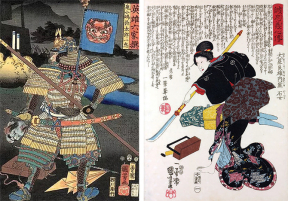
Like many history departments we have been seeking to develop schemes of work that are more outward-looking, and, as the National Curriculum describes, ‘enable pupils to know and understand significant aspects of world history’. To my mind, Samurai Japan offers students the opportunity to explore a time and place that...
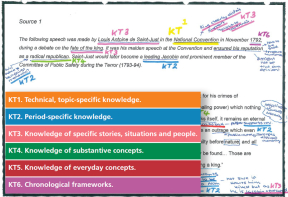
Frustrated by the generic statements that her Year 12 students were making about sources, Jacqueline Vyrnwy-Pierce resolved to undertake a research project into how her students were approaching sources about the French Revolution. Fascinated by the research of American educational psychologist Sam Wineburg, Vyrnwy-Pierce decided to use Wineburg’s methods to...
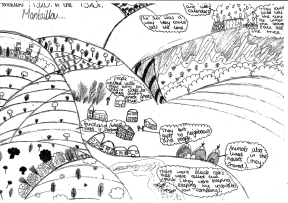
Jacob Olivey set out to design enquiries which would enable his pupils to reconstruct, using evidence, the perspectives of people in the past. In this article he shares in detail the planning and outcomes of two enquiries: one for Year 7 and one for Year 8. Olivey offers a example...
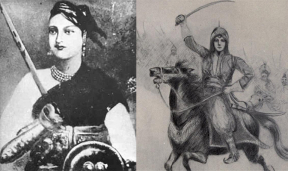
Claire Holliss reports here on the ways in which she has responded over time to the call to ‘do justice’ to the histories of those long neglected within the school curriculum. Reflection on the need to ensure that the discipline of history remained central to any reform prompted her to...
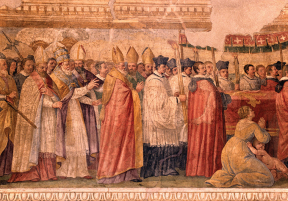
Much has been written in recent years about how historical scholarship can be used to shape practice in the classroom. As an historian of the medieval period now working as an history teacher, Dhwani Patel offers a fresh perspective on these debates. During her PGCE year, Patel found herself reflecting...
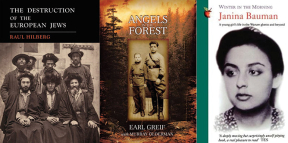
Inspired by the work of the social and cultural historian Tim Cole, Stuart Farley decided to look again at the way he teaches the Holocaust. He wanted to focus on the geographical concept of place as a way of enabling his Year 9 students to build far more diverse narratives,...
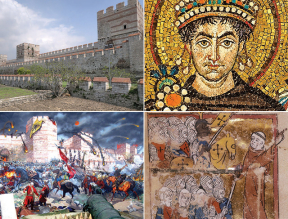
In this article, Jacob Olivey describes his department’s efforts to both diversify their Key Stage 3 curriculum and secure greater curricular coherence. Building on a large body of research and practice, Olivey sought new forms of curricular coherence through the selection and sequencing of substantive content across the curriculum. He...
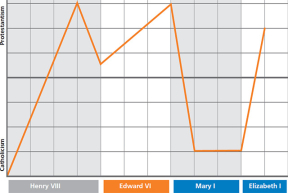
While looking to revamp his department’s Year 7 enquiry on the Tudors, Jack Mills turned to historiographical debates regarding the ‘mid-Tudor crisis’ to inform his curricular decision making. In doing so, Mills noted that the debate hinged on interpretations of substantive concepts such as ‘crisis’. He therefore also drew on...
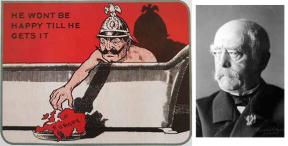
Frustrated by her students’ glib use of catch-all terms such as ‘militarism’ in addressing causation, Alexia Michalaki wanted her Year 9 students to produce mature causal explanations of World War I. To encourage this to happen she went back into decades of pedagogical writing and research, teasing out the ways...
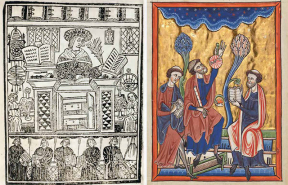
The phrase ‘medieval science’ may seem nonsensical. ‘How can... a synonym for “backward”,’ the editors of The Cambridge History of Science Volume 2 ask rhetorically, ‘modify a noun that signifies the best available knowledge from the natural world?’ To answer their question, we must rethink our assumptions, both about the...
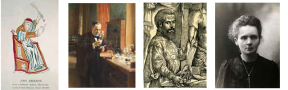
Should we, and how do we, develop in our students a sense of period – or a series of senses of period – in a thematic study spanning a thousand years? This was the problem faced by Matthew Fearns-Davies in preparing for the GCSE ‘Health and the People’ paper. He...