Britain & Ireland

The Tudors continue to fascinate and some of their story is told here along with the other dynasty of the period the Stuarts. Alongside those resources are the podcasts on the ideas that transformed British society during that period and created a United Kingdom for the first time. The industrial revolution is explored through poetry as well as technology. Religious collapse, change and diversity are all themes explored in this section. Read more

Sort by: Date (Newest first) | Title A-Z
  • Interpreting an early seventeenth-century cottage at the Weald & Downland Open Air Museum

    Article

    The Weald & Downland Open Air Museum (WDOAM), which opened to the public in 1970, is one of the leading museums of historic buildings and rural life in the United Kingdom. It has a collection of nearly 50 historic buildings - domestic, agricultural and industrial - dating from the thirteenth...

    Click to view
  • Jacobitism

    Article

    In recent years, the debate over the nature, extent, and influence of the Jacobite movement during the 70 years following the Glorious Revolution of 1688 has become one of the new growth industries among professional historians, spawning scholarly quarrels almost as ferocious as those which characterised ‘the Cause' itself.The term...

    Click to view
  • James Macpherson: a Scottish Robin Hood

    Article

    James Macpherson led a notorious gang of robbers in late seventeenth-century Scotland, and he became infamous for robbing rich lairds to give to the poor. Anne-Marie Kilday explains how his notoriety is also significant for revealing how people in early modern Scotland could hold complex attitudes towards the Gypsy Roma...

    Click to view
  • Joan Vaux: a remarkable Tudor lady

    Article

    Joanna Hickson is a hugely successful novelist, specialising in historical fiction, and she describes herself as feeling that she actually lives in the fifteenth century. For readers of The Historian she explores and explains how she developed her understanding and knowledge of a highly significant Tudor woman who is a central figure in two of...

    Click to view
  • John Knox

    Article

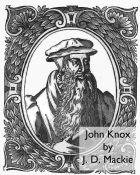
    During his own lifetime John Knox was engaged in violent disputes, and throughout the succeeding ages his character has been the subject of acrimonious controversy. While there is an infinite variety of opinion as to his character, there is complete unanimity as to his importance. This pamphlet discusses the life,...

    Click to view
  • John Knox and womankind: a reappraisal

    Article

    "To promote a woman to bear rule, superiority, dominion or empire above any realm, nation, or city is repugnant to nature, contumely to God, a thing most contrarious to his revealed will and approved ordinance, and finally it is the subversion of good order, and all equity and justice." John...

    Click to view
  • John Wesley at 300

    Article

    The tercentenary of John Wesley’s birth has been celebrated not just in his native country, but round the world – as widely, in fact, as the Methodism associated with him has spread. Over the years, in addition to innumerable biographies there have been many studies of particular aspects of his...

    Click to view
  • John Wilkes 1725-1797: A Man of Principle

    Article

    For Lord North in 1775, one John Wilkes was enough, ‘though ... to do him justice, it was not easy to find many such'. The impact of Wilkes between 1760 and 1780 was profound, a cause as much as a person. For Philip Francis, thought to be the satirist ‘Junius',...

    Click to view
  • Joseph Banks and his travelling plants, 1787-1810

    Article

    Jordan Goodman takes us on a botanical journey to the ends of the earth. Joseph Banks never commanded a ship. In 1773, aged 30, he went on his last voyage, a short crossing from Hellevoetsluis, south Holland, to Harwich. Yet not only was the sea always at the centre of his...

    Click to view
  • Joseph Priestley's American Dream

    Article

    Joseph Priestley ended his days in Northumberland, Pennsylvania. This is one of the most delightful spots in the eastern United States. It is situated at the confluence of the North Western and North Eastern branches of the Susquehanna, one of the great rivers of North America, which winds its way...

    Click to view
  • Kett's Rebellion 1549

    Article

    On 20 june, 1549, the men of the town of Attleborough and of the neighbouring hamlets of Eccles and Wilby, in South Norfolk, threw down the fences recently erected by John Green, lord of the manor of Beckhall in Wilby, round part of the common over which they all had...

    Click to view
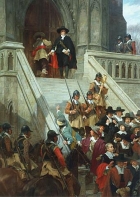
  • King Charles I

    Article

    The principles involved in the great religious and constitutional conflicts of the seventeenth century are so important to us today, that it seems desirable on the occasion of the present tercentenary to lay before the members of the Historical Association some means of examining and re-examining their views on the...

    Click to view
  • King Charles II

    Article

    The conclusions of historians change over the years, not only as a result of the discovery of new evidence, but as a result of the changing times in which historians themselves live and work. We have become familiar with the notion that each generation of historians may have its own...

    Click to view
  • Limited Monarchy in Great Britain in the Eighteenth Century

    Article

    There was hardly anything in Great Britain which political thinkers on the continent of Europe in the eighteenth century admired more than its limited monarchy. But what were the limitations? Were they deliberate or not? Were they effected by acts of parliament or by the silent encroachments of usage? Did...

    Click to view
  • London and the English Civil War

    Article

    In the spring of 1643 William Lithgow, a Scot born in Lanark in 1582, who had spent most of his life travellingaround Europe, often on foot and having many fantastic adventures, decided to return to Britain. Having just turned sixty, he was obviously feeling pretty gloomy. ‘After long 40 years...

    Click to view
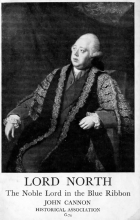
  • Lord North: The Noble Lord in the Blue Ribbon

    Article

    In the last weeks of his life Lord North, we are told, expressed anxiety about his place in history - ‘how he stood and would stand in the world'. This, he owned, ‘might be a weakness, but he could not help it'. It was a weakness one suspects that he...

    Click to view
  • Lord Rochester's Grand Tour 1661 - 1664

    Article

    The late Frank Ellis was working on a full biography of John Wilmot, earl of Rochester, at the time of his death in 2007. He had contributed a life of Wilmot to the Oxford Dictionary of  National Biography which appeared in 2004. In it he wrote that ‘on 21 November...

    Click to view
  • More than skin deep: unmasking the history of cold cream

    Article

    From the ancient Mediterranean to the shelves of twenty-first century pharmacies and cosmetic counters, cold cream has a long history. In this article, Farhana Qayoom Shaikh explores how Galen’s simple formula for treating skin complaints transitioned over the centuries into a luxury beauty product.

    Click to view
  • Mr Adams' Free Grammar School

    Article

    Adams’ Grammar School, Newport, Shropshire, was founded during the Commonwealth in 1656 towards the end of the great impetus of founding such schools in the sixteenth and seventeenth centuries. Despite many setbacks and threats to its existence it continues in the twenty first century as one of the 164 surviving...

    Click to view
  • Occult and Witches

    Article

    Occult and Witches: Some Dramatic and Real Practitioners of the Occult in the Elizabethan and Jacobean Periods One purpose of this paper is to show a correspondence between real-life Elizabethan and Jacobean practitioners of the occult and the depiction of their theatrical counterparts, with particular reference to perceived differences between,...

    Click to view