Britain & Ireland

What was it about industrialisation that led to the emergence of a woman’s movement in Victorian Britain? Why do we see so many people fighting for so many rights and liberties in this period and what are the origins of some of the issues we still campaign on today? This section includes our major series on Social and Political Change in the UK from 1800 to the present day. There are also articles and podcasts on the often violent relationship between England and Ireland during this period and England’s changing relationship with Scotland and Wales. Read more

Sort by: Date (Newest first) | Title A-Z
  • Mapping a disability history perspective onto the history of the British Empire

    Article

    Disabled peoples could be found across the British Empire; at the same time, the process of colonisation could create forms of disability, while the concept of ‘disability’ became embedded in discourses of race and gender. In this article, Esme Cleall demonstrates how thinking about disability is essential to understanding the...

    Click to view
  • ‘I am your most troublesome pauper’: disability and the New Poor Law

    Article

    In nineteenth-century England and Wales, the New Poor Law was the state’s solution for those who wouldn’t – as well as those who couldn’t – work. Even for disabled paupers, the line between the two wasn’t always clear cut. In this article, Carol Beardmore shows how those with physical disabilities...

    Click to view
  • Real lives: important lessons from the childhood experiences of Harry Drabble

    Article

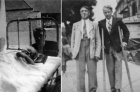
    Helen Parker-Drabble shows how the experiences of her father, Harry Drabble, who was hospitalised for bovine tuberculosis as a child, remain fiercely relevant for families, medical practitioners and policymakers in twenty-first century Britain...

    Click to view
  • Relief and resistance in Imre Kiralfy’s siege of Peking (1901)

    Article

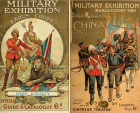
    In 1901, at the height of empire, public shock at the vulnerability of British colonial interests was accompanied by public appetite for spectacular re-enactments of British battlefield victories. Robert Brown shows how one performance of the ‘Relief of the Legations’ at the Military Exhibition in Earl’s Court, London, was reshaped...

    Click to view
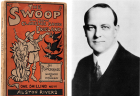
  • Jeeves and the British Empire

    Article

    The writer P.G. Wodehouse is best remembered for his comic portrayals of the exploits of wealthy, young ‘men about town’ during the interwar years, but his writing often contained a multi-layered commentary on British society and politics, the extent of which has not yet been fully appreciated. In this article,...

    Click to view
  • Doing history: Exploring behind the scenes in the corridors of power

    Article

    As the official repository for records of government of England, Wales and the UK, The National Archives at Kew offers so many opportunities for revelationary research. In this article, Steve Illingworth shows how documents in this treasure trove provide new insights on activities and debates behind closed doors...

    Click to view
  • Out and about: The Witney Blanket Mills

    Article

    In this account of the history of blanket weaving in Witney (West Oxfordshire), Young Historian essay prize-winner Isabella Duncan reflects on the importance of local history for better understanding our place in the present...

    Click to view
  • Film: Power and Protest in Ireland – 1714 to 1785

    Article

    In Episode 12, Professor Michael Brown of the University of Aberdeen discusses who held power in Ireland in 1714 and how the protestant ascendancy developed following the fall of James II and the rise of the Hanoverian dynasty. This is a period increasingly defined by the exclusion of Ireland’s Catholic and...

    Click to view
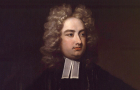
  • Film: Proto-feminism in Britain and Ireland – 1714 to 1785

    Article

    In Episode 11, Dr Mary Jo MacDonald of the University of Jyväskylä explores how the end of the Licensing Act, sweeping political change, and a revolution in intellectual culture opened unprecedented opportunities for women to shape political, social, and intellectual life in Britain and Ireland. The film highlights major proto‑feminist thinkers...

    Click to view
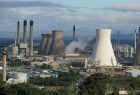
  • Making and breaking Britain’s national energy order

    Article

    British history flows through energy. Changes to fuel sources, technologies, workplace organisation and power along with government policy and ownership have been defining turning points in British economic history. In this article Ewan Gibbs traces the making, development and subsequent breaking of a national British energy order across the second half of...

    Click to view
  • The success of the Salford General Strike of 1911

    Article

    As we approach the centenary of Britain’s only national general strike, this article by Steve Illingworth tells the story of a successful local sympathetic strike in Salford in 1911. He analyses the reasons for the success of the Salford workers and considers why this kind of concerted industrial action could...

    Click to view
  • Ffilm: Grym a Phrotest yng Nghymru – 1714 i 1785

    Article

    Ym Mhennod 9, mae Dr Eryn White (Prifysgol Aberystwyth) yn trafod pwy oedd mewn grym yng Nghymru ym 1714, y berthynas newidiol rhwng Cymru a'r Deyrnas Unedig ehangach a'r datblygiadau allweddol a ddigwyddodd yng Nghymru rhwng 1714-1785. Mae Dr White yn myfyrio ar ehangu cyflym print a llythrennedd yng Nghymru...

    Click to view
  • Film: Power and Protest in Wales – 1714 to 1785

    Article

    In Episode 9, Dr Eryn White (Aberystwyth University) discusses who had power in Wales in 1714, the changing relationship between Wales and the wider United Kingdom and the key developments that took place in Wales between 1714-1785. Dr White reflects upon the rapid expansion of print and literacy in Wales...

    Click to view
  • Film: Power and Protest in Scotland – 1714 to 1785

    Article

    In Episode 9, Professor Alison Cathcart (University of Stirling) discusses who held power in Scotland in 1714 and how the Union with England, together with the arrival of the Hanoverian dynasty, transformed the nation. She examines the central role of the Church of Scotland, the influence of the Royal Burghs,...

    Click to view
  • Film: Queer British History – 1714 to 1785

    Article

    In episode 10, Dr Declan Kavanagh (University of Kent), reflects on Queer British history 1714-1785. Dr Kavanagh looks at the history of the language of LGBTQ+, in particular the term ‘queer’ in its very recent usage and how the language of descriptors for these communities has been influenced. Dr Kavanagh draws...

    Click to view
  • Social Darwinism: the myth and its reinvention

    Article

    ‘Social Darwinism’ has been associated in academia and popular consciousness with negative concepts such as hyper-nationalism and eugenics. Geoffrey M. Hodgson challenges the notion that Social Darwinism or its proponents were ever well-defined. By tracing the use of ‘Social Darwinism’ across academic disciplines and globally over a long period, Hodgson...

    Click to view
  • Opinion: the populist politics of Joseph Chamberlain and Donald Trump

    Article

    What are the pitfalls and pluses of comparing historical figures with contemporary politicians? Chris Godden argues that recent comparisons of Donald Trump with one of his predecessors may be wide of the mark, but that a more illuminating parallel may be found with one of Britain’s most controversial nineteenth-century politicians.

    Click to view
  • Tunnel visions: London’s wartime shelters

    Article

    Ronan Thomas describes two different Second World War shelters in London. One was the top-secret Mayfair bunker in which Winston Churchill sheltered during the Blitz and governed the country from underground; the other protected thousands of south Londoners and went on to provide shelter to visitors to the capital for several years...

    Click to view
  • Out and About: The historical significance of the Botanic Garden in Oxford

    Article

    The Oxford Botanic Garden was Britain’s first botanic garden and is world-renowned. Mia Andreasen, who knows it well, explores why they have been so successful and how they reflect not only plant life but also the global history of the past 400 years.

    Click to view
  • Doing history: reconstructing the life of physician, psychiatrist and anthropologist James Cowles Prichard

    Article

    Margaret Crump’s Doing History explains how she went about researching the life of a Victorian scientist, gathering material about the man himself from a variety of sources including newspapers, genealogical databases, and archives, supplemented by contextual knowledge of the period.

    Click to view