

Year 9 use a 'road map' to problematise change and continuity
Teaching History article
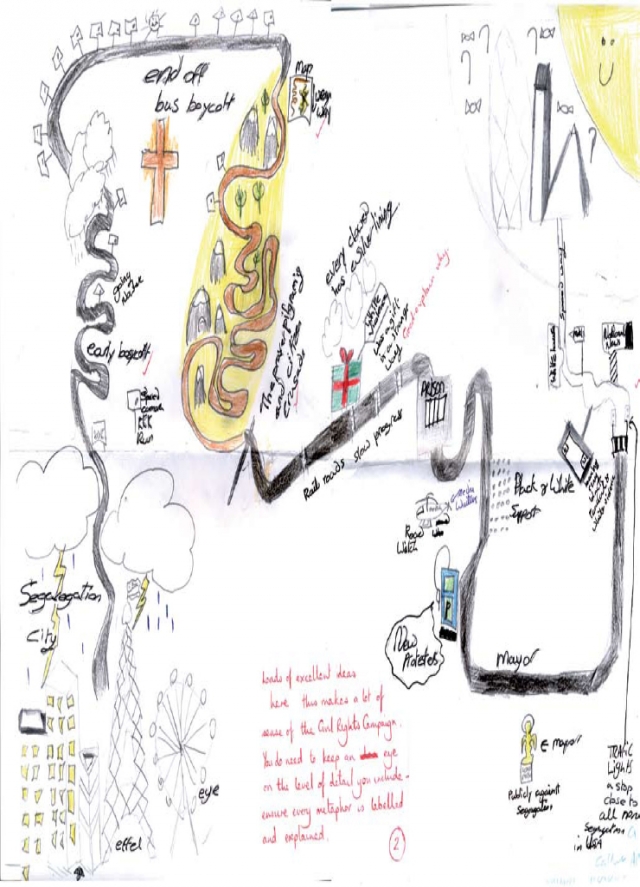
Speed cameras, dead ends, drivers and diversions
Please note: this article pre-dates the 2014 National Curriculum and some content may be outdated.
Rachel Foster, a trainee teacher on teaching placement in November of her PGCE year, wanted her Year 9 pupils to understand the complexity of historical change. She also wanted them to find the difficult challenge of characterising the flow of change/continuity as fascinating and rewarding as she did. She was aware, from her own classroom practice and from research, of the danger that pupils would see change as intentional, episodic events. Instead, she wanted them to analyse and convey the complex character of change. But how could they do this for themselves, with independence and individual insight? How could they do it in such a way that it would allow her, as teacher, to discern and assess the quality of their historical thinking? Crucially, how could she ensure that they really enjoyed all this? Her answer lay in the metaphor of a ‘road map'. The 2008 National Curriculum Attainment Target makes explicit reference to the second-order concept of change/continuity, emphasising the importance of pupils carrying out their own analyses and requiring teachers to explore the interplay of that analysis with the organisation of knowledge and the pursuit of enquiry. Teachers reviewing their practice in the light of the 2008 NC for history, and wondering how to help pupils both to develop and demonstrate their thinking about historical change and continuity, are likely to find this article helpful...
This resource is FREE for Secondary HA Members.
Non HA Members can get instant access for £2.75