Britain & Ireland

Women and social history can be overlooked themes in periods where records tended to focus on money, religion and Kings. While those latter themes are covered in this section so are features on individual women, their relationships with power and how they were able to influence politics and the people around them. Social history is also addressed through the stories of Hermits, soldiers, tax records and revolting peasantry with nobles. Read more

Sort by: Date (Newest first) | Title A-Z
Show: All | Articles | Podcasts | Multipage Articles
  • The Lady and the Unicorn

    Article

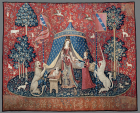
    As well as being admired for their aesthetic beauty, medieval and early modern tapestries often conveyed deeper symbolic meanings. Here Damien Dessane examines a famous sixteenth century tapestry and reveals the insights it provides into Anglo-French relations in that period and into the increasing agency of some important women...

    Click to view
  • Out and About: The castles of Castle Cary

    Article

    In this article, Chris Culpin explores the surprising story behind Castle Cary’s long-vanished castles. Through conquest, rebellion, siege, and demolition, Castle Cary’s forgotten castles reveal a dramatic chapter of local and national history...

    Click to view
  • Virtual Branch Recording: The First King of England

    Article

    Æthelstan was the early medieval king whose territorial conquests and shrewd statesmanship united the peoples, languages, and cultures that would come to be known as the 'Kingdom of the English.' In this panoramic talk, David Woodman draws on his research and recent book to create a portrait of this immensely...

    Click to view
  • Using financial records to gain insights into medieval society

    Article

    While conceding that medieval accounting and tax records can appear to be dull at first sight, Alisdair Dobie demonstrates here how they can provide fascinating insights into many aspects of life at the time. Not only do these records teach historians about economic and financial affairs: they also enhance our...

    Click to view
  • In conversation with Ayoush Lazikani

    Article

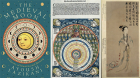
    Ayoush Lazikani’s The Medieval Moon follows the moon between roughly 700 and 1600, tracing how it became a meeting-place for prophecy, medicine, devotion, and art across a globally conceived Middle Ages. Carolin Gluchowski met with Ayoush Lazikani to explore the many moons of the Middle Ages...

    Click to view
  • Doing history: Remembering the Wars of the Roses

    Article

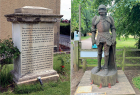
    This article examines how the Wars of the Roses have been remembered through memorials and presents the Battlefields Trust’s Wars of the Roses Memorial Database Project, launched in 2023. The open-access, crowd-sourced database maps monuments, plaques, battlefield markers and local commemorations linked to the conflicts. David Grummitt shows that remembrance...

    Click to view
  • Update: The Princes in the Tower

    Article

    A subject of endless fascination for the historian, the story of the ‘princes in the Tower’ hit the news again recently, following the discovery of Richard III’s body in Leicester and Philippa Langley’s ensuing quest to show that the much-maligned king was not responsible for the princes’ deaths. In this...

    Click to view
  • Edgar Ætheling: what happened to the boy who never became king?

    Article

    Edgar Ǣtheling, grandson of Edmund Ironside, was the last serious Anglo-Saxon claimant to the throne of Edward the Confessor. In this article, Jamie Page explores how his long life after 1066 sheds a fascinating light on the emerging Anglo-Norman world and its significant impact in Europe and the Middle East.

    Click to view
  • Decoding medieval pilgrimage

    Article

    Pilgrimage played a significant role in medieval life and belief. Pilgrims travelled far and wide to express their devotion to saints and their cults. Who were the pilgrims and what did pilgrimage involve? Luke Daly makes sense of this fascinating and complex phenomenon...

    Click to view
  • Coroners, communities, and the Crown: mapping death and justice in late medieval England

    Article

    Life in medieval cities could be violent and dangerous, and the records generated by state officials charged with regulating that violence offer invaluable insight into everyday life. Stephanie Emma Brown takes us behind the scenes of the recently launched Medieval Murder Map project, which was based on coroners’ rolls, to...

    Click to view
  • Doing history: Manorial Court Records

    Article

    Manorial records are often associated with the medieval period, and while they are a valuable resource for medieval historians, they actually span from the twelfth to the twentieth century. Sarah Pettyfer sheds light on these often-overlooked records, helping family and local historians explore them with confidence...

    Click to view
  • Out and About: The Parish Armoury in St Mary’s Church, Mendlesham

    Article

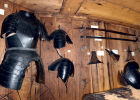
    In the Tudor and early Stuart period most towns and villages had a legal obligation to store arms and armour in case of a national emergency. Here Shona Rutherford-Edge tells the story of the parish armoury in the Suffolk village of Mendlesham, which was kept in the local church and from which many...

    Click to view
  • In conversation with Mark Nicholls

    Article

    The Historian sat down with Mark Nicholls to discuss his latest book, The Rise and Fall of Treason in English History, co-authored with Allen Boyer, which charts the history of the law of treason from its origins to the present day...

    Click to view
  • Virtual Branch Recording: The Women of the Anarchy

    Article

    In 1135 Stephen of Blois usurped the throne, stealing it from his cousin Empress Matilda and sparking a nineteen-year civil war that would become known as the Anarchy, one of the bloodiest periods in English history. On the one side is Empress Matilda. On the other side is her cousin,...

    Click to view
  • From Norwich to Nara

    Article

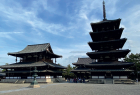
    Simon Kaner explores the fascinating parallels revealed by the international research project From Nara to Norwich between life and religious belief at the ends of the Silk Roads. Nara is the ancient capital region of Japan. The eighth century imperial treasury, the Shōsōin, with its treasures from China and central Asia, is...

    Click to view
  • Sutton Hoo and long-distance contacts

    Article

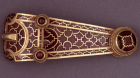
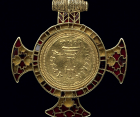
    This article looks at the importance of long distance connections between the English kingdoms and the eastern Mediterranean in the sixth to eighth centuries. The relationship between the ship burial at Sutton Hoo – in the eastern English county of Suffolk – the people who discovered and excavated it, and what...

    Click to view
  • Theodore of Tarsus, Archbishop of Canterbury (602–690)

    Article

    The remarkable career of Theodore of Tarsus, Archbishop of Canterbury, shows how the political and religious turmoil in the seventh-century eastern Mediterranean had a direct impact upon the English kingdoms. Asked to name the most significant archbishops of Canterbury, it is likely that few would name the seventh-century monk, Theodore of...

    Click to view
  • A probable silk heirloom from Central Asia...

    Article

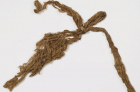
    This article explores precious fragments of silk, manufactured in the Byzantine Empire and Central Asia, discovered in archaeological excavations in Dublin. Dublin, situated on the east coast of Ireland, grew out of a fortified riverside camp (longphort) for overwintering marauding Vikings or ‘northmen’, who were plundering wealthy ecclesiastical establishments from the late eighth...

    Click to view
  • My Favourite History Place: A Short History of Brill

    Article

    In this article Josephine Glover discusses the long history of her ‘favourite history place’, the Buckinghamshire village of Brill. She explains how there has been a human settlement there since Mesolithic times. Using various fragments of evidence, she pieces together the extent to which the village was important to early...

    Click to view
  • ‘A little bird told me’: spies and espionage in the early medieval world

    Article

    Spies were a common feature of political, diplomatic and courtly life in the period of early medieval Europe. In this article, Jenny Benham explores some interesting contemporary representations of spies, in both literature and art. These stories and images reveal key features of the culture and practices surrounding these so-called...

    Click to view