Religion

In this section religions, religious belief and many elements of religiosity are explored and discussed. Early pagan beliefs in Britain and Ireland to the worship of gods across Europe are explored as are the religious changes that monotheism introduced. How religion affects themes of power, individuality and architecture are debated as are key historical movements such as the Reformation and the crusades.

Sort by: Date (Newest first) | Title A-Z
Show: All | Articles | Podcasts | Multipage Articles
  • A European dimension to local history

    Article

    Trevor James raises the prospect of broadening our approaches to local history to take a wider European perspective. When Professor W. G. Hoskins published his The Making of the English Landscape in 1955, he taught us how to observe and understand the topography of our landscapes, urban and rural, and...

    Click to view
  • A woman of masculine bravery: the life of Brilliana, Lady Harley

    Article

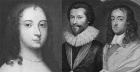
    Sara Read introduces us to a woman who challenged expectations during the turbulent years of the early seventeenth century. In 1622 a pious young woman with a highly unusual first name, Brilliana Conway, sat at her desk doodling her signature on her commonplace book. She had lofty ambitions for her self-development...

    Click to view
  • Affirmative mysticism and John Woolman in colonial America

    Article

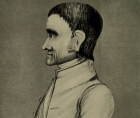
    Joshua M. Reinke introduces the American Quaker abolitionist, John Woolman. This seventeenth-century diarist’s encounter with Christ took him on a journey that led across the American colonies and provoked him to voice his fierce opposition to human bondage and the slave trade...

    Click to view
  • Anglo-Saxon women and power

    Article

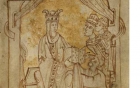
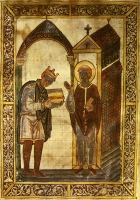
    Elite Anglo-Saxon women played a powerful role in the religious affairs and politics of their day and were important patrons of learning and culture.

    Click to view
  • Barikot’s apsidal temple

    Article

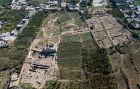
    The presence of an apse was a common architectural feature in early Buddhism. An apsidal temple associated with an Indian-style Buddhist stupa was recently discovered at Barikot in Pakistan’s Swat Valley, dating to the time of the great promoter of Buddhism, the Mauryan Emperor Aśoka (r. 268–232 BC). The monument...

    Click to view
  • Bede's Ecclesiastical History of the English People

    Article

    Much research has been devoted in recent years to Bede’s Ecclesiastical History of the English People (EH), completed in 731 at the joint monastery of Monkwearmouth-Jarrow; but in one crucial respect little progress has been made: the editing of the text. The excellent edition published by Charles Plummer in 1896...

    Click to view
  • Beware the serpent of Rome

    Article

    On 14 February 1868, the Carlisle Journal reported as follows: … two meetings were held in the Athenaeum in this city , “for the purpose of forming an auxiliary to co-operate with the Church Association in London, to uphold the principles and order of the United Church of England and...

    Click to view
  • Britain and Brittany: contact, myth and history in the early Middle Ages

    Article

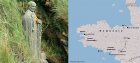
    Fiona Edmonds evidences the enduring links between Brittany and Britain throughout the early Middle Ages. Every year many thousands of British holidaymakers travel to Brittany in search of beaches, bisque and bonhomie. As they board the ferry, they may notice that they are travelling from one Bretagne to another. The names...

    Click to view
  • Building St James's spire: Louth's guilds and popular piety in the later middle ages

    Article

    Medieval historian Dr Claire Kennan continued our Virtual Branch series with a local history talk on the building of St James's spire, Louth.  In her talk Kennan traces the important role that Louth's major guilds of the Blessed Virgin Mary and Holy Trinity played in the building of the St James’s spire. Throughout the...

    Click to view
  • Castle of Convergence: the Muslim settlement of Lucera

    Article

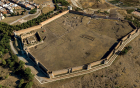
    The later medieval period can often be seen as a time of bitter ideological and military conflict between Christians and Muslims. In this article Paola Laviola tells the story of the southern Italian city of Lucera, where occasional religious division was interspersed with periods of toleration between faiths that allowed...

    Click to view
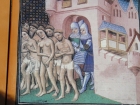
  • Cathars and Castles in Medieval France

    Article

    Almost exactly 800 years ago, in September 1213, a decisive battle was fought at Muret, about ten miles south-west of Toulouse. King Peter II of Aragon, fighting with southern allies from Toulouse and elsewhere, faced an army largely made up of northern French crusaders who had invaded the region at the...

    Click to view
  • Christopher Hill: Marxism and Methodism

    Article

    Christopher Hill, the eminent historian of seventeenth century England, was a convinced Marxist throughout most of his long and productive life (1912-2003). He embraced this secular world-view when he was a young History student at Oxford in the polemical 1930s and never lost his ideological commitment, even though he resigned...

    Click to view
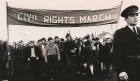
  • Civil Rights: 1968 and Northern Ireland

    Article

    Jim McBride looks at the growing demand for equal civil rights for the Catholic population of Northern Ireland through the 1960s, which led to the resignation of Terence O’Neill in 1969.

    Click to view
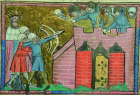
  • Crusade in Crisis: the Siege and Battle of Antioch, 1097–98

    Article

    On 28 June 1098, the forces of the First Crusade marched out from the great north Syrian city of Antioch to do battle with Karbugha, the Muslim ruler of Mosul. The odds were not in their favour: not only was the Muslim army vastly superior in size, but the crusaders had...

    Click to view
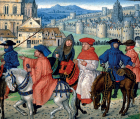
  • Decoding medieval pilgrimage

    Article

    Pilgrimage played a significant role in medieval life and belief. Pilgrims travelled far and wide to express their devotion to saints and their cults. Who were the pilgrims and what did pilgrimage involve? Luke Daly makes sense of this fascinating and complex phenomenon...

    Click to view
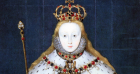
  • Film: Elizabeth I and Tudor Royal Authority

    Article

    In this film, Professor Sue Doran, Jesus College, University of Oxford, looks at the two main challenges to Elizabeth I's authority: gender and religion. Professor Doran looks at the power of Elizabeth's personality, her relationship with her advisers plus the significance of religion and domestics politics to shaping her reign and...

    Click to view
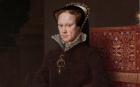
  • Film: Mary I and Tudor Royal Authority

    Article

    In this film Dr Anna Whitelock from Royal Holloway, University of London, discusses the life of Mary I, the first crowned Queen of England. Dr Whitelock looks at Mary's difficult early life, her submission to Henry VIII and the rise of a warrior princess. Dr Whitelock explores Mary as a courageous...

    Click to view
  • Film: Religion and Tudor Royal Authority – discussion

    Article

    In this film Professor Sue Doran, Jesus College, University of Oxford and Professor Steven Gunn, Merton College, University of Oxford, look at the role religion played in defining the reigns and authority of the Tudor monarchs. If you're unable to see the film below, please use the link for your Membership type:Historian...

    Click to view
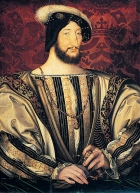
  • Francis I and Absolute Monarchy

    Article

    Francis I of France reign lasted for more than thirty years and coincided with movements as significant as the Renaissance and the Reformation. Text-books are apt to gloss over the domestic history of France before the outbreak of the Wars of Religion and convey the impression that Francis was more...

    Click to view
  • From Norwich to Nara

    Article

    Simon Kaner explores the fascinating parallels revealed by the international research project From Nara to Norwich between life and religious belief at the ends of the Silk Roads. Nara is the ancient capital region of Japan. The eighth century imperial treasury, the Shōsōin, with its treasures from China and central Asia, is...

    Click to view