

Remembrance 2026
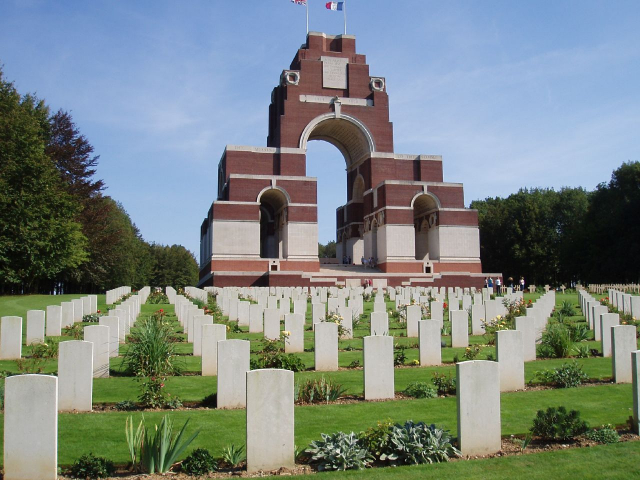
People and the natural world are continuously evolving, with every generation experiencing changes and challenges. Those challenges can be in many different forms but throughout history one factor that continually challenges generations has been war and conflict. These have led to population changes and stresses, environmental changes and damage, and cultural challenges and responses. In the last 100 years the impact of global conflicts and a rise in long-lasting civil conflicts have resulted in attitudinal changes to the practice of war. From the 19th century when all leading powers accepted war as part of global dominance the impact of the First and Second World Wars and the regional conflicts that followed have resulted in war being viewed as something to avoid at all costs if you have a choice, either through political decision-making or international diplomacy.
Following those cultural changes came a concept of Remembrance and a belief, or hope, by some that Remembrance would not only commemorate those that had fallen but also act as a reminder that war always resulted in a negative outcome for many. Alas not all governments wanted or were able to heed the warning of the dangers of conflict and so young men and women have continued to be asked to go and serve their country and all generations have been impacted by the physical, emotional, environmental and economic cost of war.
War and conflict have also been the catalyst or enabler for technological changes, and those changes have helped to save lives but also to change warfare, not sadly to end it. However, technology has meant that some of the traditional ways of carrying out warfare have changed thus changing individual experiences of it and some people's relationships to it. Nonetheless, whether the war is fought through drones or from the trenches, the result is the same for at least one side – the loss of life and a threat to freedoms. Some hope that modern styles of warfare could end conflict altogether or make it a pointless endeavour.
For now, a modern conflict is still dangerous, and a technological conflict still creates names of the fallen. For Remembrance 2026 it is important to reflect on the loss of the previous generations whose families hoped their sacrifice would serve as a deterrent for future generations, and to hope that those who are called on to serve now do not have their names added to the lists carved on stone memorials but help instead to demonstrate that wars of the present should be consigned to the past.
Resources for Primary
- Webinar series: The Forgotten Generations – Black British experience in the RAF from 1918 (free webinar series: 12 and 19 Nov, 4-5pm)
- Remembrance: Primary scheme of work
- Lest we forget
- Ideas for Assemblies - Remembrance
- Ideas for Assemblies: A slightly different view of remembrance
- Ideas for Assemblies: Lest we forget
- Musings and misconceptions about Remembrance Day
- Muslim soldiers in World War I
- Lions of the Great War: How are Sikh soldiers of the First World War seen today?
- School war memorials as the subject for enquiry-based learning
- Teaching about Remembrance Day in EYFS
Resources for Secondary
- Webinar series: The Forgotten Generations – Black British experience in the RAF from 1918 (free webinar series: 12 and 19 Nov, 4-5pm)
- Active Remembrance (Teaching History article)
- Lesson sequence: Muslim Tommies - taster lesson
- Recorded webinar series: Commemorating the 75th anniversary of the UN Convention on Genocide
- ‘The Strands of Memory’ (Teaching History article)
- The impact and legacy of the First World War: On-demand short course
- Conflict, art and remembrance Teacher Fellowship resources (open access) including How has the First World War been memorialised?, What can the artist Stanley Spencer tell us about the First World War? and more
General resources
- The impact and legacy of the First World War: On-demand short course
- Recorded webinar series: Commemorating the 75th anniversary of the UN Convention on Genocide
- The last battle: Bomber Command’s veterans and the fight for remembrance (Historian article)
- The Historian 138: Hidden stories of a centenary
- The peace treaties of 1919 (Historian article)
Image credit: Thiepval (Somme, France) Le Mémorial et le cimetière. By Amanda Slater, from Coventry (England) - https://www.flickr.com/photos/pikerslanefarm/1788158299, CC BY-SA 2.0, https://commons.wikimedia.org/w/index.php?curid=4020491