
Causation
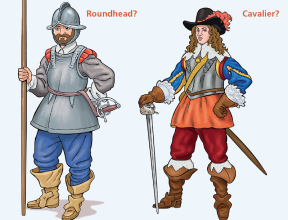
Denise Greany and Andrew Hopper show how to make the British Civil Wars of the mid-seventeenth century readily accessible to primary-aged children by focusing on the experiences of people who lived through these tumultuous times.
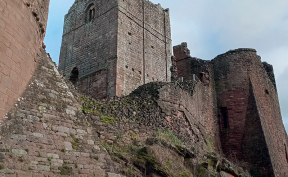
Disciplinary knowledge is often identified as a key area of development by subject leaders. In this article, Susie Townsend explores the concepts of change, continuity and causation through the lens of forts and castles. Emphasizing the importance of enquiry, she provides a range of historical activities that could be used...

We’ve been talking to our secondary school members and we know how difficult life is for teachers in the current circumstances, so we wanted to lend a helping hand. 'What’s the wisdom on…' is a brand-new and already popular feature in our secondary journal Teaching History and provides the perfect...
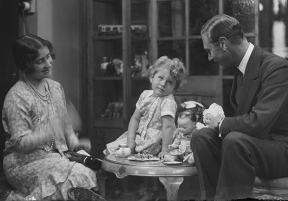
Hidden away on top of a dusty, battered cupboard in a local primary school were two equally dusty and battered log books. Each has seen better days and each could provide a range of links to local and national history. The log book was one of two found in one...
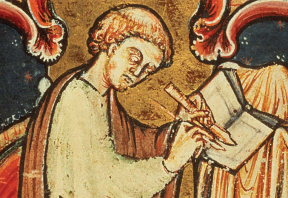
The Anglo-Saxons and the Vikings shaped British history in ways that are directly relevant to us today and inform our language, laws and culture. Without them we would not have some of our greatest stories, heroes and artefacts. The recent exhibition at the British Library on the Anglo-Saxons is testament...
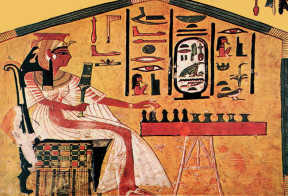
Perhaps one of the most perplexing aspects of teaching history is the fostering of conceptual understanding. History subject leaders often find this a challenging issue. Even if they have a decent grasp themselves, it can be difficult for others in the school who have to teach the subject. Over recent...
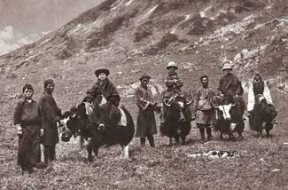
Exploration and a curiosity about the world are key human characteristics that have shaped and continue to shape our behaviour. Nowhere is this more true than with younger children who relish the opportunity to investigate their environment and all it contains. Promoting this natural curiosity and introducing stimulating challenge should...
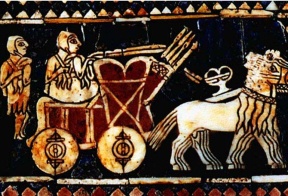
For many teachers and children alike, Ancient Sumer will be completely new. Although Sumer has always been an option for teaching about Early Civilisations, the fame of Ancient Egypt, as well as being a tried-and-tested topic, has meant that Sumer has perhaps been overlooked. There is little danger of failing...

The new (2014) Primary History National Curriculum is finally upon us. The first thing you might notice is that the level descriptions have gone. These were first introduced in 1995 and became the mainstay for assessing pupil progression and attainment in Key Stages 1, 2 and 3 across schools in...

The Vikings will be familiar territory to many primary teachers. For many, therefore, this section of the history curriculum should cause fewer headaches than others. This does not mean, however, that it is all straightforward. This article contains a number of elements that teachers might welcome including a timeline of...
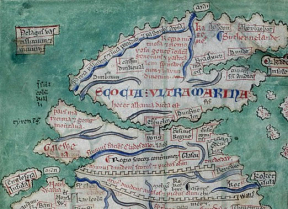
Anglo-Saxons have been a part of the primary national curriculum from the onset so they may not be as unfamiliar to teachers as some themes. Many teachers also report that pupils enjoy studying them so there is clearly much in their favour. That does not mean, however, that all is...
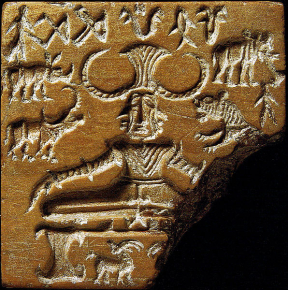
In 1924 The Illustrated London News broke the story of a sensational discovery in the Indian subcontinent. Ruined mounds at Mohenjodaro and Harappa, 600 km apart, were forgotten cities of a lost civilisation. Nearly all we know about the Indus Civilisation comes from archaeology. What survives leaves many unanswered questions,...
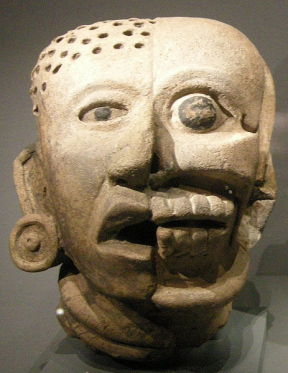
Obscured by the fame of the Aztec empire or shrouded by a veil of mystery, the cultural history of the Maya has generally been misunderstood by the British public. Maya civilisation developed in a territory the size of Germany and Denmark together (nearly 400,000 km2). This vast territory shows three...
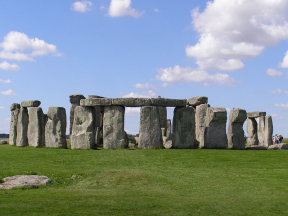
Stone Age to Iron Age covers around 10,000 years, between the last Ice Age and the coming of the Romans. Such a long period is difficult for children to imagine, but putting the children into a living time-line across the classroom might help. In one sense not a lot happens...
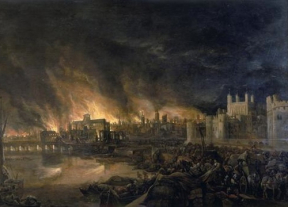
The Great Fire of London is a favourite National Curriculum teaching topic. This paper draws on the latest resources and teaching ideas to suggest how you can meet both the NC history requirements and the wider ones of the National Curriculum, particularly in integrated programmes that include teaching about the...
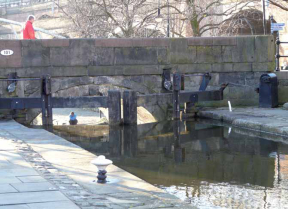
Please note: this article pre-dates the 2014 National Curriculum and some content may be outdated. A study of the local environment can make a vital contribution to children's sense of identity, their sense of place and the community in which they live. More importantly, a local study can enable children...

This section explores some of the key ideas and activities for time, causation, interpretations, enquiry and significance. There are also some ideas on how history can be linked with literacy.