Change and continuity

This particular concept is more appropriate for fourth stage Key Stage 1 than Key Stage 2. It is about developing an understanding of the idea that some things change while others old and new stay the same. A house for example will both have doors and windows (continuity) but what those doors are made of and how they work will be different (change) this is about comparing and contrasting in particular to your students own experiences and lives. This should become a process that children can apply in a less explicit manner across Key Stage 2. Read more

Sort by: Date (Newest first) | Title A-Z
Show: All | Articles | Podcasts | Multipage Articles
  • Task design for historical thinking

    Article

    In this article, Julia Huber examines how task design can support pupils’ historical thinking in the primary classroom. Drawing on her own practice, she shares examples that develop conceptual understanding in areas such as significance, similarity and difference, continuity and change, and interpretations...

    Click to view
  • Battersea: here for every dog and cat – 165 years and still going strong

    Article

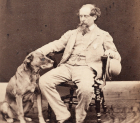
    In this article Karin Doull looks at the 165th anniversary of Battersea Dogs and Cats Home. Our treatment of our most popular pets is reflective of society in a given time and Karin highlights several ways in which the history of Battersea can be used to spotlight different aspects of...

    Click to view
  • When your parents were young…

    Article

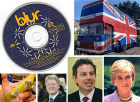
    This article is free to everyone. For access to hundreds of other high-quality resources by primary history experts along with free or discounted CPD and membership of a thriving community of teachers and subject leaders, join the Historical Association today Susie Townsend explores the theme of life in the 1990s,...

    Click to view
  • Creating drawings and environmental narratives for developing historical thinking

    Article

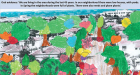
    This article is free to everyone. For access to hundreds of other high-quality resources by primary history experts along with free or discounted CPD and membership of a thriving community of teachers and subject leaders, join the Historical Association today Maria Vlachaki explores her home city of Thessaloniki, Greece with...

    Click to view
  • The end of the Cold War with a personal perspective

    Article

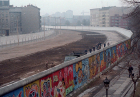
    This article is free to everyone. For access to hundreds of other high-quality resources by primary history experts along with free or discounted CPD and membership of a thriving community of teachers and subject leaders, join the Historical Association today The beginning of the 1990s, just as this publication was...

    Click to view
  • Writing in Primary History edition 1 and 100: has there been a dramatic shift?

    Article

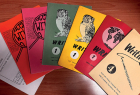
    This article is free to everyone. For access to hundreds of other high-quality resources by primary history experts along with free or discounted CPD and membership of a thriving community of teachers and subject leaders, join the Historical Association today Tim Lomas was astounded and partly horrified that he was...

    Click to view
  • A view from the Editor’s desk 1997–2006

    Article

    This article is free to everyone. For access to hundreds of other high-quality resources by primary history experts along with free or discounted CPD and membership of a thriving community of teachers and subject leaders, join the Historical Association today Congratulations on the publication of the 100th issue of Primary...

    Click to view
  • History through children’s voices

    Article

    This article is free to everyone. For access to hundreds of other high-quality resources by primary history experts along with free or discounted CPD and membership of a thriving community of teachers and subject leaders, join the Historical Association today In this article, we explore examples of children’s writing, from...

    Click to view
  • Developing disciplinary knowledge: how and why castles and forts developed

    Article

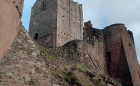
    Disciplinary knowledge is often identified as a key area of development by subject leaders. In this article, Susie Townsend explores the concepts of change, continuity and causation through the lens of forts and castles. Emphasizing the importance of enquiry, she provides a range of historical activities that could be used in...

    Click to view
  • Little coins, big histories

    Article

    In this article, Damienne Clarke examines how coins can be used as a focus for history teaching and learning in Key Stage One. She describes the emergence of coins from older systems of bartering, as well as their role as tokens of commemoration for significant people and events. This article provides...

    Click to view
  • Who is in charge?

    Article

    Children are introduced from the start of their lives to the idea that someone is in charge.  Helen Crawford and Karin Doull explore how the question ‘Who is in charge?’ can be used with EYFS children to develop ideas of power, authority and agency. The article looks at its relevance...

    Click to view
  • Olympics, past and present

    Article

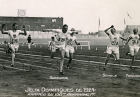
    This article will consider how to use the Olympics as a ‘past event’. It will provide material that will allow children to compare and contrast Olympic Games that have been hosted in Paris. They will be encouraged to look at what has changed in relation to the sports, medals and...

    Click to view
  • Teaching ‘changes within living memory’: making the most of your school

    Article

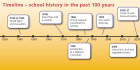
    The Key Stage 1 curriculum requires an exploration of changes within living memory, and what better way to do this than discovering the history of your own school! In this article, Helen Crawford and Sandra Kirkland provide guidance and suggested activities to explore change and continuity in your own locality. ...

    Click to view
  • Using picture books to explore ideas around history with very young children

    Article

    This article looks at the relevance of picture books in the Early Years Foundation Stage as a resource for introducing children to the idea of the past. Firstly examining its relevance to the Framework, Karin identifies some appropriate resources and how they can be used.  In particular, she links them...

    Click to view
  • Teaching about the German Occupation of Jersey through the Occupation Tapestry

    Article

    The German Occupation and subsequent liberation of Jersey is particularly significant for schools in Jersey and is included in a new history curriculum being trialled for Key Stage 1 and 2 to be implemented in 2023. For children in Jersey, it relates to a significant event at Key Stage 1...

    Click to view
  • Coherence in primary history: How can we get children to see that their history links up?

    Article

    No teacher ever wants to claim that their history curriculum is incoherent. All schools want to have a curriculum that is logically ordered and consistent, that has clarity and that holds together. It is easy to assume that how we see this coherence as adults must also translate to the...

    Click to view
  • How did a volcano affect life in the Bronze Age?

    Article

    Recent discoveries have greatly altered our view of life in the Bronze Age. Must Farm, for example, was built in the Cambridgeshire Fens around 1000 BCE. Sometime around 1159 BCE (no-one is quite sure when) Hekla, a volcano in Iceland (a country no-one yet knew existed) erupted, throwing millions of...

    Click to view
  • Film: What's the wisdom on... Change and continuity (Primary)

    Article

    Please note: the 'What's the Wisdom On' film series has been produced principally for secondary school history teachers, however some of the content is transferrable to a primary setting. Secondary members can view the film here We know how difficult life is for teachers in the current circumstances. We also understand your need...

    Click to view
  • Migration to Britain through time

    Article

    Migration is rarely absent from the news and arouses political, social cultural and emotional responses which range from compassion to hostility, racism and anti-racism. By exploring migration in the past, it is possible for children to go beyond current issues and appreciate that, rather than being a recent characteristic of...

    Click to view
  • The Elizabeth cake

    Article

    Hidden away on top of a dusty, battered cupboard in a local primary school were two equally dusty and battered log books. Each has seen better days and each could provide a range of links to local and national history. The log book was one of two found in one...

    Click to view