Diversity

Diversity is based on an understanding of the past of the many individual experiences and localities in order to establish a broadly based understanding of the past. In the same way that the big picture relates to local, national and world dimension. Diversity needs to include an appreciation of experiences from rich and poor, men, women and children and different ethnic groups and different period of the past.

Sort by: Date (Newest first) | Title A-Z
Show: All | Articles | Podcasts | Multipage Articles
  • Pull-out posters: Primary History 88 – Diversity

    Article

    There has been much emphasis on ensuring that we teach a balanced history curriculum that reflects diversity. Teachers often ask the Historical Association where they can get their ideas and find examples of good practice. From the start, this journal has addressed the many strands of a diverse primary history...

    Click to view
  • Racism and equality through the 1936 Berlin Olympics: the Olympics, Nationalism and Identity

    Article

    Please note: this article pre-dates the 2014 National Curriculum and some content may be outdated. This article outlines ideas for teaching history with crosscurricular links to citizenship, with a Year 6 class...

    Click to view
  • Re-evaluating the role of statues

    Article

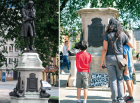
    Like them or loathe them, statues are excellent learning resources and the recent events in Bristol and elsewhere should not dissuade us from using them to aid children’s historical knowledge and enquiry skills. In fact, in the current climate, statues need a careful re-evaluation of their role within our towns....

    Click to view
  • Recorded webinar: Exploring representations and attitudes to disability across history

    Article

    This webinar was presented by Richard Rieser, who is a campaigner and champion for disability rights and the coordinator of UK Disability History Month. His presentation is part of our ongoing work to explore disability history and the arguments and representations of it and ensure that people from disability groups...

    Click to view
  • Recorded webinar: What is diversity within the primary history curriculum?

    Article

    In 2021 we ran a series of webinars aimed at teachers working in primary schools: Diversity in the primary history curriculum. This series considered the following questions: What is diversity? Why has it proved to be controversial? How can we respond to this? Why is it so important in developing children's...

    Click to view
  • Representations of Empire: Learning through Objects

    Article

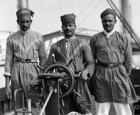
    Produced by the Northamptonshire Black History Association and originally published in 2008, this is one of a set of resources for schools offering a more inclusive map of the past that includes an appreciation of Black History within the local, national and global context. The resources provide a range of opportunities to promote diversity within the curriculum. Contents of...

    Click to view
  • Scheme of Work: Grace O'Malley

    Article

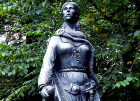
    This unit encourages pupils to explore the past by examining their ideas about pirates, with particular reference to Grace O’Malley. The key question leads children to consider what are the characteristics of a pirate and to challenge stereotypes in the light of historical enquiry. The key question also leads to...

    Click to view
  • Scheme of work: Journeys - the story of migration to Britain

    Article

    This unit is designed as a thematic course looking at the big picture of migration to Britain over time. There are many ways that the course can be adapted to include different content which may be more relevant for the local community around your school. Most of the content described in...

    Click to view
  • Significant anniversaries: The Bristol Bus Boycott, 1963

    Article

    It is sixty years since the Bristol Bus Boycott highlighted race inequalities and discrimination in the workplace. In this article, Stuart Boydell revisits this watershed moment and considers how the Bristol Bus Boycott could be incorporated into the curriculum today. Sixty years ago, Bristol was at the centre of a...

    Click to view
  • Significant anniversaries: Windrush 75

    Article

    It is 75 years since the ship called the Empire Windrush brought people from the Caribbean to begin a new life in the United Kingdom. Those who also arrived in the years leading up to 1971 are often referred to as ‘the Windrush generation’. Their contribution to Britain socially, culturally...

    Click to view
  • Teaching Ancient Egypt

    Article

    Editorial note: This paper has two sections: first, a background briefing about Ancient Egypt with a timeline and map that introduces the second section's three teaching activities on: building the Great Pyramid of Giza; Hatshepsut, Egypt's great woman pharaoh; and Akhenaten and his attempt to revolutionise Egyptian religion. ‘Hail to thee, O...

    Click to view
  • Teaching Gypsy, Roma and Traveller history

    Article

    Gypsy, Roma and Traveller people are the largest minority ethnic group in some communities (and therefore in some schools) in the UK. Yet the past of Gypsy, Roma, Traveller people may rarely be part of history lessons. The result is that pupils of Gypsy, Roma and Traveller heritage may not...

    Click to view
  • Teaching about racism, fairness and justice through key people

    Article

    Please note: this article pre-dates the 2014 National Curriculum and some content may be outdated. Our school has no uniform. You can’t predict what most children or teachers will wear from one day to the next. So the children were rather surprised one day in July 1996 when most of...

    Click to view
  • Teaching and learning about Grace O'Malley as a significant woman at Key Stage 1

    Article

    "Why are you so angry Grace?" Teaching and learning about Grace O'Malley as a significant woman at Key Stage 1 Grace O'Malley was an Irish queen in the Tudor period and her story provides insights about life in Ireland at the time of the Elizabethan conquests. Grace, also known as...

    Click to view
  • Teaching black British history through local archives

    Article

    The huge benefits that local archives can bring to primary history are explored by Steven Kenyon. He illustrates this with a case study of Lancashire Archives. The central focus is on ways in which local history can support diversity in the curriculum by providing three examples – one for Key Stage...

    Click to view
  • Teaching diversity through drama

    Article

    Teaching diversity through drama at the Museum of London: Stories of London people From Roman times to the present, London has been shaped by the diversity of its people. London is home to500 different nationalities, 300 different languages,14 major faiths and a host of other religions. The Museum of London...

    Click to view
  • Teaching famous people at key stage one

    Article

    The draft English NC for history highlights the study of ‘significant individuals and people'. Michelle Dexter provides an insight on how to approach this biographical requirement; it also opens up biography as a major genre for pupils to master - augmenting their development of literacy...

    Click to view
  • The Maya: a 4,000-year-old civilisation in the Americas

    Article

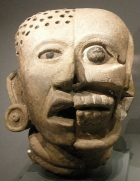
    Obscured by the fame of the Aztec empire or shrouded by a veil of mystery, the cultural history of the Maya has generally been misunderstood by the British public. Maya civilisation developed in a territory the size of Germany and Denmark together (nearly 400,000 km2). This vast territory shows three...

    Click to view
  • The T.E.A.C.H. Report

    Article

    The TEACH report outlines the sort of good practice in teaching sensitive topics which is available for teachers to share, not least through the Historical Association's programme of subject-specific training.

    Click to view
  • The world on the wall: exploring diversity on Hadrian's Wall

    Article

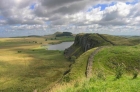
    Built in AD 122 by the order of the Emperor Hadrian, the 73 mile (80 Roman miles) long frontier goes from Bownesson-Solway in Cumbria to Wallsend on the River Tyne. Since 1987, the area has been inscribed as a United Nations Educational, Scientific and Cultural Organisation (UNESCO) World Heritage Site....

    Click to view