Diversity

Diversity is based on an understanding of the past of the many individual experiences and localities in order to establish a broadly based understanding of the past. In the same way that the big picture relates to local, national and world dimension. Diversity needs to include an appreciation of experiences from rich and poor, men, women and children and different ethnic groups and different period of the past.

Sort by: Date (Newest first) | Title A-Z
Show: All | Articles | Podcasts | Multipage Articles
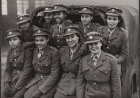
  • Three first-class ladies – teaching significant individuals in Key Stage 1

    Article

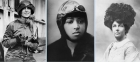
    The turn of the 20th century was in many ways a golden age of aviation. In 1903 the Wright brothers conquered heavier-than-air flight. From that time onward there were many other visionaries who wanted to be part of the dream of flying. The topic of early aviation history is an...

    Click to view
  • Towards inclusion: A study of significant figures and disability within the national curriculum

    Article

    Since the early days of the National Curriculum, considerable progress has been made to introduce children to an inclusive view of history. The research of the late Hilary Claire (1996) served as a major impetus and now primary teachers strive to ensure that no groups or individuals are marginalised, particularly...

    Click to view
  • Unlocking the treasures of early Islam

    Article

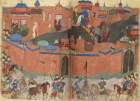
    Lucy Hawker demonstrates her school’s approach to teaching early Islam though focusing on its significance and demonstrating how lessons are effectively sequenced to develop subject knowledge and understanding. The article also indicates rich opportunities that this topic provides for links with other subjects...

    Click to view
  • Walter Tull: Sport, War and Challenging Adversity

    Article

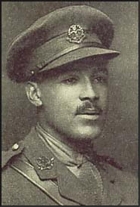
    Schemes of work and resource packs  Produced by the Northamptonshire Black History Association and originally published in 2008, these packs comprise a teachers' resource book and a schemes of work booklet of 10 activities for teachers to use in the classroom. The resource book contains a description of how to use this resource,...

    Click to view
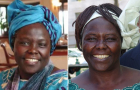
  • Wangari Maathai as a significant individual

    Article

    "Instead of a curriculum where race, gender and disability are mainly rooted in victim narratives, include positive representation. Go beyond teaching slavery and the Holocaust or gender narratives of victimhood…Actively use examples and narratives countering this dominance." Bennie Kara, (2021, p.59) The 2014 National Curriculum for history sets out that children...

    Click to view
  • West Indian Soldier: Learning resources from the National Army Museum

    8th October 2021

    The National Army Museum is a leading authority on the British Army, exploring its role from the British Civil Wars to the present day. Through its collections, the Museum preserves and shares stories of ordinary people with extraordinary responsibilities. The Museum’s Learning team is committed to providing engaging and curriculum-driven...

    Click to view
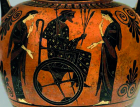
  • Who were the Greeks and how diverse was their society?

    Article

    Susie Townsend explores ancient Greece through the use of maps in this innovative and interesting article. The focus here is on diversity within ancient Greek civilisations and the article includes some activities to support learning. There is something for everyone to take from this piece.

    Click to view
  • Whose history is it anyway?

    Article

    Please note: this article pre-dates the 2014 National Curriculum and some content may be outdated. The main goals of educating children are meeting their educational and achievement needs. Herein is the challenge. Our classrooms are a cornucopia of diversity. The most prominent or acknowledged being gender, class, religion and ethnicity. Some...

    Click to view
  • Why are there so many ‘mummies’ in Western museums?

    Article

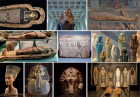
    Richard Harris invites us to consider how the teaching of ancient Egypt can be decolonised by considering non-Western perspectives. The article provides a fascinating viewpoint on this popular period of history and shares examples of how this can be explored with children. One of the joys of working in history...

    Click to view
  • Why is diversity so important and how can we approach it?

    Article

    Imagine what the following scenarios tell you about the past – a Tudor role-play of Queen Elizabeth visiting Kenilworth Castle; a photograph of London during the Blitz; a picture of Viking warriors attacking Lindisfarne monastery. The first of the images can perhaps draw on a family visit to an event...

    Click to view
  • Why stories?

    Article

    Please note: this article was written before the 2014 National Curriculum and some content and references may no longer be relevant. During the Early Years and Foundation Stage children should listen to stories, ask how and why and talk about the past (DfE 2012). Young children are comfortable with stories. Through...

    Click to view
  • Women’s History Month: Female Voices

    Article

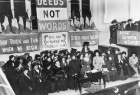
    March is Women’s History Month each year. We have produced resources to support primary school assemblies exploring the history of female suffrage in the UK. If you would like some ideas for a special assembly during Women’s history month, download our assembly ideas and powerpoint presentation to support your school assembly....

    Click to view
  • World War I: widening relevance in the modern world

    Article

    Hayyan Bhabha introduces a project that is using newly-discovered documents to show the contribution of Allied Muslim soldiers in the First World War, with the aim of developing empathy, mutual respect and religious understanding in young children of all ages. At a time of rising nationalism across the world, where Muslims are...

    Click to view
  • ‘Nothing was easy’: Viewing war, empire and racism through the eyes of a local Windrush migrant

    Article

    This article is free to everyone. For access to hundreds of other high-quality resources by primary history experts along with free or discounted CPD and membership of a thriving community of teachers and subject leaders, join the Historical Association today Andrew Wrenn shares examples from a fascinating project with which...

    Click to view
  • ‘You should be proud about your history. They make you feel ashamed’: Teaching history hurts

    Article

    As history teachers we are used to encouraging pupils to think; enabling them to express thoughts with clarity both verbally and in written form. Yet, if history as a school subject becomes purely cognitive, then something is missing. History deals with human behaviour and therefore the affective and the emotional...

    Click to view