General

When considering planning for any topic perhaps the first question should be to question your rationale for teaching this topic and how it relates to wider issues such as diversity, learning outside the classrooms, and whether to teach history discreetly or as a part of meaningfully linked cross curricular approach. In this section, you will find articles, guides, resources that will support you to develop your planning and helping children to make progress.

Sort by: Date (Newest first) | Title A-Z
Show: All | Articles | Podcasts | Multipage Articles
  • How diverse is your history curriculum?

    Article

    The past was full of diverse people and our students are entitled to learn about this diverse past. History lessons should enable students to see their connection to the past and to understand the world today. Here are a list of questions for history teachers to use to support a...

    Click to view
  • Ideas for Assemblies: Lest we forget

    Article

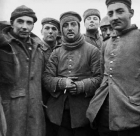
    Over the next three editions of Primary History our assemblies pages will be linked to the theme of commemorating the First World War. We have found that while many teachers wish to remember these events in school, they are unsure how to approach the subject with primary aged children. It...

    Click to view
  • In my view: We must support gifted historians from an early age

    Article

    A successful schools system must have the capacity to harness the potential of all pupils. This means tailoring teaching so that every pupil makes strong, steady progress throughout their school lives. While we all agree that learners who are struggling need effective teaching and support, I am passionate that gifted...

    Click to view
  • Including the Muslim Contribution in the National Curriculum for History

    Article

    History education has a key role to play in creating the informed, critical attachment of young people to the nation and in creating the feeling that young people belong and can participate in national life. The Curriculum for Cohesion Team, comprising Muslim and non-Muslim academics and community leaders, believes that...

    Click to view
  • Is teaching about the Holocaust suitable for primary aged children?

    Article

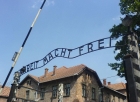
    Editorial note: While this is a valuable paper, we must point out that the normal ethical procedures concerning such a sensitive, emotional subject must be followed in relation to pupils, their parents/carers and the wider community, i.e. the protocols for permission and clearance to teach such topics must be followed....

    Click to view
  • Objects and objections: getting critical about using artefacts in primary history

    Article

    Jenny uses her experience and expertise from a school committed to using museum education to outline ways in which artefacts can be used effectively in primary settings. This article is based on practice at Langley Heritage Primary Academy. She outlines some of the challenges and how practice was refined, including actual...

    Click to view
  • Oral history, a powerful tool or a double edged sword?

    Article

    We all agree that oral history is a particularly powerful and attractive method for children to gather evidence and appreciate the real life relevance of history. From the Early Years to Year 6, many of us look deliberately for the opportunities to bring a visitor into the classroom, who will...

    Click to view
  • Planning for diversity in the Key Stage 2 history curriculum

    Article

    Please note: this article was written before the the 2014 National Curriculum and some content is now outdated, e.g. reference to the QCA. This article may therefore be more useful for those engaging in research than for practising teachers. See Primary History summer resource 2019: Diversity for current guidance.  In a series of three articles Hilary Claire...

    Click to view
  • Primary History at Key Stage 2

    Article

    In this series of podcasts Karin Doull, Principal Lecturer and Subject Co-ordinator (Primary History Education) at the University of Roehampton examines good history at Key Stage 2. 1. What makes a good primary history curriculum? 2. What makes a good history curriculum at Key Stage 2?3. Personalisation and local links4. The...

    Click to view
  • Primary history and British values

    Article

    In this article, Michael Maddison provides an overview of what schools must do in relation to promoting British values, as well as preventing extremism and radicalisation, and why it is so important that opportunities are taken in history to  deal with these two pressing issues. It is an updated version...

    Click to view
  • Processes, Chronological Understanding & Planning

    Article

    In this podcast Dr Hilary Cooper, Professor of History and Pedagogy at the University of Cumbria, looks at why teachers and students seem to enjoy primary history and discusses processes of enquiry, chronological understanding and planning a topic. 1. Ofsted Report History for All published in 2011 said that: "history taught in schools...

    Click to view
  • Progression and coherence in history

    Article

    Please note: this article pre-dates the 2014 National Curriculum and some content may be outdated. "The focus for much of the planning and the teaching is on pockets of knowledge at basic levels. Thus, the notion that pupils can progress and do better over time in history is not well established...

    Click to view
  • Pupils as apprentice historians (3)

    Article

    Please note: this article pre-dates the 2014 National Curriculum and some content may be outdated. The Spring 2008 issue of this magazine, Visual Literacy, highlighted the excellent practice in using visual historical sources that exists in many primary schoolsWe should strive to preserve and extend this critical use of visuals, whatever...

    Click to view
  • Sutton Hoo - Classroom archaeology in the digital age

    Article

    Please note: this article pre-dates the 2014 National Curriculum and some content and links may be outdated. The class had composed its Anglo-Saxon funeral poem for Raedwald, an Anglo-Saxon king, https://en.wikipedia.org/wiki/R%C3%A6dwald_of_East_Anglia, the high king or Bretwalda of all seven Anglo-Saxon kingdoms in the early seventh century as well as being King...

    Click to view
  • Teaching history to young children

    Article

    Please note: this article pre-dates the 2014 National Curriculum and some content may be outdated. History is a subject whose meaning is properly appreciated only in our maturity. In their old age we find those we consider wisest turning to Gibbon, Burckhardt, and Thucydides. The richness and endlessly elaborated meaning of...

    Click to view
  • Teaching primary history thematically – why it makes sense

    Article

    Recognising that most schools deliver history as separate units that are then divided into themes,  Nick Mackintosh argues that this means a lack of a narrative thread, which can result in children struggling to analyse it effectively. A thematic history curriculum is much better at developing children’s understanding of chronology,...

    Click to view
  • Teaching the Maya in upper Key Stage 2

    Article

    In this article, Jo identifies a rationale for learning about this civilisation and addresses some of the ways it can be taught, especially with older primary children. It includes a comparative enquiry with Anglo-Saxons. She also highlights how recent research has developed a greater understanding of the Maya and, at...

    Click to view
  • The digital revolution

    Article

    Please note: this article pre-dates the 2014 National Curriculum. Developments in information technology continue at an extraordinary pace. Many young children will have little or no idea of what it was like to live in a world without mobile phones, computers and the Internet. Most children will regularly make use...

    Click to view
  • The importance of history vocabulary

    Article

    Teachers and schools should surely be forgiven for quickly turning to the pages containing the ‘subject content' - within the new 2014 history curriculum - and finding out ‘what' they should be teaching. This is especially true for Key Stage 2 where children must now learn British history from the...

    Click to view
  • Ways of making Key Stage 2 history culturally inclusive: A study of practice developed in Kirklees

    Article

    Please note: this article pre-dates the 2014 National Curriculum. Kirklees, West Yorkshire comprises Huddersfield, Dewsbury and Batley. There is a population of 300,000. Minority, ethnic pupils account for nearly 20%. Over the next decade it is predicted that there will be an increase in the number of pupils of Pakistani, Indian,...

    Click to view