General

When considering planning for any topic perhaps the first question should be to question your rationale for teaching this topic and how it relates to wider issues such as diversity, learning outside the classrooms, and whether to teach history discreetly or as a part of meaningfully linked cross curricular approach. In this section, you will find articles, guides, resources that will support you to develop your planning and helping children to make progress.

Sort by: Date (Newest first) | Title A-Z
Show: All | Articles | Podcasts | Multipage Articles
  • Case Study: Historical information and the local community

    Article

    Please note: this article pre-dates the 2014 National Curriculum. The ICT revolution A paper register, a pink-lined A4 mark book and a written school log book are surely historical artefacts? The transition from paper to digital technology continues, changing the world of the classroom teacher whose working life like mine,...

    Click to view
  • English Heritage's Heritage Explorer

    Article

    Please note: this article pre-dates the 2014 National Curriculum. [THINK BUBBLE, has burst, r.i.p... Diogenes, a curmudgeonly Ancient Greek cynic, has taken its place. The original Grumpy Old Man Diogenes typically looks back to a mythical golden age] Introduction Unfortunately I'm old enough to remember a time when primary school...

    Click to view
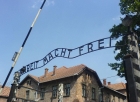
  • Is teaching about the Holocaust suitable for primary aged children?

    Article

    Editorial note: While this is a valuable paper, we must point out that the normal ethical procedures concerning such a sensitive, emotional subject must be followed in relation to pupils, their parents/carers and the wider community, i.e. the protocols for permission and clearance to teach such topics must be followed....

    Click to view
  • Archives in Primary History

    Article

    In this series of podcast Sue Temple, Senior Lecturer in Primary History at the University of Cumbria looks at the value of using archives in the primary history classroom:

    Click to view
  • Processes, Chronological Understanding & Planning

    Article

    In this podcast Dr Hilary Cooper, Professor of History and Pedagogy at the University of Cumbria, looks at why teachers and students seem to enjoy primary history and discusses processes of enquiry, chronological understanding and planning a topic. 1. Ofsted Report History for All published in 2011 said that: "history taught in schools...

    Click to view
  • Primary History at Key Stage 2

    Article

    In this series of podcasts Karin Doull, Principal Lecturer and Subject Co-ordinator (Primary History Education) at the University of Roehampton examines good history at Key Stage 2. 1. What makes a good primary history curriculum? 2. What makes a good history curriculum at Key Stage 2?3. Personalisation and local links4. The...

    Click to view
  • Progression and coherence in history

    Article

    Please note: this article pre-dates the 2014 National Curriculum and some content may be outdated. "The focus for much of the planning and the teaching is on pockets of knowledge at basic levels. Thus, the notion that pupils can progress and do better over time in history is not well established...

    Click to view
  • Britain, Europe and the World?

    Article

    Please note: this article pre-dates the 2014 National Curriculum and some content may be outdated. With the current debate on what content we should teach, and especially with the focus on pupils understanding the history of Britain before they leave school, it is perhaps pertinent to ask how this should link...

    Click to view
  • Pupils as apprentice historians (3)

    Article

    Please note: this article pre-dates the 2014 National Curriculum and some content may be outdated. The Spring 2008 issue of this magazine, Visual Literacy, highlighted the excellent practice in using visual historical sources that exists in many primary schoolsWe should strive to preserve and extend this critical use of visuals, whatever...

    Click to view
  • Whose history is it anyway?

    Article

    Please note: this article pre-dates the 2014 National Curriculum and some content may be outdated. The main goals of educating children are meeting their educational and achievement needs. Herein is the challenge. Our classrooms are a cornucopia of diversity. The most prominent or acknowledged being gender, class, religion and ethnicity. Some...

    Click to view
  • A view from the classroom

    Article

    The end of one school year and the beginning of a new one is always a time for reflection. If it coincides with moving classrooms and changing key stage too, as I am from KS1 to KS2, there is a good opportunity to sort out resources, and plan a fresh...

    Click to view
  • Sutton Hoo - Classroom archaeology in the digital age

    Article

    Please note: this article pre-dates the 2014 National Curriculum and some content and links may be outdated. The class had composed its Anglo-Saxon funeral poem for Raedwald, an Anglo-Saxon king, https://en.wikipedia.org/wiki/R%C3%A6dwald_of_East_Anglia, the high king or Bretwalda of all seven Anglo-Saxon kingdoms in the early seventh century as well as being King...

    Click to view
  • Artefacts and art facts: images of Sir Francis Drake

    Article

    Please note: this article pre-dates the 2014 National Curriculum and some content and links may be outdated. Editorial note: This article reveals the power of the Internet in helping us all, adults and children, to bring portraits like Drake's to life. So, as you read, follow the links.

    Click to view
  • History, artefacts and storytelling in the 2011 primary curriculum

    Article

    Please note: this article pre-dates the 2014 National Curriculum and some content may be outdated. This article will argue that although history can seem a ‘hard' discipline for young children, it can be made accessible and exciting through telling stories about objects. The article does not contain advice about obtaining objects:...

    Click to view
  • Extending Primary Children's thinking through artefacts

    Article

    Please note: this article pre-dates the 2014 National Curriculum and some content may be outdated. A research project was carried out with Maltese primary school children at San Andrea Infant and Middle school to see if learning strategies could accelerate pupils' cognitive development. The research involved a range of historical sources:...

    Click to view
  • Doing History with Objects

    Article

    IntroductionI was talking about ‘Doing History' with historical artefacts and objects with a young teacher when she closed the discussion with the statement ‘It's alright for you, you're old, your house is full of old things - how do I get them?' Alas - I had to agree with her,...

    Click to view
  • Archaeology: A view from the classroom

    Article

    Please note: this article pre-dates the current National Curriculum and some content and references are outdated. Perhaps it is the earthiness of the ground beneath our feet which arouses pupils' curiosity. Or maybe, the idea of the unexpected with the hope of finding something precious or unusual, that is so engaging about archaeology....

    Click to view
  • Teaching history to young children

    Article

    Please note: this article pre-dates the 2014 National Curriculum and some content may be outdated. History is a subject whose meaning is properly appreciated only in our maturity. In their old age we find those we consider wisest turning to Gibbon, Burckhardt, and Thucydides. The richness and endlessly elaborated meaning of...

    Click to view
  • In my view: We must support gifted historians from an early age

    Article

    A successful schools system must have the capacity to harness the potential of all pupils. This means tailoring teaching so that every pupil makes strong, steady progress throughout their school lives. While we all agree that learners who are struggling need effective teaching and support, I am passionate that gifted...

    Click to view
  • Oral history, a powerful tool or a double edged sword?

    Article

    We all agree that oral history is a particularly powerful and attractive method for children to gather evidence and appreciate the real life relevance of history. From the Early Years to Year 6, many of us look deliberately for the opportunities to bring a visitor into the classroom, who will...

    Click to view