
Central & South America
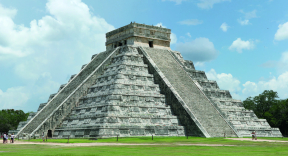
In this article, Jo identifies a rationale for learning about this civilisation and addresses some of the ways it can be taught, especially with older primary children. It includes a comparative enquiry with Anglo-Saxons. She also highlights how recent research has developed a greater understanding of the Maya and, at...
Caitríona Ní Cassaithe and Anne Marie Kavanagh explore how herbs and wild plants were and are used to create natural remedies. They use archive material and oral history to promote and explore indigenous voices. They suggest how this could be applied and developed within your own communities. They also make...
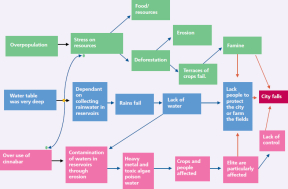
Karin Doull looks at how previous civilisations were affected by natural climate change, often precipitated by volcanic eruptions. She suggests that any investigation into ancient civilisations should consider how physical geography contributed to the initial settlement and development. She argues that we should also look at what might have contributed...
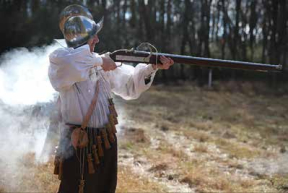
This article focuses on the links between the Maya and Europe in the fifteenth and early sixteenth centuries, exploring the impact of the Spanish on the life and times of the Maya, as seen through the eyes of one man – Gonzalo Guerrero, who was shipwrecked off the Yucatan peninsula...
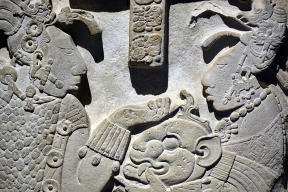
Most pupils like history, but some struggle with aspects of reading and writing – how can we make history more accessible? This article explores some ways I have found useful in engaging pupils of all abilities. It will focus on activities that might be used in studying the Non-European Society...

This article explores some of the ways history and geography can be taught side by side, so that the sum of the parts adds up to more than the original. How can we teach history with geography and vice versa, to the benefit of both, while fulfilling the aims of...
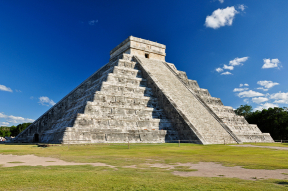
In this unit pupils will learn about the remarkable achievements of the ancient Maya. Through these activities pupils will learn about the Maya perspective of time, the calendar system, writing, maths and the environment. In doing so they should see the stark contrast between their own history and that of...
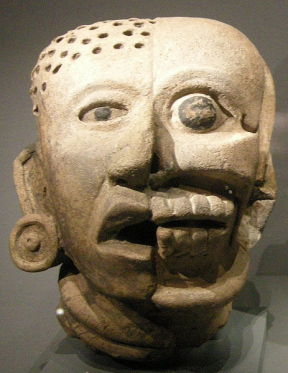
Obscured by the fame of the Aztec empire or shrouded by a veil of mystery, the cultural history of the Maya has generally been misunderstood by the British public. Maya civilisation developed in a territory the size of Germany and Denmark together (nearly 400,000 km2). This vast territory shows three...
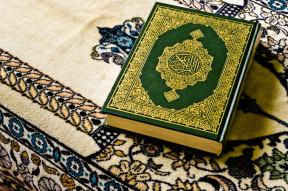
A non-European society that provides contrasts with British history - one study. chosen from: early Islamic civilization, including a study of Baghdad c. AD 900; Mayan civilization c. AD 900; Benin (West Africa) c. AD 900-1300. That's quite clear then - there's a choice between early Islam, Central America or...
‘A non-European society that provides contrasts with British history - one study chosen from: early Islamic civilization, including a study of Baghdad c. AD 900; Mayan civilization c. AD 900; Benin (West Africa) c. AD 900-1300.' That's quite clear then - there's a choice between early Islam, Central America or...
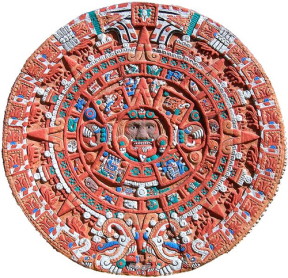
Please note: this article pre-dates the 2014 National Curriculum and some content may be outdated. Even an inclusive national history curriculum can make Britain (and Europe) appear as the lynchpin of world history. Without a coherent structure for global history, young people remain unaware that continents beyond Europe have histories...
Take a holiday with the Aztecs! Children design holiday brochures. History providing a context for literacy. Demonstration and modelling of the holiday brochure genre, and the transfer of understanding of the generic form into an historical context. Pupils produced their own brochures giving information about life in the Aztec capital,...
When the Spanish Conquistadores arrived in Mexico during the early sixteenth century there were many repercussions for the indigenous people. Their conversion to Christianity and the sacking of their temples are two of the most well known examples. However, it is often forgotten that the Aztecs had only a pictorial...

In this article Nicolas Kinloch examines aspects of an indigenous empire: that of Aztec Mexico. He attempts to persuade a group of mixed-ability Year 8 students to examine - and question - some of the assumptions they bring to the study of this empire. Their attitudes reflect quite widespread beliefs...