Living Memory

Studying events within living memory can help young children to gain an early understanding of chronology and that history is made all of the time. It also helps them to understand the world and their place within it. Through this Key Stage 1 unit of study, children are introduced to historical concepts, vocabulary and representations through exploring the ways in which life has changed over the time of their parents, grandparents and great-grandparents. This can be used to reveal aspects of national events or changes where possible. Popular areas for this topic include family, toys, holidays, the climate, technology, school, among many others.  In this section you will find articles and guidance to help you plan exciting and creative ways to introduce your children to the study of history.

Sort by: Date (Newest first) | Title A-Z
Show: All | Articles | Podcasts | Multipage Articles
  • Animals who help us: teaching past and present in EYFS

    Article

    Remembrance Day is a useful time to explore with EYFS pupils the people who help us. But of course animals also play a part in human conflicts. This article explores animals who have helped us in wartime now and in the past. The article includes useful teaching ideas and picture...

    Click to view
  • When your parents were young…

    Article

    This article is free to everyone. For access to hundreds of other high-quality resources by primary history experts along with free or discounted CPD and membership of a thriving community of teachers and subject leaders, join the Historical Association today Susie Townsend explores the theme of life in the 1990s,...

    Click to view
  • Creating drawings and environmental narratives for developing historical thinking

    Article

    This article is free to everyone. For access to hundreds of other high-quality resources by primary history experts along with free or discounted CPD and membership of a thriving community of teachers and subject leaders, join the Historical Association today Maria Vlachaki explores her home city of Thessaloniki, Greece with...

    Click to view
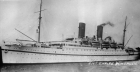
  • ‘Nothing was easy’: Viewing war, empire and racism through the eyes of a local Windrush migrant

    Article

    This article is free to everyone. For access to hundreds of other high-quality resources by primary history experts along with free or discounted CPD and membership of a thriving community of teachers and subject leaders, join the Historical Association today Andrew Wrenn shares examples from a fascinating project with which...

    Click to view
  • The end of the Cold War with a personal perspective

    Article

    This article is free to everyone. For access to hundreds of other high-quality resources by primary history experts along with free or discounted CPD and membership of a thriving community of teachers and subject leaders, join the Historical Association today The beginning of the 1990s, just as this publication was...

    Click to view
  • History through children’s voices

    Article

    This article is free to everyone. For access to hundreds of other high-quality resources by primary history experts along with free or discounted CPD and membership of a thriving community of teachers and subject leaders, join the Historical Association today In this article, we explore examples of children’s writing, from...

    Click to view
  • Little coins, big histories

    Article

    In this article, Damienne Clarke examines how coins can be used as a focus for history teaching and learning in Key Stage One. She describes the emergence of coins from older systems of bartering, as well as their role as tokens of commemoration for significant people and events. This article provides...

    Click to view
  • Exploring the history of our place with very young children

    Article

    Karin Doull considers how we can develop historical thinking in the Early Years in this article about locality and place. Karin offers helpful suggestions for developing historical vocabulary and assessing understanding. How can we seek to encourage Foundation Stage children to engage with historical thinking and processes? What appears to...

    Click to view
  • Teaching ‘changes within living memory’: making the most of your school

    Article

    The Key Stage 1 curriculum requires an exploration of changes within living memory, and what better way to do this than discovering the history of your own school! In this article, Helen Crawford and Sandra Kirkland provide guidance and suggested activities to explore change and continuity in your own locality. ...

    Click to view
  • World War II: breathing life into a local history enquiry

    Article

    Debbie Doolan explores how the locality of her school, Worle School in North Somerset, was impacted by a significant event, World War II. What is particularly pertinent is not just the range of activities in this topic but the way the theme was refined over a number of years. It...

    Click to view
  • What do children think about the the royal family and the coronation of King Charles III? 

    Article

    Recently, Princess Anne, the Princess Royal, was interviewed for American television about the future of the monarchy and thoughts about a slimmed down royal family in line with how some European royal families operate. At a recent event in partnership with City, University of London and Southampton University about the...

    Click to view
  • The Coronation of King Charles III

    Article

    2023 will see the first coronation of a British monarch for 70 years. Only those now in their 70s or above will remember the last one. The UK is the only country in Europe still to carry out a coronation, a ceremony that has its roots in traditions over a...

    Click to view
  • Significant anniversaries: the infamous Beeching Report 1963

    Article

    March 2023 sees the anniversary of a report that had profound significance on social history and which affected many parts of the United Kingdom. There is every chance that it had an effect close to your school especially if you are in a more rural or coastal area. The Beeching...

    Click to view
  • What’s in your pocket, Peg?

    Article

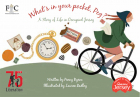
    What’s in your pocket, Peg? is a story book about Jersey which experienced German occupation throughout most of World War II. We wanted to create a book that appealed to children across different primary age groups, helping them to imagine the first-hand life experiences of a child alive at that time. The...

    Click to view
  • Teaching about the German Occupation of Jersey through the Occupation Tapestry

    Article

    The German Occupation and subsequent liberation of Jersey is particularly significant for schools in Jersey and is included in a new history curriculum being trialled for Key Stage 1 and 2 to be implemented in 2023. For children in Jersey, it relates to a significant event at Key Stage 1...

    Click to view
  • The Coronation

    Article

    On 6 May 2023 King Charles III, together with Camilla, the Queen Consort, will be crowned in Westminster Abbey. The Coronation provides rich opportunities for history lessons at both Key Stage 1 and Key Stage 2. At Key Stage 1 it naturally lends itself to Key Stage 1 ‘changes within living...

    Click to view
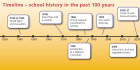
  • Scheme of work: Significant historical events, people and places in their own locality

    Article

    Children can be introduced to the idea that schools have been in the locality for some time but they have not always been the same. They can look at similarities and differences, as well as be introduced to some of the events that affected the schools. The theme allows children...

    Click to view
  • Using oral history in the classroom

    Multipage Article

    The Oral History Society has kindly agreed to produce two new films aimed at history teachers who are new to carrying out or using oral histories either in their teaching or with students. These two films will equip teachers with the essential tools and knowledge for using and devising effective...

    Click to view
  • Teaching about Remembrance Day in EYFS

    Article

    Remembrance Day (11 November) is an important time for children to learn about how we choose to both represent and remember significant events in the past. Within EYFS, learning about remembrance most obviously lends itself to Understanding the World – with a focus on children making connections between past and present,...

    Click to view
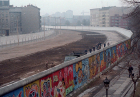
  • Using photographic evidence to explore the impact of the Berlin Wall

    Article

    I remember being struck by the quote from Primo Levi when leaving Anne Frank’s house in Amsterdam. He stated that ‘One single Anne Frank moves us more than the countless others who suffered just as she did but whose faces have remained in the shadows’. While not trying to make...

    Click to view